





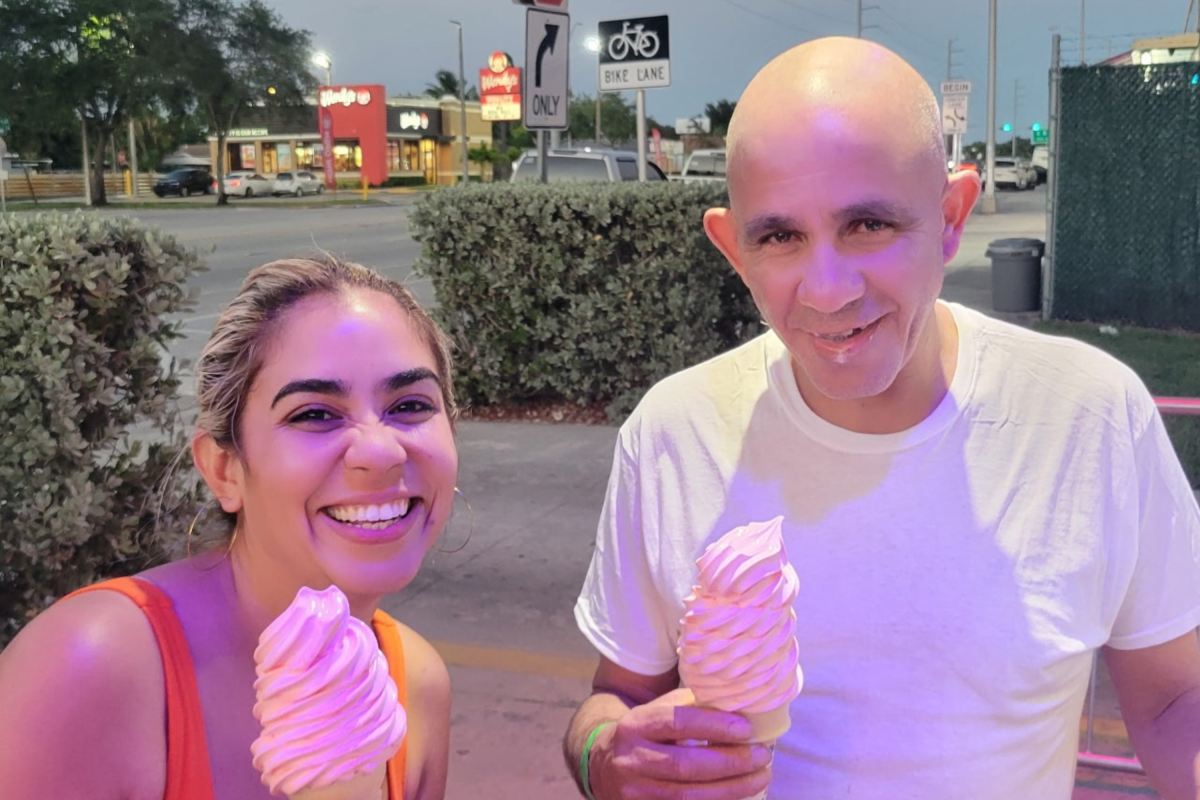
The threshold between incarceration and freedom is often marked not by a grand, dramatic gesture, but by the quiet, overwhelming sensation of breathing fresh, uncompromised air under a wide open sky. For Justo Betancourt, a Cuban-born Miami resident who has spent the better part of his adult life deeply woven into the vibrant cultural and social fabric of South Florida, that long-awaited moment finally arrived after more than six grueling, anxious months of federal captivity. His hard-won release was not merely a dry, bureaucratic victory; it was a profound human triumph that resonated far beyond the sterile walls of his detention facility, eventually capturing the attention of the highest levels of American political discourse. Former President Donald Trump unexpectedly thrust the case into the national spotlight, issuing a warm, highly public “welcome home” to Betancourt on his TruthSocial platform, a gesture that immediately amplified the family’s private relief into a national news story. In his characteristically direct style, Trump publicly acknowledged the relentless, exhausting crusade of Justo’s daughter, Arianne, who had waged a fierce, highly visible campaign to rescue her father from the desolate, isolated federal facility known colloquially as “Alligator Alcatraz.” The former president’s public message, which warmly wished the reunited family joy and peace in their newly restored freedom, served as a surreal, high-profile punctuation mark to a harrowing ordeal that had threatened to permanently dismantle a hardworking immigrant family. Beneath the glaring political spotlight, however, lay the raw, beating heart of a deeply human story about a father and a daughter who simply refused to be separated by the cold, mechanical, and often indifferent jaws of a sprawling federal immigration apparatus. For decades, Justo had built a quiet, respectable, and law-abiding life in Miami, contributing to his neighborhood, supporting his loved ones, and raising a family, only to find himself suddenly cast into the terrifying nightmare of indefinite detention, where individuals are all too frequently reduced to mere file numbers on an agent’s desk. His eventual release represented the culmination of an agonizing, emotionally draining struggle, and as the Betancourt household was finally filled once again with the warmth, laughter, and embraces of a reunited family, their victory proved that some familial bonds are simply too resilient for even the most formidable federal institutions to break.
The unimaginable nightmare began with what was supposed to be a routine, entirely mundane administrative check-in—the kind of standard, periodic bureaucratic appointment that thousands of law-abiding immigrants undergo every year with the expectation of a quick stamp, a brief conversation, and a swift return to their daily lives and families. Instead, for Justo Betancourt, this ordinary appointment with Immigration and Customs Enforcement (ICE) officers transformed in an instant into a sudden, shocking arrest that stripped him of his liberty without warning, leaving his family in a state of utter panic. Swept up by the unyielding, impersonal machinery of federal immigration enforcement, he was quickly transported far from the familiar, sun-drenched streets of Miami to the isolated Krome Service Processing Center, a notoriously bleak and high-security ICE facility nestled deep within the hostile, swampy terrain of the Florida Everglades. Dubbed “Alligator Alcatraz” by detainees, lawyers, and advocates familiar with its forbidding geography and severe reputation, the compound is surrounded by layers of razor-wire fences and the swampland’s predatory wildlife, symbolizing a terrifying wall of physical and psychological isolation designed to systematically sever detainees from the outside world. For a man of Justo’s advancing age, who had long considered the United States his permanent, safe home and had established deep roots in his community, this sudden, aggressive thrust into a harsh penal landscape was both physically punishing and psychologically devastating. The facility’s chilling nickname is not merely a colorful piece of local folklore; it accurately reflects the deep, suffocating sense of abandonment and hopelessness felt by those locked inside its concrete walls, where the constant, low hum of the surrounding swamplands serves as a relentless daily reminder of how far they are from society, from their families, and from basic human dignity. Inside those sterile, high-security communal wings, the days blended into a monotonous, frightening blur of anxiety, sleepless nights, and despair, as Justo grappled with the terrifying realization that his decades of peaceful residency and community integration could be instantly erased by a single bureaucratic pivot, leaving him highly vulnerable to deportation back to a communist homeland he had fled so long ago in search of democratic freedom.
While Justo languished in the swamp-bound fortress of Krome, a fierce, unwavering light was ignited on the outside in the form of his daughter, Arianne Betancourt, who refused to let her father be forgotten. Unwilling to accept her father’s sudden disappearance into the massive black hole of federal immigration detention, Arianne transformed herself overnight from a grieving, worried daughter into a formidable, highly articulate advocate, spearheading a public campaign that would eventually capture national headlines and reach the ears of political leaders. She understood instinctively that silence is the greatest ally of an indifferent, overreaching administrative system, and so she courageously chose to raise her voice as loudly as possible, speaking passionately to media outlets, rallying local community leaders, and organizing grassroots support to humanize her father’s plight. Her crusade was fueled by a profound, agonizing sense of injustice and a daughter’s fierce, protective loyalty; she absolutely refused to let Justo become just another anonymous, forgotten statistic in the ongoing, highly polarized national debate over immigration enforcement and border security. Every single week, she made the long, emotionally draining trek out to the isolated Everglades facility, pressing her hands and face against the cold visitation glass to offer her father words of hope, strength, and love, even as her own heart was breaking under the weight of the uncertainty. Arianne’s fierce public advocacy became a powerful, essential counter-narrative to the sterile, highly securitized legal language used by ICE authorities, constantly reminding the public and the courts that behind every bureaucratic detention file is a living, breathing human being with a family, a rich history, and people who love them desperately. Her extraordinary courage under the most intense pressure became a beacon of resilience for her community, drawing critical national attention not just to her father’s specific wrongful detention, but to the thousands of other families who suffer similar heartbreaks in silence, shattered by federal policies that often prioritize administrative efficiency and statistics over human decency, compassion, and fundamental due process.
As Arianne fought her tireless battle in the court of public opinion, a parallel and equally critical war was being aggressively waged in the sterile, quiet hallways of the federal judiciary by a dedicated team of immigration attorneys. Recognizing the profound injustice and illegal nature of Justo’s prolonged confinement, his legal counsel constructed a meticulous, highly sophisticated defense centered around the historic and fundamental constitutional right of habeas corpus—a cornerstone of Western law designed specifically to protect individuals against arbitrary, unlawful, and abusive state imprisonment. His attorneys argued passionately and brilliantly before a federal judge that ICE had grossly overstepped its legal authority by detaining Betancourt, demonstrating with extensive documentation that his ongoing physical incarceration lacked any legitimate statutory foundation and violated his basic constitutional protections under the law. After months of grueling litigation, intense evidentiary hearings, and persistent bureaucratic foot-dragging by federal prosecutors who sought to justify his continued detention, the American legal system finally functioned precisely as the shield it was originally intended to be. A federal judge issued a decisive, sweeping ruling that declared Justo’s detention entirely wrongful and ordered his immediate, unconditional release from ICE custody, dealing a major blow to the government’s case. This landmark judicial ruling was not a mere legal technicality; it was an explicit, powerful judicial rebuke of the federal government’s administrative overreach, reaffirming the sacred principle that the state cannot simply lock away individuals indefinitely without solid, unassailable constitutional justification. On May 14, the heavy steel security doors of the Everglades facility finally swung open, and Justo stepped out into the bright, warm Florida sunshine, free at last after more than six months of wrongful captivity, a moment that vindicated his family’s relentless faith in the justice system and highlighted the indispensable role of an independent, vigilant judiciary in curbing executive excess.
The dramatic narrative took an even more unexpected turn when Donald Trump chose to publicly celebrate Justo’s release, a move that immediately added a highly complex, fascinating political dimension to an already intense human interest story. By posting his enthusiastic “welcome home” message on TruthSocial, Trump not only amplified the Betancourt family’s private joy to millions of active followers but also targeted a highly sensitive, deeply emotional political nerve in South Florida, where the vibrant, politically influential Cuban-American community remains a crucial electoral voting bloc. Trump’s specific, evocative mention of “Alligator Alcatraz” and his direct praise for Arianne’s relentless, heroic fight reflected a keen, highly strategic understanding of the local Miami-Dade political landscape, where stories of overcoming oppressive government overreach and fighting desperately for family survival resonate deeply with exile communities. This public intervention created an intriguing political paradox, as Trump, widely known for his hardline national platform on immigration and his vows to execute mass deportations, positioned himself as a compassionate champion of an undocumented immigrant who had been ensnared by the very federal law enforcement apparatus he once commanded. For the local Miami-Cuban community, however, the former president’s public message was received as a powerful gesture of solidarity that recognized their unique historical struggles and validated the immense emotional and financial toll of being caught in the crosshairs of rigid federal policies. Whether viewed by observers as an act of genuine, spontaneous empathy or as a highly calculated, politically brilliant maneuver to secure conservative Hispanic support, Trump’s message guaranteed that Justo’s story would not fade quietly into the dusty archives of forgotten immigration cases, but would instead remain a high-profile, living example of how individual human struggles can disrupt, complicate, and permanently reshape the broader, highly polarized national conversation surrounding borders, law enforcement, and belonging in modern America.
While the loud political dust eventually settles and the complex legal documents are permanently filed away in cold steel cabinets, the true, lasting resolution of this harrowing ordeal is found in the quiet, peaceful sanctuary of the Betancourt home, where Justo and Arianne are finally picking up the shattered pieces of their disrupted lives. The physical confinement may have legally ended on May 14, but the deep emotional, mental, and psychological scars of spending half a year wrongfully imprisoned in the middle of a desolate swamp do not simply vanish overnight; the lingering trauma of detention is a heavy burden, demanding a slow, patient, and collective process of healing and restoration. Yet, as they sit together in their living room, free to share a home-cooked meal, exchange warm embraces, and speak openly without a physical barrier of bulletproof glass or a corrections officer monitoring their private conversations, their home is filled to the brim with a profound sense of gratitude, relief, and renewed purpose. Justo’s survival and ultimate liberation stand as an enduring monument to the extraordinary, transformative power of familial love, proving beyond a shadow of a doubt that a daughter’s fierce, uncompromising determination can successfully pierce through the thickest, most intimidating administrative walls of federal bureaucracy. His story, while deeply personal and unique to the Miami landscape, also serves as a poignant, urgent reminder of the thousands of other nameless, forgotten individuals who remain trapped within harsh facilities like the Krome Service Processing Center, desperately waiting for their own voices to be heard and their own rights to be recognized. As the Betancourt family celebrates their hard-won victory and steps confidently forward into a hopeful future no longer clouded by the terrifying threat of sudden separation, their courageous journey remains an inspiring, deeply human testament to the human spirit’s capacity to endure, adapt, and ultimately triumph over the cold, unfeeling structures of institutional power.