




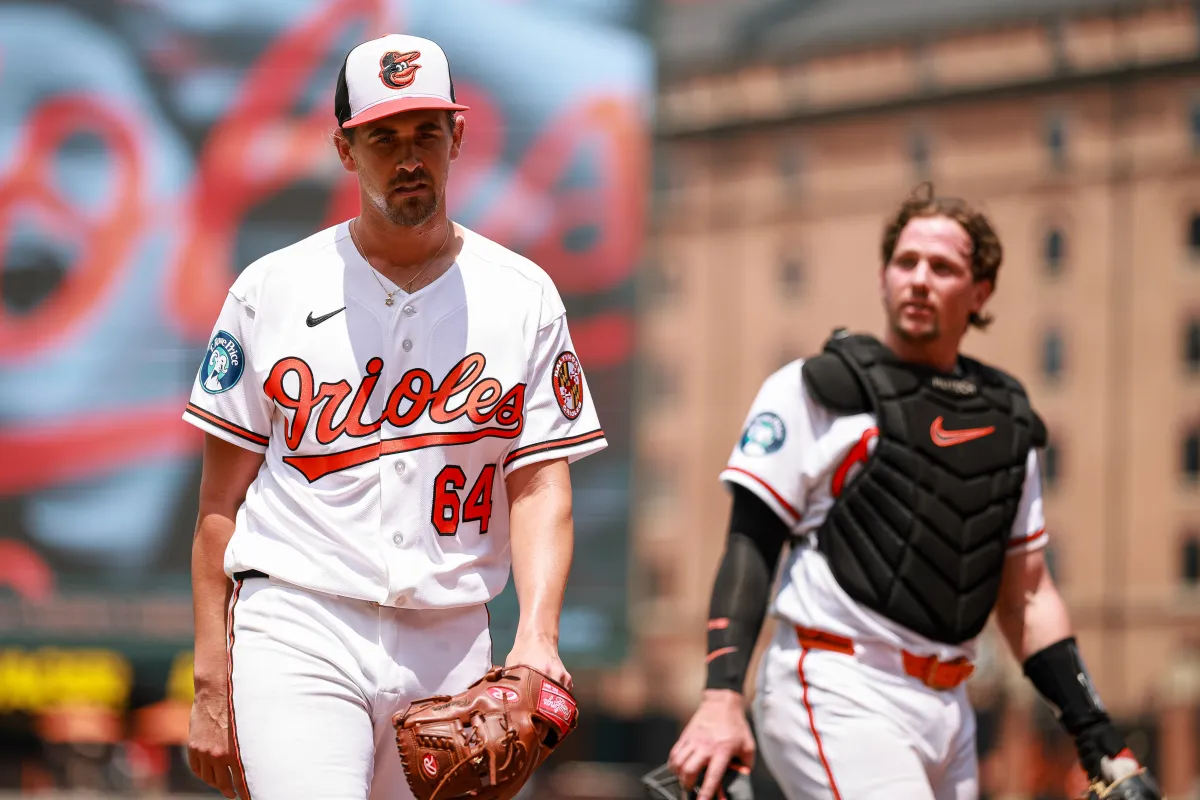
The annual Major League Baseball trade deadline is a pressure cooker of ambition, anxiety, and cold mathematical calculations, a time when human lives are uprooted in the name of marginal athletic gains. For Baltimore Orioles President of Baseball Operations Mike Elias, this seasonal crucible arrived with a peculiar set of challenges, forcing him to navigate a razor-thin line between contending for the present and safeguarding the future. On a warm July Friday, Elias stood before reporters in Baltimore and attempted to soothe a restless fan base by stating that his impending front-office maneuvers would not neatly fit into “one bucket or another in terms of buying or selling.” It was a classic piece of executive diplomacy, designed to maintain leverage and keep opposing general managers guessing. Yet, the sheer speed with which the theoretical became reality caught many off guard. Only a few hours after those carefully measured words were spoken, Elias finalized a trade that seemed to defy traditional deadline logic, sending starting pitcher Dean Kremer to the Minnesota Twins—a direct rival sitting a mere game ahead of Baltimore in the frantic American League Wild Card chase. This sudden transaction perfectly illustrated the modern baseball landscape, where the distinction between buyer and seller has dissolved into a chaotic, day-to-day scramble for survival, and where front-office executives must make peace with the deeply uncomfortable reality of trading vital assets directly to the competitors who stand in their path to October.
To understand the emotional gravity of this transaction, one must look past the dry statistics on the back of a baseball card and consider the human trajectory of Dean Kremer. For seven years, the right-handed pitcher had known no other professional home than the Baltimore Orioles organization, growing from a raw, promising prospect into a battle-tested major leaguer who had ridden the franchise’s agonizing waves of rebuilding and eventual resurgence. Kremer’s journey was woven into the very fabric of the clubhouse, making his sudden departure a poignant reminder of the sport’s ruthless business side. This season, however, had been a grueling test of physical and mental resilience for the 28-year-old pitcher, characterized by a frustrating right quad strain that sidelined him during a crucial stretch of the summer. Upon his return, the physical toll of the injury manifested on the mound, leading to a difficult July campaign where he struggled to a 1-3 record and a punishing 7.56 ERA over five starts. For a starting pitcher, there is no hiding place when things go wrong; every mistake is magnified under the stadium lights, and the psychological burden of trying to recapture one’s mechanics while pitching through the lingering doubt of injury can be overwhelming. By sending him to Minnesota, the Orioles were not just moving a contract or a roster spot; they were saying goodbye to a tenured brother in arms who had given his blood, sweat, and tears to the city of Baltimore, leaving him to pack his life into a few suitcases and instantly pivot his loyalty to a team he was actively trying to defeat just twenty-four hours prior.
Meanwhile, in Minneapolis, the acquisition of Kremer signaled an aggressive, almost desperate push by a Minnesota Twins front office that refuses to let the postseason slip through its fingers. Having already secured the services of talented left-handed reliever A.J. Minter from the New York Mets just a day earlier, the Twins entered the final hours of July in absolute buyer’s mode, seeking to patch every conceivable hole in their roster. Yet, the sheer irony of their position was hard to ignore: the difference between the “buying” Twins and the “selling” Orioles was the microscopic margin of a single baseball game in the standings. As the Twins took the field on July 31 to battle the Seattle Mariners, they found themselves chasing the Cleveland Guardians for the final American League Wild Card spot, with Baltimore breathing directly down their necks. In this high-stakes environment, the acquisition of Kremer is a calculated gamble on human redemption. The Twins are betting that a change of scenery, a fresh analytical perspective from their coaching staff, and the sheer adrenaline of a playoff race will unlock the version of Kremer that pitched to a respectable career mark over 133 big-league appearances, rather than the compromised version that struggled through a painful July. It is a testament to the relentless optimism of baseball evaluators, who must constantly search for value in the margins, believing that a player’s true potential can be revitalized when placed in a new home.
This trade is also a fascinating microcosm of a systemic shift that has quietly transformed Major League Baseball over the past several seasons. With the introduction of the expanded postseason format, the league has created a vast, overcrowded middle class of franchises that find themselves trapped in a state of competitive purgatory. On both sides of the ledger, the standings are choked with teams hovering near the .500 mark; in the American League, a staggering six franchises remain within five games of the wild-card threshold, leaving only a small handful of teams like the Athletics, Angels, and Royals completely out of the hunt. The National League presents an almost identical bottleneck, with a half-dozen teams chasing the Philadelphia Phillies for the final postseason seed, while only a select few have surrendered to the reality of next season. This unprecedented level of parity has created an economic crisis of supply and demand at the trade deadline. With so few definitive “sellers” willing to wave the white flag, and an abundance of hungry “buyers” desperate to appease their fan bases, the traditional market has dried up, forcing general managers to abandon their usual playbooks and engage in highly unconventional, sometimes lateral trades with direct competitors. It is a landscape that demands extreme creativity, where teams can no longer afford to wait for blockbusters and must instead find complex, multi-layered ways to address their roster deficiencies.
Lost in the high-profile analysis of major league transactions is the quiet, life-altering experience of the minor league players who serve as the human currency in these exchanges. Going to Baltimore in return for Kremer is Jhomnardo Reyes, a young prospect whose world was instantly turned upside down by a single phone call from a front-office executive. For a young athlete working their way through the grueling, unglamorous minor league system, a trade is an incredibly disorienting event that forces them to leave behind close friends, trusted coaches, and familiar routines to join a completely foreign developmental philosophy. Reyes now carries the immense psychological weight of being “the return” for an established major league starting pitcher, a label that brings with it immediate expectations from a passionate Baltimore fan base that will closely monitor his minor league box scores for years to come. Yet, within this abrupt disruption lies the beautiful, redemptive promise of professional baseball: the opportunity to join an Orioles organization that has earned a sterling reputation for cultivating young talent and transforming unpolished prospects into major league superstars. For Reyes, the trade is a bittersweet threshold, representing both the sudden end of his initial baseball dream with the Twins and the exciting, unpredictable beginning of a new chapter where his big-league aspirations will be nurtured by one of the most successful developmental pipelines in the sport.
As the clock ticks down toward the final deadline where major league players can no longer be traded, the baseball world is left to contemplate the fragile, intensely human drama that underpins every transaction in this beautiful and brutal sport. The trade of Dean Kremer is a poignant reminder that behind every analytical projection, every salary arbitration calculation, and every postseason probability matrix, there are real people navigating the sudden disruption of their careers and lives. For Mike Elias and the Orioles, the decision to trade Kremer was a cold, strategic calculation designed to maximize long-term organizational health, even if it meant temporarily aiding a direct competitor in the wild-card standings. For the Twins, it was an act of competitive bravery, a declaration to their players and fans that they will exhaust every avenue to bring playoff baseball back to Minnesota. When the dust finally settles and the deadline passes, the charts and spreadsheets will be put away, and the game will return to where it has always belonged: on the dirt and grass of the diamond, where players like Kremer and Reyes will continue to chase their dreams, fighting to prove that the human heart can never be fully captured by a statistic.