





The corridors of power in Washington, D.C., have long stood as silent monuments to a quiet, bureaucratic decorum, where historic preservation and stately governance typically move at a deliberate, agonizingly slow pace. However, this traditional institutional calm has been shattered by a profound and deeply personal clash of philosophies, as President Donald Trump wages an increasingly public war against the federal judiciary over some of the capital’s most iconic real estate. At the center of this gathering political storm are two high-profile, highly symbolic architectural initiatives championed by the administration: a massive, state-of-the-art $400 million expansion of the White House ballroom and a sweeping, multi-million-dollar structural overhaul of the John F. Kennedy Center for the Performing Arts. Both projects, envisioned by the administration as essential steps to safeguard critical national security and revitalize deteriorating cultural infrastructure, have run headfirst into a wall of legal injunctions, historic preservation statutes, and intense judicial skepticism. By reframing these physical disputes as vital matters of state survival, public safety, and national prestige, the White House has positioned its current battles with the courts not merely as routine procedural legal challenges, but as a historic, high-stakes defense of executive authority against what it characterizes as overreaching, unelected jurists who are actively compromising America’s cultural and physical security. The resulting public standoffs have laid bare the raw, systemic friction between a president who views his mandate through the lens of urgent execution, corporate-style branding, and grand physical transformation, and a federal judiciary committed to upholding the rigorous, slower-moving checks and balances of constitutional governance. Ultimately, this struggle represents a fundamental, highly charged question about who controls the physical symbols of American heritage, transforming mere construction delays into a dramatic, highly personalized theater where the rules of historical preservation, executive privilege, and the rule of law are fiercely contested before a watching nation.
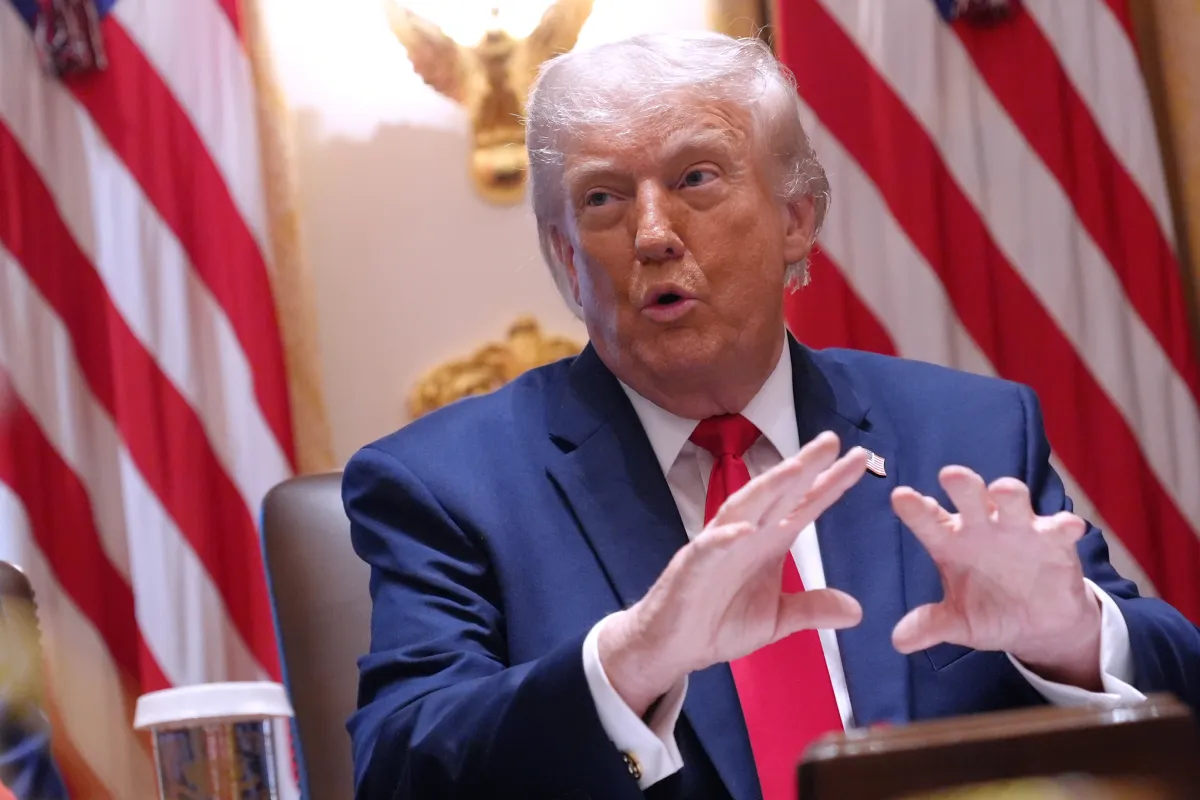
This national conflict reached a dramatic fever pitch over the weekend when the president launched a series of blistering, highly targeted social media attacks on two federal judges, beginning with U.S. District Judge Richard Leon. A veteran jurist appointed by President George V. Bush, Leon found himself squarely in the administration’s crosshairs after granting a preliminary injunction that halted the above-ground construction of a massive, 90,000-square-foot White House ballroom layout. The ambitious project, designed to replace the historic East Wing, includes a state-of-the-art, sophisticated “DronePort” which the president has championed as a vital modern defense asset designed to protect the capital of the United States from advanced aerial threats long into the future. Trump spared no words on his Truth Social platform, warning that Judge Leon would be held personally and historically responsible for any potential “Death and Destruction” that might befall the country due to security vulnerabilities left unaddressed by this legal block, accusing him of playing dangerous games with national security. The president painted the lawsuit—which was brought by a dedicated coalition of preservationists led by the National Trust for Historic Preservation and a local co-plaintiff—as a trivial, highly obstructive effort initiated by a “serial plaintiff” whose primary concern was that the brand-new, desperately needed security infrastructure would disrupt her leisurely afternoon walks. This sharp personalization of the legal dispute highlights a fundamental clash of worldviews: the administration views the lawsuit as an intolerable luxury that compromises secret service operations in an increasingly hostile world, while preservationists view the wholesale destruction of the historic East Wing without explicit congressional permission as an irreversible, unconstitutional strike against American heritage and historic preservation standards. The legal filings reveal a bitter dispute over whether a private citizen’s scenic walks can legally check the defense capabilities of a nuclear superpower.
Behind the heated rhetoric lies a stark and highly disruptive physical reality on the White House grounds, where the partially demolished remains of the East Wing stand as a daily, visible monument to the unresolved legal deadlock. Although the U.S. Court of Appeals for the D.C. Circuit has granted a temporary administrative stay allowing underground security fortification, perimeter reinforcement, and bunker excavation to continue, the above-ground construction remains entirely frozen until a critical, formal appeal hearing takes place on June 5. This logistical limbo has severely strained the daily operations of White House staffers, Secret Service agents, and administration officials, who must continuously scramble to coordinate highly sensitive executive events, presidential addresses, and diplomatic receptions in cramped, temporary pavilions and alternative physical spaces. The Department of Justice has desperately sought to dissolve the court’s injunction, filing urgent motions that cite a recent, highly publicized shooting outside the White House Correspondents’ Dinner as direct evidence that secure, reinforced, and modern executive spaces are an immediate operational necessity rather than an aesthetic luxury. National security experts highlight that the physical vulnerability of the president is not a hypothetical concern, and every single day of delay represents a window of risk. Yet, critics and legal experts counter that the massive scale of the proposed ballroom requires unprecedented environmental, historic, and regulatory oversight, arguing that the administration cannot bypass statutory congressional approval and local zoning consults simply by invoking national security concerns. As the June court date rapidly approaches, the physical landscape of the executive mansion remains a divided battlefield, capturing the anxieties of a security apparatus desperate for protective modernization and a legal system determined to ensure that not even the President can reshape the nation’s core monuments without legislative consent.
Simultaneously, a parallel battle has erupted over the cultural crown jewel of the nation’s capital, the John F. Kennedy Center for the Performing Arts, transforming a dispute over corporate naming rights and structural management into a full-blown constitutional standoff. In December 2025, a Trump-appointed board of directors sought to signal a bold, modern era for the financially struggling venue by voting unanimously to change its historic title to the “Trump-Kennedy Center,” a move that was quickly followed by the installation of prominent, gleaming signage reading “The Donald J. Trump and The John F. Kennedy Memorial Center for the Performing Arts.” However, this dramatic branding exercise was met with swift, fierce resistance from preservation groups and Democratic lawmakers, led by Representative Joyce Beatty, a former member of the center’s board, who argued that because the center was created by an act of Congress as a living memorial to the assassinated president, its name could not be altered without explicit legislative action. U.S. District Judge Christopher Cooper, an Obama appointee, soundly agreed with the plaintiffs, issuing a sweeping injunction that struck down the name change and ordered the administration to completely strip Trump’s name from the physical facade, official website, and any internal documentation within 14 days. The sudden ordered removal of the prominent branding signage has created a public spectacle, as work crews coordinate the removal of heavy metal lettering under the watchful eyes of reporters and passersby. Furthermore, Judge Cooper halted a scheduled two-year, total shutdown of the facility set to begin in July, delivering a blistering critique of the board for “rubber-stamping” an ill-conceived, highly disruptive closure without conducting a thorough analysis of its devastating economic impact on performing artists, local businesses, and regional cultural sponsorships that keep the facility afloat.
This direct judicial rebuke provoked an immediate and explosive reaction from President Trump, who took to social media to excoriate Judge Cooper as a politically motivated partisan hater out of touch with the logistical realities of high-end real estate, venue management, and the demands of modern performance spaces. In a series of passionate posts, Trump painted a grim, visceral portrait of the Kennedy Center’s current state, describing it as a “rusted, rotted, and rat and bug infested” facility that was on the verge of potential structural collapse. He lamented that the judge’s sudden intervention had completely derailed a magnificent, multi-million-dollar aesthetic and structural overhaul where massive orders of fine marble, structural steel, advanced climate control systems, and luxury furniture were already in motion to rescue a dying institution from financial obscurity. The president defended the contentious name change as a generous, practical gesture by a distinguished board of directors aimed at breathing new life, prestige, and capital into a venue that had suffered catastrophic losses during and after the COVID-19 pandemic and was experiencing record-low attendance. Trump’s supporters argue that his singular dedication to physical grandeur is exactly what the aging landmark required, while his detractors celebrate the court’s ruling as a victory for historical integrity. By framing the conflict as a rescue mission thwarted by bureaucratic red tape and judicial overreach, Trump sought to highlight the human and economic cost of the court’s intervention, warning that the cancellation of the project would leave the storied institution trapped in a state of terminal decline. This sharp critique exposes the deep philosophical difference between a developer-turned-politician who views grand structural overhauls as the ultimate cure for institutional decay, and a legal community that prioritizes statutory compliance, institutional heritage, and procedural transparency over rapid, unauthorized aesthetic transformations.
Confronted by these mounting judicial roadblocks, the administration has signaled a dramatic willingness to walk away from the historic cultural venue altogether, introducing an ultimatum that could fundamentally alter the relationship between the federal government and the arts. Trump announced over the weekend that he has instructed the Department of Commerce to coordinate with Capitol Hill lawmakers to facilitate a complete and total transfer of the Kennedy Center back to the sole custody and control of Congress. Expressing his deep frustration with the legal constraints placed on his executive vision, the president declared that unless he is granted complete and uninhibited freedom to utilize his trademark business and architectural acumen to rebuild the institution physically, artistically, and financially, he has absolutely no interest in pursuing what he described as a hopeless, bureaucratic journey into “NEVER NEVER LAND.” This dramatic threat to relinquish federal oversight and management of the nation’s premier performing arts center marks a significant escalation in the ongoing struggle over public spaces, demonstrating the profound real-world consequences when political ambition, national security initiatives, and judicial boundaries collide. Whether Congress will accept this sudden structural and financial burden remains to be seen, but the gesture signals a dramatic realignment of federal priorities and highlights the personal stakes involved in administrative legacy building. Ultimately, the twin standoffs over the White House ballroom and the Kennedy Center serve as a powerful testament to the enduring complexity of the American system of checks and balances, where even the grandest architectural visions of the executive branch must ultimately bow to the sober, unyielding dictates of the law, reminding us that the preservation of governance is as vital as the preservation of stone.