





The memory of June 24, 2021, remains an open wound for Floridians, forever marked by the horrific midnight collapse of the Champlain Towers South condominium in Surfside. That tragedy, which claimed 98 lives in a matter of seconds, stripped away the illusion of safety for hundreds of thousands of people living in coastal high-rises. In the years since, the state has undergone a painful, necessary reckoning, transitioning from a culture of complacency to one of rigorous, legally mandated vigilance. A sobering new report by the Florida Legislature’s Office of Program Policy Analysis and Government Accountability (OPPAGA) reveals the true, staggering scale of this structural crisis. More than 2,500 condominium and cooperative buildings across the state have been flagged for intensive, high-level Phase Two structural inspections after showing initial signs of serious deterioration. For the residents who call these buildings home, these statistics are not mere data points on a legislative spreadsheet; they represent a haunting daily reality and the terrifying realization that the very walls built to protect them may be quietly failing from the inside out.
To understand the scope of the anxiety gripping Florida’s communities, one must look at the rigorous multi-step inspection framework the state implemented in the wake of the Surfside disaster. Under current state law, aging condominium and cooperative buildings rising three stories or taller are subjected to a mandatory two-phase evaluation process. A Phase One inspection is a visual assessment to check for obvious distress, but if an engineer detects substantial structural damage, the building is pushed into a Phase Two inspection. This secondary phase is a deep, intrusive medical checkup for concrete, utilizing advanced engineering techniques to inspect internal steel rebar, test concrete density, and outline mandatory, lifesaving repairs. According to the OPPAGA report, local building officials identified 8,777 buildings requiring Phase One inspections in 2024, with 6,952 completed, and another 2,880 slated for 2025, with 1,784 finished. From those initial sweeps, 2,535 buildings across both years were deemed compromised enough to require the more invasive Phase Two evaluations. Alarmingly, these numbers do not even present the full statewide picture, as only 71 percent of local jurisdictions provided data for 2024, and a mere 64 percent did so for 2025, leaving a gaping silence where even more compromised buildings likely stand.
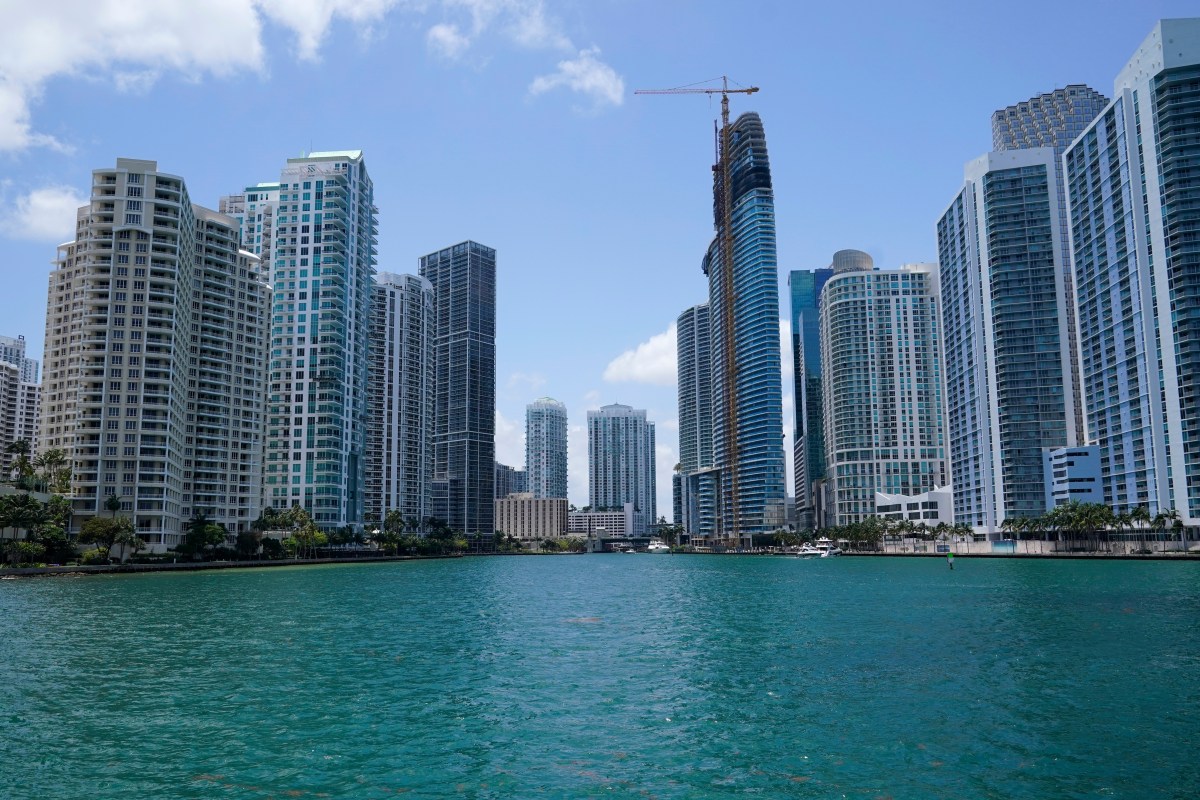
The epicenter of this structural emergency is concentrated in the sun-drenched, densely populated coastal corridors of South Florida—specifically Miami-Dade, Broward, and Palm Beach counties. This region presents a stark, almost tragic paradox: it is currently experiencing a historic economic boom, attracting major corporate relocations, billionaires, and high-profile political figures, yet it is simultaneously hollowed out by a severe housing affordability crisis, marked by a shortage of at least 90,000 affordable units. Beneath the glittering skyline of luxury penthouses lies an aging inventory of mid-century coastal towers built decades before modern, post-Surfside building codes were ever conceived. In 2024 alone, these three counties reported the state’s highest concentration of deteriorating buildings, with anywhere from 218 to 543 structures per county forced into Phase Two inspections. The relentless combination of salty sea air, high humidity, and rising sea levels has spent decades silently eating away at these coastal sanctuaries, leaving local officials to grapple with a backlog of vulnerable properties that house working-class families, retirees, and long-term residents who are increasingly priced out of their own neighborhoods.
The physical reality of this deterioration is a slow-motion disaster driven by chemistry and time. In the federal investigation into the Champlain Towers South collapse, the National Institute of Standards and Technology (NIST) pointed to a catastrophic failure that likely began weeks before the actual collapse, starting at critical column-to-slab connections beneath the pool deck where concrete had deformed, fractured, and deteriorated. This process, often referred to as “concrete cancer,” occurs when saltwater penetrates porous concrete and rusts the internal steel reinforcement bars. As the steel rusts, it expands, cracking the surrounding concrete and progressively robbing the structure of its ability to hold its own weight. The OPPAGA report highlights the terrifying progression of this decay, revealing that inspections across 2024 and 2025 rendered 54 buildings across the state entirely “unsafe or uninhabitable.” In 2024, five of these buildings had to be urgently evacuated, uprooting families overnight and forcing them to scramble for shelter, while 23 of the unsafe structures identified for 2025 are located in Miami-Dade County alone, hanging like a shadow over the local community.
While ensuring physical safety is an absolute, non-negotiable priority, the financial fallout of these mandates has triggered a secondary crisis for Florida’s condo owners. Under the state’s sweeping post-Surfside reforms, condominium associations are no longer allowed to waive or underfund their financial reserves for critical structural repairs. Historically, many associations kept monthly fees artificially low by deferring maintenance, a practice that is now illegal. Today, everyday homeowners are being hit with astronomical “special assessments” and soaring monthly HOA fees to pay for the millions of dollars in concrete restoration, waterproofing, and structural retrofitting required to pass inspections. For retirees living on fixed incomes, working-class families, and middle-income workers, these sudden six-figure bills are a financial death sentence, forcing many to sell their beloved homes at a loss or face foreclosure, transforming a vital effort to save lives into an economic displacement crisis.
In response to this mounting human and financial toll, a glimmer of hope has emerged in the form of bipartisan legislative action at the federal level. Recognizing that safety should not come at the cost of homelessness, Florida Representatives Debbie Wasserman Schultz, a Democrat, and María Elvira Salazar, a Republican, recently reintroduced the “Making Condos Safer and Affordable Act.” This critical piece of legislation aims to ease the crushing financial burden on homeowners by expanding access to Department of Housing and Urban Development (HUD) and Federal Housing Administration (FHA) loan programs. By modifying the FHA’s 203(k) loan program, individual condo owners would finally be allowed to use federally backed loans to pay off their association’s heavy special assessments for structural repairs. Furthermore, the bill would authorize the FHA to insure rehabilitation loans directly to condominium associations under Section 234 of the National Housing Act, making it significantly easier for communities to secure low-interest private financing for shared infrastructure, common areas, and structural retrofitting. Five years after the dust settled over the ruins of Surfside, the OPPAGA report makes it clear that Florida’s journey toward structural integrity is far from over, but through a combination of relentless inspections, engineering expertise, and compassionate financial relief, the state has a fighting chance to rebuild both its physical foundations and the peace of mind of its residents.