




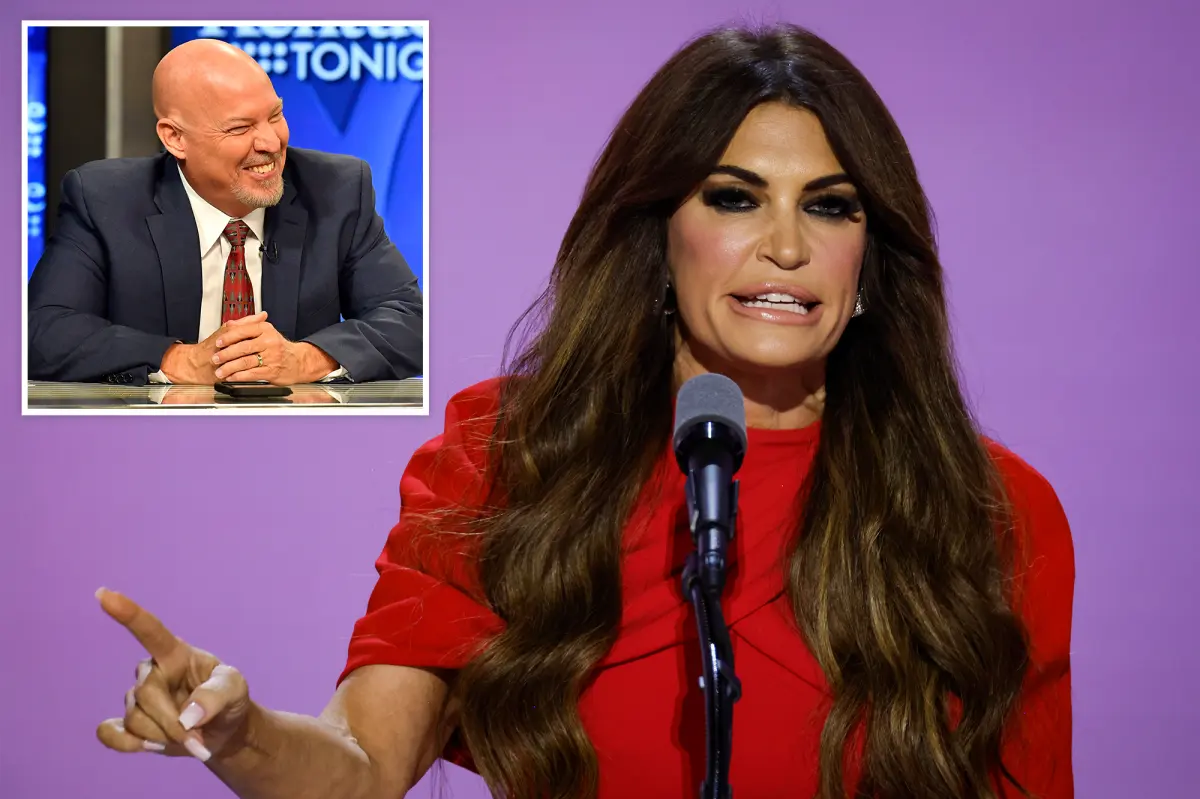
In the summer of 2025, Kimberly Guilfoyle stood on the cusp of a diplomatic career, poised to trade the glitz of cable news and Trump-world celebrity for the grandeur of the American Embassy in Athens. But behind the polished image of a woman about to become ambassador to Greece lay a far messier reality, one captured in frantic private messages that would eventually surface in the pages of The Wall Street Journal. Days before her Senate confirmation hearing, the 57-year-old former Fox News host, ex-wife of California Governor Gavin Newsom, and former fiancée of Donald Trump Jr., sent an almost painfully human plea to a man she had come to rely on for money and favors. “Honey please I need you to get this done for me today,” she texted Eric Deters, a 63-year-old Kentucky attorney and former congressional candidate, via the encrypted Signal app. The request was not for legal advice or political strategy. It was for help paying her American Express bill—a six-figure credit card debt that had apparently become so urgent that she attached a PDF with payment instructions and begged him to wire the money directly to the credit card company. “You could just send it here,” she wrote. “It won’t show up anywhere if you wire money to American Express that’s all that will show. Please.” A praying hands emoji followed, as if the transaction itself required a blessing. It was a moment of startling intimacy and desperation, the kind of behind-the-scenes panic that rarely sees the light of day, and it hinted at a relationship built on money, access, and mutual need—one that would soon unravel in public.
Eric Deters was not a random donor. He was a MAGA loyalist, a fierce Trump supporter, and a man with his own legal and financial troubles. For months, he and Guilfoyle had been circling each other in the strange ecosystem of Republican politics, where loyalty is often measured in cash and access is the ultimate currency. According to the Journal’s report, Deters had promised Guilfoyle up to one million dollars if she could help him get his legal and tax issues in front of top officials in the Trump administration. It was a staggering amount, even in a political world where wealthy donors routinely open their checkbooks for influence. But when Guilfoyle came calling with her urgent $100,000 credit card bill, Deters balked. The money he had pledged was apparently not meant for personal expenses, and his response had a distinctly human edge of frustration and marital reality. “Your needing $100,000 urgent [sic] unfortunately is not going to work,” he reportedly replied. “I can’t do this without getting a divorce.” The answer must have stung Guilfoyle, who was used to wielding charm and celebrity as keys to unlock almost any door. She pushed back, reminding him of the access she could offer, trying to make the transaction feel like an investment rather than an indulgence. “I’ve been calling you for over a week straight,” she wrote. “You could be here meeting with [then-IRS Commissioner] Billy Long.” But Deters did not budge. He later told the Journal with the weariness of a man who felt used, “She never came through on anything.” In that one sentence, the entire glittering promise of Trump-world influence seemed to collapse into a bitter, ordinary grievance.
The story of Guilfoyle and Deters did not begin at that moment, of course. It stretched back to 2020, when Deters founded Freedom Fest, an anti-COVID mandate event that attracted a mix of pandemic skeptics, conservative activists, and Trump family figures. Guilfoyle was paid $300,000 to speak at subsequent editions of the festival, appearing alongside other members of the Trump family. It was a comfortable arrangement: she brought star power and a famous name; he brought money and a stage. Deters, a former morning radio DJ in Ohio, also donated $125,000 to a pro-Trump political action committee in 2022, according to Federal Election Commission records. Such donations are common in political circles, but the relationship between Deters and Guilfoyle deepened after the 2024 election. Deters had real problems he wanted solved. He was dealing with an IRS investigation into a deduction he had claimed in 2020 from the sale of a stake in his family business. He also wanted help securing the extradition of an Ohio doctor who had fled to Pakistan after being charged with defrauding insurers by performing unnecessary surgeries on children. For Deters, Guilfoyle was not just a charismatic television personality; she was a conduit to power, someone who could pick up the phone and reach people like Billy Long or other officials in the Trump administration. For Guilfoyle, Deters was a reliable source of financial support, a man with deep pockets and a desperate need for the kind of access she could provide. It was a classic political transaction, doomed by the fact that one side thought the money was for favors and the other thought the favors were for money.
What makes the text messages so striking is not just the money, but the fear and anxiety lurking beneath the surface. Guilfoyle seemed acutely aware that her position was fragile, and she repeatedly urged Deters to be careful. In one message, she wrote, “Eric, I really wish you would stop papering all these things. It’s really dangerous and not helpful to you or me while you could simply just call me on Signal.” She was terrified that the details of their arrangement would leak, that a single careless message could destroy her nomination and expose the transactional nature of her rise. In another blast, sent in January 2025, weeks after President Trump nominated her, she was even more direct: “What a nightmare, you’ll literally cost me my ambassadorship stop writing.” It is hard not to feel a shred of sympathy for her in those moments—the panic of a person who has climbed very high and suddenly realizes how far she could fall. She was not just asking Deters for money; she was begging him to protect her from the consequences of her own choices. But the messages also reveal a striking lack of judgment, a willingness to blur ethical lines that would make most political appointees cringe. If she was worried about the appearance of impropriety, she nonetheless continued to engage in the very behavior she knew could sink her. Guilfoyle’s attorney, Jesse Binnall, told the Journal that she disputed the authenticity of the messages, but offered no specifics. That denial felt less like a clear rebuttal and more like a quiet hope that the story would fade.
It did not fade quickly. Guilfoyle appeared before the Senate Foreign Relations Committee on July 9, 2025, just six days after the desperate text message. The hearings were contentious, but in the end, she was confirmed by the full Senate on September 18, by a vote of 51 to 47—almost entirely along party lines. The narrow margin reflected the controversy that surrounded her nomination, but it was enough. She got the job. The American Embassy in Athens did not immediately respond to requests for comment, but an official eventually defended her, telling the Journal, “Guilfoyle’s career in and out of public service is guided by deep and abiding values. She was fully vetted by the bipartisan Senate Foreign Relations Committee and confirmed by the U.S. Senate. The ambassador remains committed to representing the American people with dedication and integrity.” Those are the polished words of institutional defense, the kind of statement that is written to sound unassailable. But the story refused to stay in the rearview mirror. When Secretary of State Marco Rubio arrived in Greece on an official visit, reporters asked him about the text messages. Rubio, visibly irritated, waved off the question with a scolding tone. “You guys walk around thinking that because some source told you something and you reported it, it’s the gospel,” he said, as Guilfoyle looked on. “It’s not the gospel. It’s not the gospel for me. That’s not the way we do things.” The remark was a masterclass in political deflection, but it could not erase the image of Guilfoyle pleading with a donor to pay her credit card bill while simultaneously trying to become a diplomat.
In the end, the story of Kimberly Guilfoyle and Eric Deters is a story about the strange, often unseemly intersection of money, politics, and personal desperation. It is easy to read the text messages and see only hypocrisy: a woman about to represent the United States abroad, privately begging for a six-figure payout to cover her personal debts. But it is also possible to see something more human in it—a woman who had spent years navigating a world where relationships are transactional, where loyalty is bought and sold, and where access to power is the most valuable commodity of all. Guilfoyle knew how to play that game. She had been doing it for decades, first in California politics, then at Fox News, and finally at the highest levels of Trump-world. She understood that people like Deters gave money not out of charity, but because they wanted something in return, and she was willing to make promises she could not keep to get what she needed in the moment. Deters, for his part, was not an innocent victim. He wanted favors, meetings, and influence, and he was willing to dangle the promise of a million dollars to get them. When the transaction fell apart, each side blamed the other, and the result was a mess of bitter accusations and embarrassing headlines. Guilfoyle remains ambassador to Greece, armed with the official support of her government and the quiet hope that the news cycle will move on. But the text messages have a way of lingering, a reminder that behind every diplomatic smile and every ceremonial handshake, there is often a story that is far less elegant—one filled with credit card bills, frantic calls, and the desperate hope that no one will ever find out. Whether or not the messages are authentic, as her lawyer suggested, they have already achieved a kind of truth in the public imagination, because they capture something essential about the way power works. It is not always exercised in grand speeches or historic negotiations. Sometimes it is exercised in a small, encrypted message sent late at night, begging a friend, a donor, a handshake away from the levers of government, to please, please, just take care of this one thing, so the rest of the world never has to know.