





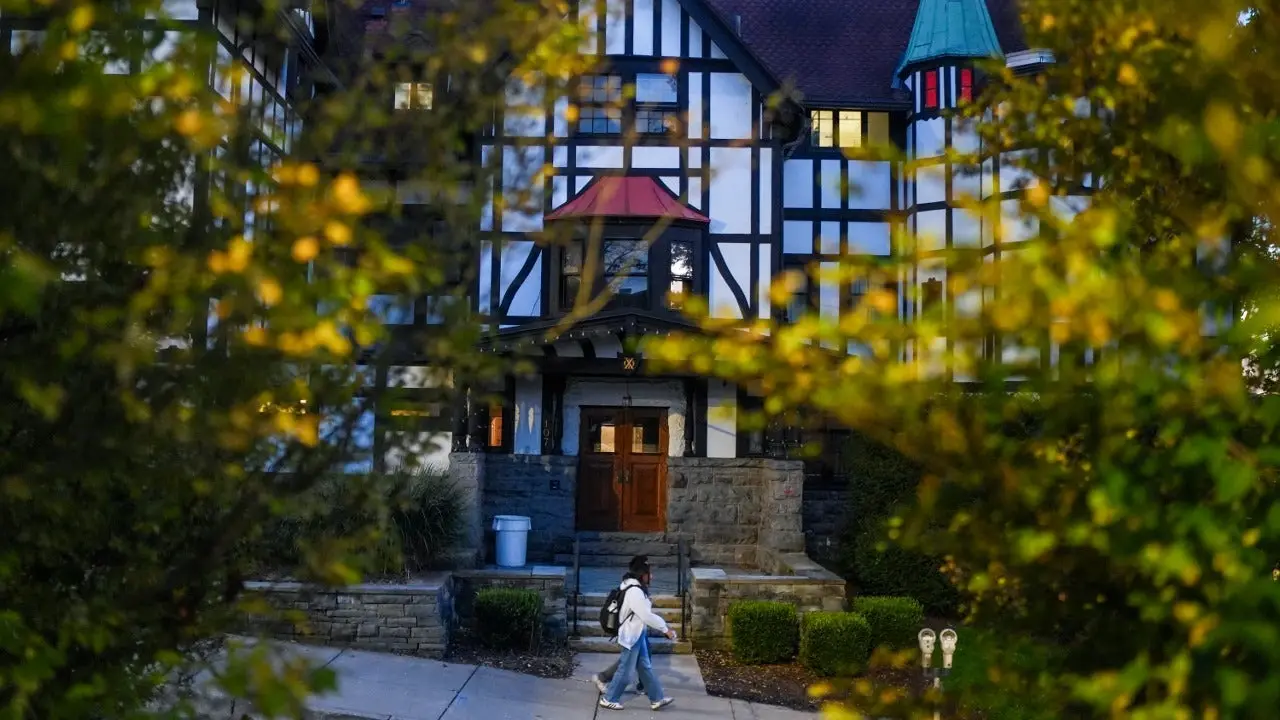
Late Wednesday night, after hours of impassioned debate that filled the Ithaca Common Council chamber, the city made a decision that no one could have predicted just a few months ago. In a 9–1 vote, the council approved a temporary moratorium on issuing city permits to Cornell University and its affiliated student groups—including fraternities and sororities—freezing the university’s ability to hold assemblies, parades, special events at the Ithaca Commons, and any other activity that requires a noise permit. The vote was framed as a matter of public safety, but it was inseparable from the public anger that has been building since Jane Doe, a former Cornell student, filed a lawsuit accusing seven former members of the Chi Phi fraternity of drugging and raping her in October 2024. To the students and residents who packed the room, the moratorium was an act of accountability: a way to force Cornell to confront its handling of the allegations rather than letting an Ivy League institution protect its reputation at the expense of a survivor. But the debate was not one-sided. Several graduate students rose to oppose the measure, warning that it was too broad and would disrupt activities that had nothing to do with Greek life. One graduate student cautioned that the moratorium could result in canceled or delayed events, lost deposits, reduced access to venues, and even disruptions to conferences. The council listened, but the scale of public outrage pushed the measure through. The moratorium will remain in place until November 5, unless the council votes to extend it later. The resolution also includes an amendment that requires Cornell to refer investigations involving sexual and violent crimes to the Ithaca Police Department, although exactly how that requirement will be enforced is still unclear. For now, the vote stands as a powerful symbol: a city telling one of the most powerful universities in the world that it must do better.
The story behind that vote begins more than a year ago, on a night that Jane Doe says has haunted her ever since. In her civil lawsuit, filed in September, she alleges that she attended a party at the Chi Phi fraternity house on the night of October 19, 2024, and into the following morning. She arrived already intoxicated, she says, and was pressured by seven men into taking ketamine and other substances. What followed, she says, was assault. The seven men named in the lawsuit have denied wrongdoing; some say the sexual activity was consensual, while others say they did not participate at all. The fraternity was suspended by Cornell on November 8, 2024—the same day Doe reported the assault to campus police, according to her civil complaint. For many survivors, reporting an assault is an act of extraordinary courage. But what followed became a nightmare of a different kind. Tompkins County District Attorney Matthew Van Houten initially declined to press charges, explaining that Doe’s sworn statement from November 2024 did not allege that she had been drugged against her will or gang-raped. Instead, he said, her statement described her participation in drug use and sexual conduct as “voluntary, conscious, and consensual.” Those words stung survivors and their advocates. They seemed to dismiss the possibility that coercion and trauma don’t always look the way prosecutors expect. And they stood in sharp contrast to what Doe told Cornell police in interviews recorded on November 14 and 15, 2024, transcripts of which were later obtained by CBS New York. In those interviews, she stated: “I can say with 100% confidence I was raped.” How could a prosecutor read such a clear assertion and still walk away? That question would become the center of a widening scandal.
For nearly two years, Van Houten’s initial refusal to prosecute stood as the official verdict. Then the public got a glimpse of evidence that seemed to tell a very different story. CBS New York obtained transcripts of the interviews Cornell police conducted with Jane Doe on November 14 and 15, 2024. In those interviews, she did not hedge or hesitate. “I can say with 100% confidence I was raped,” she told investigators. The revelation did not immediately change the legal landscape, but it changed the conversation. Van Houten later admitted that he had never been provided the full transcript of those interviews—an admission that raised uncomfortable questions about how thoroughly his office had reviewed the case before deciding not to prosecute. Late last month, he reversed course and announced that his office was reopening the investigation, explaining that the allegations contained in Jane Doe’s lawsuit differed from her sworn statement nearly two years earlier. But for Doe and her attorney, the reversal came far too late and after far too much damage. In an interview with the Associated Press on Wednesday, her lawyer, Thomas Giuffra, said Cornell police had led her to believe that her criminal case was still active, even though Van Houten had made the decision against charging just days after she first spoke with investigators. Van Houten, for his part, said he had instructed Cornell police to inform Doe that charges would not be pursued. But he acknowledged that he never spoke directly with her or with her attorney. The breakdown in communication—or, as some suspect, a deliberate effort to deny a survivor the truth—is exactly the kind of institutional failure that drove the Ithaca Common Council to act. A permit moratorium may not fix a broken investigation, but it forces the people in power to face the public’s fury.
The permit moratorium is a blunt instrument, and the council knew it. It is not a criminal sanction, nor does it overturn any university decision. What it does is simple and symbolic: Cornell and its affiliated student organizations cannot get new permits for events in the city’s public spaces, including the bustling Ithaca Commons, and they cannot obtain noise permits for concerts, rallies, or other gatherings. In a town where the university is so deeply intertwined with the community, the practical effects are real. The measure drew enthusiastic support from numerous Cornell students and long-time Ithaca residents who argued that Cornell’s response to Jane Doe’s assault allegations amounted to a public safety failure. They wanted the university to feel pressure so significant that it could not be ignored. But the council also heard from graduate students who were uneasy with the broad sweep of the moratorium. They worried that the restrictions would sweep up student organizations with no connection to the fraternity system, punishing people who had nothing to do with the alleged assault. One graduate student warned specifically that the moratorium could lead to canceled or delayed events, force organizations to forfeit deposits, shrink access to venues, and create chaos for academic conferences. That warning reflected a deeper tension: how do you hold an institution accountable without harming innocent members of the same community? The council tried to balance those concerns by including an amendment that requires Cornell to refer future investigations involving sexual and violent crimes to the Ithaca Police Department. But the amendment left unclear how the city would enforce that requirement or what would happen if Cornell refused. The moratorium itself is temporary, with an expiration date of November 5, unless the council votes to extend it. For supporters, that deadline is part of the strategy: keep the pressure on, force the conversations, and don’t let the university simply wait out the storm.
By the time the council voted, the case had already exploded beyond Ithaca’s borders. Governor Kathy Hochul had stepped in on October 1 and appointed New York Attorney General Letitia James as a special prosecutor, effectively taking the investigation out of Van Houten’s hands. In a statement, Hochul said that newly released information continued to raise serious questions about the Cornell Police Department’s investigation and about why the Tompkins County District Attorney had declined to prosecute an alleged sexual assault on campus. She said the situation had “undercut my faith, and the public’s faith, in the District Attorney’s ability to effectively investigate and prosecute the case at this time.” It was an extraordinary move—a state leader openly expressing distrust in a local prosecutor and assigning a special prosecutor to ensure that justice would be served. But the legal battle did not end there. On Wednesday, the same day the common council approved the moratorium, one of the seven men named in Jane Doe’s lawsuit petitioned a court to remove James from the case. His lawyers argued that James had demonstrated bias because, days before her appointment, she had posted on social media describing what Doe allegedly endured as “horrific and unacceptable.” To the accused man’s legal team, that language was proof that James had already formed an opinion. To Doe’s supporters, it was simply an expression of basic human empathy—not a legal conclusion. The petition underscored how polarizing the case has become, with every action by public officials scrutinized from both sides. It also highlighted a painful truth: in cases like this, there are no easy answers, only layers of trauma, suspicion, and legal maneuvering. And as the courts sort out the special prosecutor’s role, Jane Doe and the men she accuses remain trapped in a process that seems to move at the speed of politics rather than the speed of justice.
At its core, the Ithaca Common Council’s vote was not really about parade permits or noise levels. It was about trust—and the fact that trust has collapsed. A young woman said with absolute certainty that she was raped. She reported it to campus police. She participated in interviews that should have given prosecutors everything they needed to at least take a serious look. Yet, for months, she was left in the dark, and a district attorney decided not to prosecute based on a reading that stripped her account of its meaning. Whether those failures were the result of negligence, institutional pride, or something more deliberate, the effect has been identical: a community that no longer believes the system will work for survivors. The moratorium is a temporary measure, but it is built on a permanent question: What does accountability actually look like? It is not just a criminal case, though criminal charges matter. It is not just a lawsuit, though the civil claims give the public a window into what allegedly happened. Accountability means making sure survivors are told the truth at every step. It means giving them transcripts, explanations, and a voice. It means not allowing a university or a district attorney to quietly decide that a person’s trauma is not worth pursuing. The city council’s vote tells Cornell that it must do more than disagree with the moratorium. It must prove, through action, that it takes sexual violence seriously. The governor’s appointment of a special prosecutor tells the district attorney’s office that public confidence is not a luxury; it is essential. And the ongoing court fight over recusal tells everyone watching that this story is far from finished. For Jane Doe, the legal road ahead remains uncertain. But the 9–1 vote in Ithaca has already accomplished something that countless statements and press releases could not: it has made it impossible for the powerful to pretend that nothing is wrong. That, perhaps, is the first step toward justice.