





There is something uniquely magical about the collective experience of sitting in a darkened theater, surrounded by generations of families, and watching a childhood icon leap across the cosmos. For decades, the beloved Italian plumber was confined to the pixelated screens of our living rooms, but the arrival of “The Super Mario Galaxy Movie” has proved that his cinematic footprint is as massive as his gaming legacy. Released on April 1, 2026, this visually stunning, gravity-defying outer space adventure has officially shattered expectations by becoming the first film of the year to cross the coveted $1 billion mark globally. Reaching this monumental milestone in its tenth weekend of release, the film—a collaborative masterpiece from Illumination, Nintendo, and Universal—has captured $1,000,028,930 at the worldwide box office. This achievement is not merely a testament to the power of a brand, but a celebration of nostalgic storytelling that bridges the generational divide. For the millions of parents who grew up holding blocky controller pads and the children who now play on modern consoles, the movie represents a shared universe of joy, wonder, and technicolor escapism that came at a time when the world deeply yearned for lighthearted entertainment.
To truly appreciate the dizzying heights to which Mario and Luigi have soared, one must look at the highly competitive landscape of the 2026 theatrical market. This year has been an absolute gold rush for cinema, characterized by a diverse array of storytelling that has drawn audiences back to theaters in droves, yet “The Super Mario Galaxy Movie” remains the undisputed king of the hill by a margin of over $100 million. Trailing behind it in the global rankings is the deeply moving, highly anticipated Michael Jackson biopic, “Michael,” which has secured a massive $888,066,424, followed by the critically acclaimed, brainy science-fiction survival epic “Project Hail Mary” with a stellar $679,728,026. The rest of the year’s top ten is a fascinating reflection of contemporary tastes, featuring fashion-world nostalgia in “The Devil Wears Prada 2” ($663,570,934) and high-octane blockbusters like “Pegasus 3” ($656,459,523). Pixar’s whimsical “Hoppers” captured the hearts of families to the tune of $372,010,783, while Disney’s galaxy far, far away found steady ground with “Star Wars: The Mandalorian and Grogu” bringing in $293,622,349. Rounding out this competitive elite are the moody, romantic adaptation of “Wuthering Heights” ($241,601,072), the psychological thriller “Obsession” ($224,795,930), and the visually arresting international crossover “Blades of the Guardians” at $215,363,913. Amidst these heavy hitters, Mario’s bright, celestial journey stands as a vibrant beacon of pure, unadulterated fun that captivated everyone from casual viewers to die-hard gamers.
This latest achievement cements the franchise’s standing in a broader historical contest, marking “The Super Mario Galaxy Movie” as the second-highest-grossing film based on a video game in cinematic history, both on the domestic front and across the international stage. The only film that stands ahead of it is its own predecessor, the historic 2023 release of “The Super Mario Bros. Movie.” It is hard to forget the seismic impact of that original film, which brought in an astronomical $1.3 billion globally, shattering the long-standing “curse” of video game adaptations and proving to Hollywood that gaming intellectual property, when treated with respect and creative fidelity, could rival any traditional comic book franchise. By building upon the lush, orchestral foundations and emotional heart established in the first film, “Galaxy” didn’t just resting on its laurels; it expanded the universe, literally and figuratively, taking audiences from the cozy, familiar piping of the Mushroom Kingdom and launching them into the vast, glittering celestial plains of space. In doing so, it proved that the initial run was no mere fluke, but rather the dawn of a dominant cinematic empire that has permanently reshaped how studios view game-to-film adaptations.
The combined force of these two cinematic entries has catapulted the “Super Mario” theatrical brand into the pantheon of the most lucrative entertainment franchises in history. Together, they have amassed an incredible $2.30 billion, which has allowed them to claim the ninth spot among the highest-grossing animated franchises of all time. What makes this feat truly astonishing is the sheer speed of their ascent; while traditional franchises have spent decades and numerous installments building up their box office totals, Mario and his friends managed to outpace DreamWorks’ beloved, seven-film “Madagascar” series—which pulled in $2.26 billion over its lifetime—in just two spectacular outings. Looking at the historic hierarchy of animation, Mario is now rubbing shoulders with historic giants: the unstoppable “Despicable Me” franchise reigns supreme with a colossal $5.64 billion across six films, followed by the folklore satire of “Shrek” at $3.98 billion, the emotional brilliance of Pixar’s “Toy Story” with $3.28 billion across five films, and the prehistoric adventures of “Ice Age” at $3.22 billion. The upper tier also boasts of modern wonders like “Zootopia” ($2.89 billion across two films), the cultural phenomenon of “Frozen” ($2.73 billion across two films), the introspective triumph of “Inside Out” ($2.56 billion across two films), and the martial arts artistry of “Kung Fu Panda” ($2.37 billion across four films). For Illumination’s visionary CEO, Chris Meledandri, this success serves as a crowning crowning achievement, marking the third franchise under his belt (alongside Despicable Me and Minions) to grace this elite top-ten list since he founded the boundary-pushing animation studio back in 2007.
The triumph of this cosmic sequel is just one piece of a much larger, incredibly successful puzzle for Universal Pictures in 2026, a year that could go down as one of the studio’s most acclaimed and profitable eras. Universal is currently firing on all cylinders, orchestrating a diverse theatrical slate that perfectly balances crowd-pleasing animated spectacles with high-concept, director-driven dramas. Later this year, audiences will be treated to Steven Spielberg’s highly anticipated, mysterious science-fiction drama “Disclosure Day,” as well as Christopher Nolan’s epic adventure “The Odyssey,” a film which industry insiders and box office analysts are already tipping to comfortably break the $1 billion threshold. Furthermore, Universal is capitalizing on its fruitful relationship with Chris Meledandri and the creative minds at Illumination by gearing up for the July 1, 2026, release of “Minions & Monsters,” which is poised to dominate the summer family market. Given the profound synergy, immense goodwill, and astronomical profit margins generated by their partnership with Nintendo, it comes as no surprise to fans and financial investors alike that a third installment in the main “Super Mario” film series is already quietly being mapped out, rumored to make its grand theatrical landing sometime in 2028.
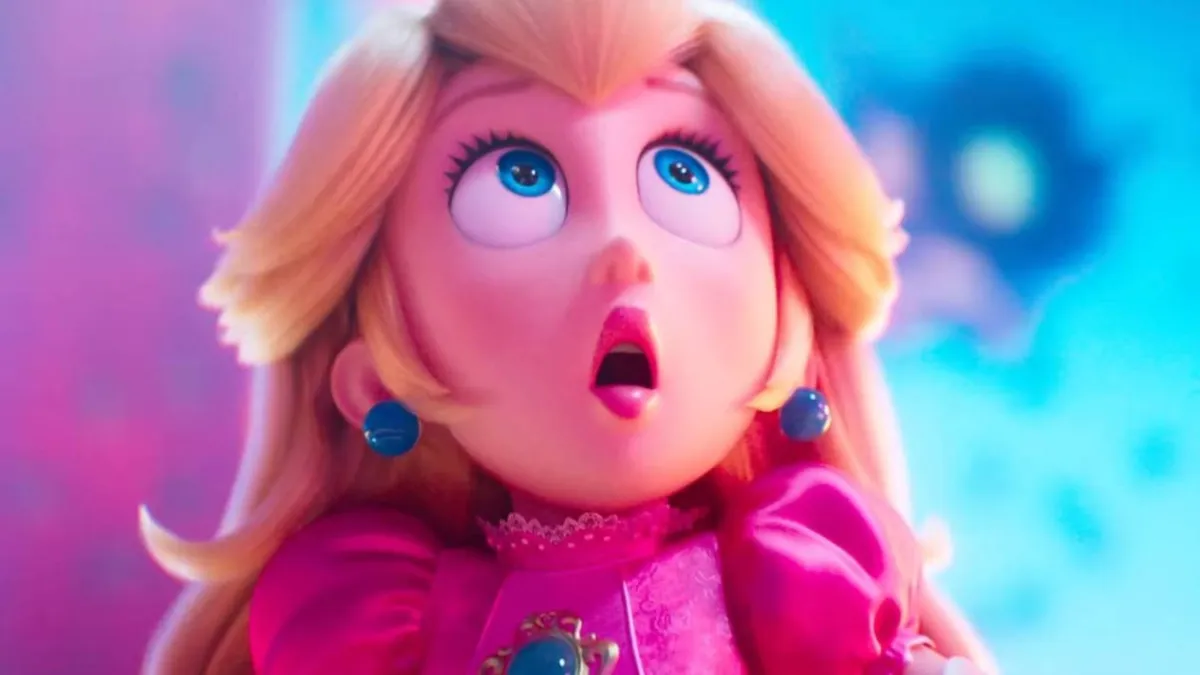
Yet, behind all the complex business metrics, merchandise sales, and eye-popping box office calculations, the true soul of “The Super Mario Galaxy Movie” lies in the human passion of the exceptional vocal cast who breathed life, humor, and heart into these iconic digital avatars. Chris Pratt returned with a grounded, warm, and highly endearing performance as the courageous Mario, while Charlie Day perfectly captured the frantic energy and loyal heart of his brother, Luigi. Anya Taylor-Joy once again transformed Princess Peach into a fierce, modern, and inspiring leader, and Jack Black stole the show with his wildly theatrical, delightfully bombastic, and oddly touching performance as the villainous Bowser, alongside Keegan-Michael Key as the endlessly energetic Toad. This star-studded ensemble was elevated further by brilliant new additions to the cast, including Brie Larson, who brought an ethereal, regal grace to the fan-favorite cosmic protector Rosalina, and Donald Glover, who voiced the beloved, playful sidekick Yoshi with a joyful charm. The film’s emotional depth and comedic timing were further bolstered by Benny Safdie’s mischievous turn as Bowser Jr., a hilarious and unexpected cameo from Glen Powell as the heroic space pup Fox McCloud, Issa Rae voicing the sweet Honey Queen, Luis Guzmán as the menacing Wart, and Kevin Michael Richardson returning as the loyal loyal wizard Kamek. It is this incredible blend of starry charisma, creative respect for the original gaming material, and world-class animation that transformed a simple game about jumping on turtles into a billion-dollar, heartfelt monument of modern cinematic history.