





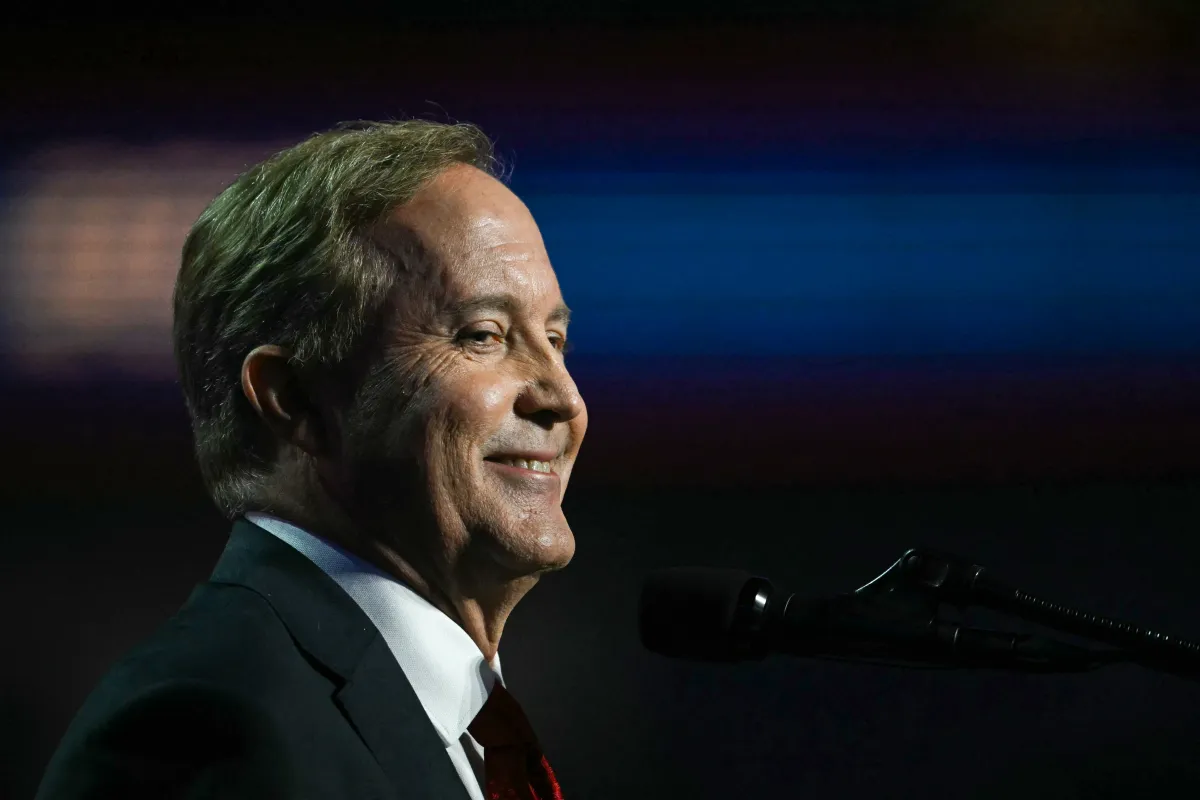
There’s a strange kind of political whiplash happening in Texas right now, and it’s centered on a single contradiction: Ken Paxton, the state’s Republican nominee for Senate, is deeply unpopular with voters, and yet he remains locked in a race that polls suggest is essentially tied. The oddness of that reality became the center of a media storm on Thursday when CNN’s Harry Enten looked at the numbers and declared that Paxton might be the least popular Texas Republican Senate nominee of the entire century. Enten pointed to polling showing Paxton with a net favorability rating of negative 16 points, which is a fancy way of saying far more people view him unfavorably than favorably. That kind of underwater standing, Enten argued, is almost unprecedented for a Republican Senate hopeful in Texas at this stage of a campaign. And yet, despite all of that baggage, Paxton isn’t slumping in the polls. Instead, he’s running neck-and-neck with Democrat James Talarico in a race that has attracted record-shattering spending and national attention. It’s the kind of paradox that makes political observers scratch their heads, but it’s also becoming strangely normal in modern American politics: voters might not like the candidate, but they may still vote for them if the alternative feels worse. The race has become a case study in how candidate favorability, party loyalty, and national political winds can collide in unexpected ways.
Not everyone, though, is on board with Enten’s framing. Mark P. Jones, a political scientist at Rice University and a fellow at the Baker Institute for Public Policy, told Newsweek that whether Paxton is truly the most unpopular Republican Senate nominee of the century depends entirely on how you measure popularity. Jones pointed out that John Cornyn, the state’s outgoing senior senator, also faced significant image problems with parts of the Republican base, so Paxton isn’t necessarily in completely uncharted territory from a statistical standpoint. But Jones was quick to add that there’s something different about Paxton’s situation, and it comes down to intensity. It’s not just that people dislike Paxton; it’s how much they dislike him, especially on the Democratic side. The intensity of that negative feeling, Jones suggested, is far stronger than anything Cornyn had to deal with in his last election. Even former President Donald Trump, who remains the most powerful force in Republican politics, seemed to acknowledge Paxton’s rough edges during an event in Texas, offering a backhanded compliment that quickly made headlines. “He can be a pain in the ass sometimes, I’ll be honest,” Trump said. That kind of public honesty from a political ally doesn’t necessarily sink a campaign, but it certainly doesn’t help polish a nominee’s image.
The political fallout from Paxton’s struggles is forcing Republicans to play defense in a state they’ve grown accustomed to dominating. Cal Jillson, a political science professor at Southern Methodist University, explained that Paxton’s weaknesses are costing the party dearly, forcing Texas and national donors to pour tens of millions of dollars into what should have been a relatively comfortable seat. In a normal year, Republicans might expect to cruise in a statewide Texas race, but Paxton is not a normal candidate. He carries legal baggage, a polarizing persona, and a history of intraparty drama that has made him a target for Democrats and a headache for GOP strategists. At the same time, Jillson cautioned against treating Paxton as some kind of aberration. Instead, he argued, Paxton is more like a reflection of the Texas Republican Party as it exists today—a party that has veered sharply to the populist right and increasingly rewards combativeness over collegiality. Paxton may be an unusually polarizing figure, but he’s not necessarily out of step with the political movement that produced him. That distinction matters, because it suggests the party’s problems aren’t just about one candidate but about the direction of the party itself.
Despite the gloomy numbers, Paxton is very much in the fight. Jones described the race as a coin-flip situation, with the outcome almost too close to call. A polling average compiled by PollsMax on Thursday showed Talarico leading by just 0.2 percentage points, while other surveys ranged from a narrow Democratic lead to a slim Republican advantage. Those numbers might look contradictory, but they actually reflect a broader trend that political scientists have been watching for years: voters are increasingly separating their personal feelings about a candidate from their voting behavior. Texas remains a Republican-leaning state, and many voters who have negative opinions of Paxton may still pull the lever for him because they simply cannot bring themselves to vote for a Democrat. This dynamic is what makes the race so frustrating for Democrats, who believe that Paxton’s weaknesses should make him unelectable, and so nerve-wracking for Republicans, who worry that the nominee’s baggage could cost them the seat in a year when the national environment should be working in their favor. The truth is that both sides are walking a tightrope, and the candidate who ultimately wins may be the one who makes the fewest unforced errors in the final stretch.
Republicans, for their part, seem to have accepted that trying to fix Paxton’s image is a losing battle. Jones was blunt about this, arguing that no amount of advertising can fully rehabilitate Paxton in the eyes of Texas voters. Instead, the campaign and its allies are shifting their focus to the only option left: making Talarico look bad too. “The real open territory is raising Talarico’s unfavorables,” Jones said. That strategy is not new, and it carries its own risks. Republicans learned a painful lesson in 2018 when Ted Cruz faced Democrat Beto O’Rourke and spent much of the early race struggling to define his opponent. By the time the GOP ramped up its attacks, O’Rourke had already built significant statewide support, and Cruz barely held on to his seat. The lesson Republicans took from that experience was that you can’t wait to define a challenger, so this time around, outside groups and Senate allies are moving earlier and more aggressively. The question is whether those attacks will stick. Talarico, a young state lawmaker with a compelling personal story, has worked hard to present himself as a pragmatic moderate who can appeal to independents and suburban voters. But with a flood of negative advertising expected in the final weeks, the pressure is on him to defend his record and keep his image from being defined by the millions of dollars in attack ads heading his way.
Early voting in Texas begins on October 19 and runs through October 30, with Election Day set for November 3, and the final weeks of the campaign are shaping up to be a brutal test of voter psychology. Republican outside groups and Senate committees are finally pouring serious money into the state after a surprisingly quiet summer, and the deluge of ads is likely to dominate television screens across the state. Jones noted that the money is arriving later than Republicans would have preferred, which means they’ll have less time to move the needle than they might like. The central question is no longer whether Paxton can dramatically improve his own standing—that ship has likely sailed. Instead, the race now hinges on whether attacks against Talarico can shift enough voters to change the outcome. For Democrats, the challenge is maintaining Talarico’s current standing while weathering that storm. For Republicans, the task is even more uncomfortable: trying to win a statewide race with a nominee whose favorability ratings are stuck in the basement. As Jones put it, the real question facing Paxton might simply be how much lower those numbers can go. In a year when Texas was supposed to be safely Republican, this race has become a nail-biter, and the outcome could send shockwaves through the political world no matter who wins.