





California has officially ended child marriage, and for advocates and survivors, the moment feels like the closing of a long, painful chapter. Governor Gavin Newsom, a Democrat, signed the new law on a day meant to signal protection and healing, not just legal change. “Today, California kids are safer than ever before,” he said, calling the measure a “long overdue step” to shield minors from a practice that still remains legal across most of the United States. Standing beside him was Courtney Stodden, a survivor whose story helped put a human face on the issue. At just 16, Stodden’s parents allowed her to marry Doug Hutchison, an actor then 50 years old—a relationship she has described as abusive. In an Instagram post that resonated with more than 20,000 people, Stodden wrote, “i spent years wishing someone had protected the little girl i used to be. today, california protected the next one.” Her words captured the emotional weight of the moment: a state that had long been one of only three in the country with no minimum age for marriage was finally drawing a clear, protective line at 18.
The path to this moment was neither quick nor easy. California lawmakers had tried for nearly a decade to fully ban child marriage, and their efforts repeatedly stalled in the face of unlikely opposition. Groups such as Planned Parenthood and the ACLU raised concerns about minors’ reproductive autonomy and access to healthcare, fearing that an absolute ban might leave some young people without the legal ability to make their own medical and personal decisions. In 2018, a more limited measure passed, introducing safeguards that required judges to evaluate whether a minor seeking marriage was being coerced or abused. It was a step forward, but not the full protection advocates wanted. Over time, those concerns shifted, and in a significant turning point, Planned Parenthood moved to a neutral stance on the full ban, removing one of the most powerful sources of resistance. With that obstacle cleared, the legislation gained momentum, passed through the statehouse, and ultimately reached the governor’s desk. For those who had spent years lobbying and telling painful stories, the signing was not just a political victory—it was a recognition that childhood should not be traded away through marriage.
At its core, child marriage is a human rights violation. The United Nations defines it as any marriage in which at least one party is under 18, because children cannot give full, free, and informed consent. UNICEF points out that the practice affects girls disproportionately—around the world, child marriage among boys is roughly one-sixth as common as among girls. The consequences are severe and lasting. Girls who marry before 18 are more likely to experience domestic violence and far less likely to remain in school. They enter adult responsibilities before they are emotionally or physically ready, often with limited legal rights and few resources to escape if the marriage turns dangerous. Advocates have long warned that child marriage leaves minors especially vulnerable, not only because they are young, but because the legal system treats them as adults in certain ways once they are married, making it harder for them to seek help. The damage is not always visible from the outside; it lives in quiet rooms, in missed classrooms, in relationships where power is deeply unequal. That is why the definition matters—it is not about tradition or culture, but about whether a child is truly able to choose.
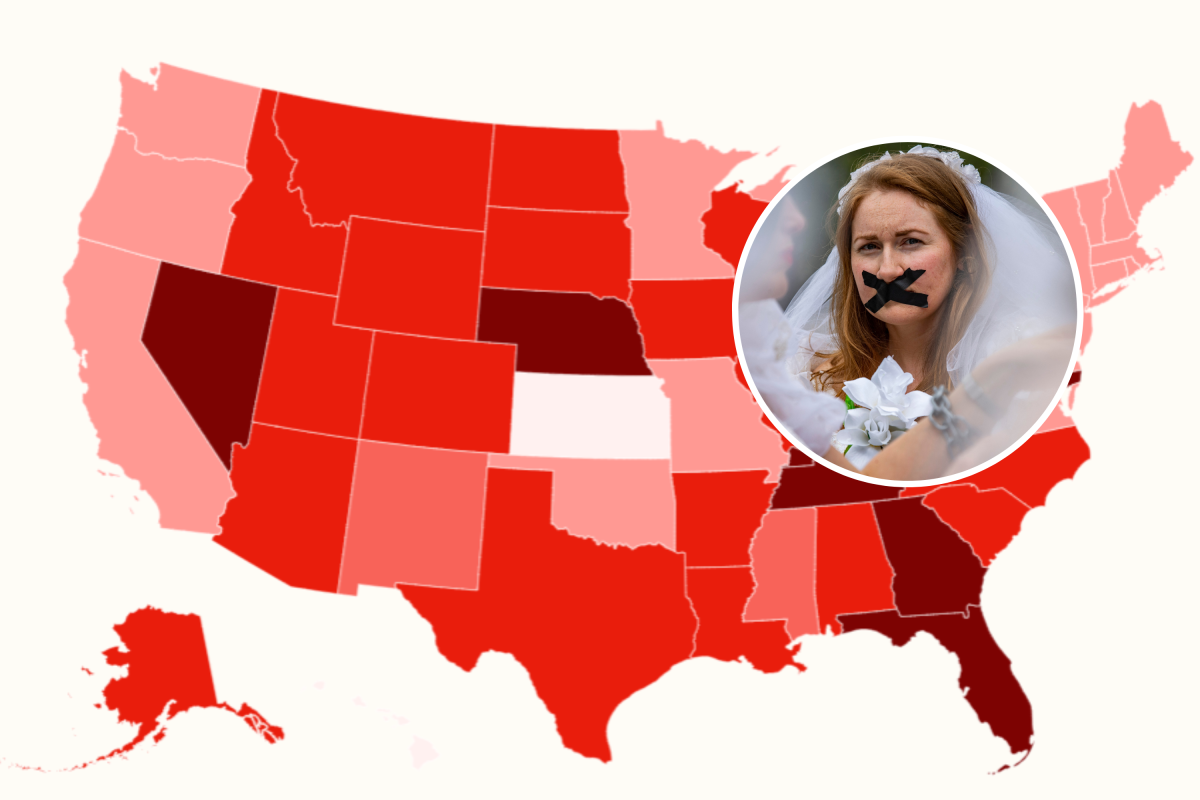
The problem is far larger than any single state. In 2017, marriage under 18 was legal in all 50 states, often with parental consent or judicial approval. Nearly a decade later, 18 states and Washington, D.C., have raised the legal age to 18, but the majority of states still allow the practice under some circumstances. The numbers tell a troubling story: between 2000 and 2018, nearly 300,000 children—some as young as 10—were legally married in the United States. The vast majority were girls married to adult men, according to Unchained at Last, a nonprofit organization dedicated to ending child marriage. In California alone, more than 8,000 children, most of them girls, reported having been married within the previous year, based on 2021 U.S. Census data analyzed by that same group. These are not abstract statistics. They represent real people who lost years of their childhood, who were asked to carry burdens they were never prepared for, and who often had no clear way out. The patchwork of state laws makes the problem even more dangerous, because minors can be transported across state lines to marry in places where the practice remains legal. A ban in one state does not erase that reality for the nation, but it does create an important barrier and a powerful message.
California now joins a growing group of states that have chosen to end child marriage entirely. The full list includes Connecticut, Delaware, Maine, Massachusetts, Michigan, Minnesota, Missouri, New Hampshire, New York, New Jersey, Oklahoma, Oregon, Pennsylvania, Rhode Island, Vermont, Virginia, Washington, and now California. Earlier this year, Oklahoma became the latest state to pass a full ban, requiring anyone getting married there to be at least 18 years old with no exceptions. Each of these laws tells a similar story: years of advocacy, powerful personal testimonies, and lawmakers finally deciding that protecting children matters more than preserving an outdated legal loophole. The progress has been gradual, often feels too slow, but it is real. State by state, the map is changing, and families who might have once seen marriage as a solution to a teenage pregnancy or a way to escape a difficult home life are being given a different message: children need protection, not marriage. The shift is also a signal to survivors that their pain was not ignored, and that the system is capable of learning and doing better.
The new law in California will take effect on January 1, giving families and courts time to adjust. Oklahoma’s ban goes into effect on November 1. But the real change is bigger than dates on a calendar. It is a shift in how society views childhood, consent, and the responsibility of the state to protect the vulnerable. Courtney Stodden, standing beside the governor, represented countless survivors whose stories have never been told. For years, she struggled with the knowledge that the adults who should have protected her instead signed her into an abusive marriage. Now, she can point to a law that will spare other girls the same fate. There is still much work to do, because child marriage remains legal in most states, and national action has yet to follow. But California’s decision adds weight to the movement and hope to those still fighting. It shows that when survivors speak and lawmakers listen, change is possible. And it reminds us that every child who is allowed to simply be a child—no wedding gowns, no adult promises, no premature endings—is a small victory for all of us.