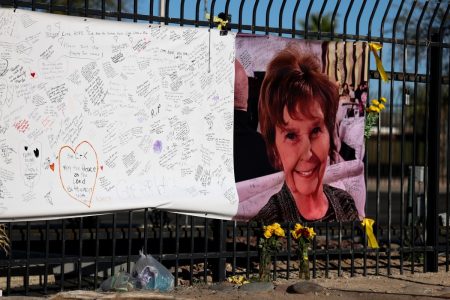






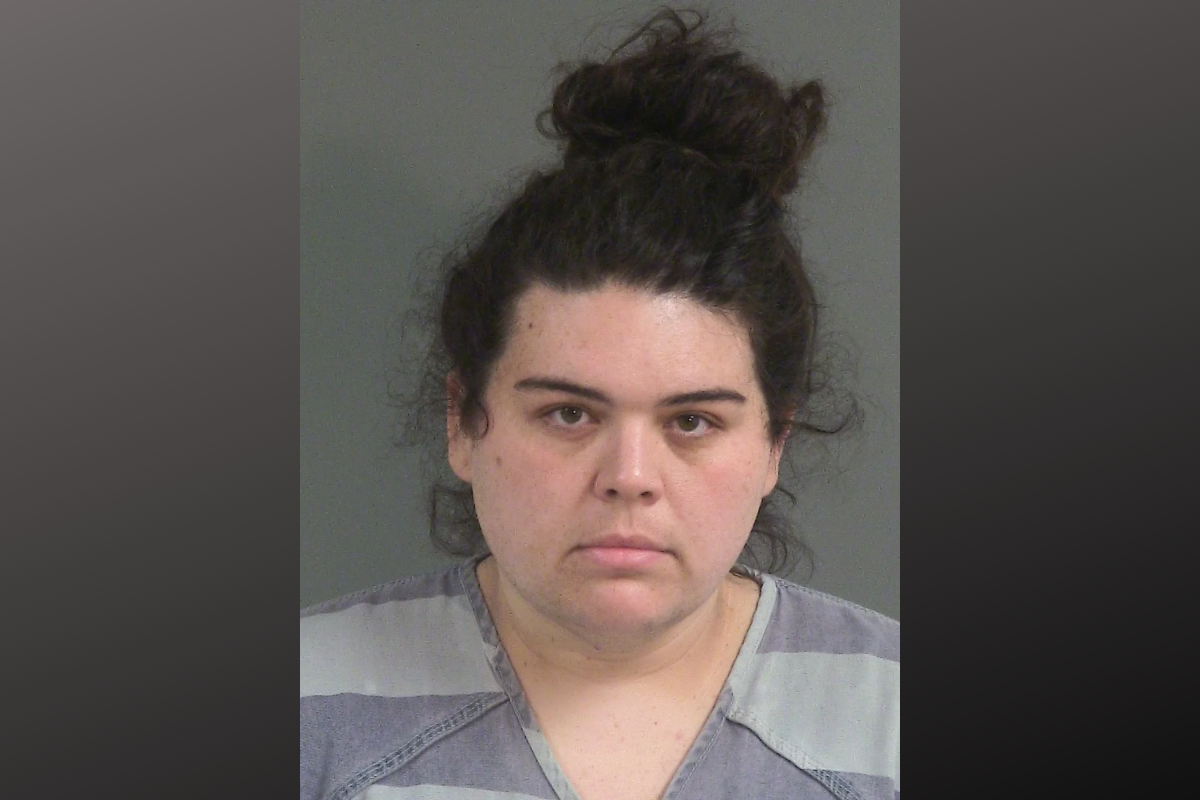
In the quiet outskirts of Ladson, South Carolina, a tragedy of unspeakable proportions unfolded behind the closed doors of a modest Pinewood Drive home—a house that would never again hold the laughter of children. On a Tuesday in late September, deputies responding to a welfare check discovered the lifeless bodies of two young girls, both under the age of three. Their names, as confirmed by grieving family members to local reporters, were Emory and Harlow—names that now echo with the weight of a future never to be lived. The woman at the center of this heartbreak, Justine Marie May, 31, was swiftly arrested and charged with two counts of homicide by child neglect. The charge, a weighty legal term, does little to capture the staggering loss, the family’s desperate attempts to intervene, or the chilling question that lingers: how did this happen, and why did no one save them? For the community of Ladson, a town about twenty miles northwest of Charleston, the news struck like a thunderbolt, leaving behind a mixture of grief, anger, and bewilderment.
The story that has since emerged from relatives paints a portrait of a family watching helplessly as a woman they loved slipped away into an abyss. According to family members who spoke to reporter Cody Alcorn of WXIA in Atlanta, May had been “normal for over 30 years”—a mother of two, a wife, someone who seemed to have her life together. But roughly 45 to 60 days before the children’s deaths, something changed dramatically. Her behavior became erratic, unrecognizable. Alarmed, her relatives took action: they contacted the South Carolina Department of Social Services, requested multiple welfare checks, and even sought assistance from a mobile crisis unit, hoping that professional intervention could pull May back from the edge. Their concerns were not baseless. They had seen a photograph of little Harlow, the younger child, suffering from a severe rash that seemed to indicate neglect. And then, about a month before the tragedy, May cut off all communication with her family, deepening their dread. In a final, desperate move, May’s mother emailed the local police chief the day before the children were found dead, expressing her fears. Yet despite all these red flags, the system failed to intervene in time. The family’s anguished words, “None of it makes sense,” capture the senselessness of a tragedy that was foretold but not prevented.
The details contained in the probable cause affidavit paint a harrowing picture of a mother in the throes of a profound mental health crisis. May allegedly told investigators that she had been in a “blur” for the previous two weeks and could not remember the last time she had fed her daughters or given them anything to drink. She reportedly believed the children had died because they had not eaten, and she acknowledged that failing to feed them was neglectful. She described herself as the girls’ sole caregiver, with no one else having entered the home in the weeks before their deaths. When deputies arrived for the welfare check, they found May outside, crying and speaking incoherently—a woman clearly disconnected from reality. The home, as the affidavit notes, was not unfamiliar to authorities; they had responded to previous welfare-check calls at the residence. While the official autopsy results and cause of death have not yet been released, investigators allege that May’s failure to provide basic sustenance contributed to the children’s deaths. The charge of homicide by child neglect carries severe penalties in South Carolina—a mandatory minimum of 20 years up to life in prison—but the legal process offers little solace to a family grieving the loss of two innocent souls.
May’s case does not exist in a vacuum. It arrives at a time when the nation is grappling with a disturbing pattern of mothers accused of killing their own children, often amidst severe mental illness. In Massachusetts, the case of Lindsay Clancy has captivated the country. Clancy is accused of strangling her three children in January 2023, with her defense arguing that she was in the grips of severe postpartum psychosis. The trial ended in a mistrial in September, with a hung jury—reportedly 11 to 1 in favor of finding her not criminally responsible—leaving the question of accountability and mental illness unresolved. In Illinois, Corie Walsh stands charged with the murder of her two-year-old son, Barrett, after allegedly strangling him and leaving him hanging from a basement rafter. Walsh’s attorneys argue that she was experiencing a psychotic episode, believing her son was “the devil,” while prosecutors maintain her actions were criminal. These cases have ignited a fierce debate about the intersection of mental health, criminal justice, and maternal responsibility. They force society to confront an uncomfortable truth: that the very individuals who are supposed to protect and nurture their children can, under the crushing weight of undiagnosed or untreated mental illness, become their greatest threat.
But there is a critical distinction in May’s case that sets it apart from Clancy’s and Walsh’s: the family’s public and persistent attempts to intervene. The relatives did not stand idly by; they sounded the alarm repeatedly, only to be met with a system that seemed ill-equipped to handle a mental health crisis of this magnitude. Their story highlights a broken infrastructure for maternal mental health care in the United States. Postpartum depression and postpartum psychosis are medical emergencies that require immediate and robust intervention, yet too often, families are left to navigate a labyrinth of underfunded services, overburdened social workers, and police officers who lack the training to recognize the signs. The family’s plea to a mobile crisis unit, their emails to the police chief, their calls to the Department of Social Services—all were cries for help that dissipated into the void of bureaucratic inertia. The question of what authorities knew and what actions they took will be central to any investigation, but the deeper issue is societal: why do we wait until a tragedy occurs to examine the cracks in our safety nets? The answer lies in a culture that stigmatizes mental illness, a healthcare system that often fails to prioritize maternal mental health, and a child welfare system that is reactive rather than proactive.
As the legal proceedings against May move forward, the court will have to grapple with the same complex questions that have plagued other cases: Was she criminally responsible for her actions, or was she a woman so consumed by mental illness that she could not distinguish right from wrong? May waived her bond hearing, signaling that she may be prepared to accept the consequences, or perhaps indicating that she is too shattered to fight. The mandatory minimum sentence of 20 years looms, but incarceration would do little to address the root causes of this tragedy. What happened on Pinewood Drive is a story of a family’s love, a mother’s illness, and a system’s failure. It is a story that should compel us to ask hard questions: How many more children must die before we treat maternal mental health with the urgency it deserves? How many more warnings must be ignored before we overhaul our child welfare protocols? And how can we, as a society, honor the memories of Emory and Harlow by ensuring that no other family endures such a loss? The answers are not easy, but they begin with listening to families who see the warning signs, investing in mental health resources, and acknowledging that sometimes, the most dangerous place for a child is not a stranger’s car, but the untreated illness of their own parent. For now, the community mourns, a family grieves, and two little girls—Emory and Harlow—rest in a peace they were denied in life. Their story is a sobering reminder that behind every statistic is a human being, and behind every headline is a tragedy that might have been prevented.