






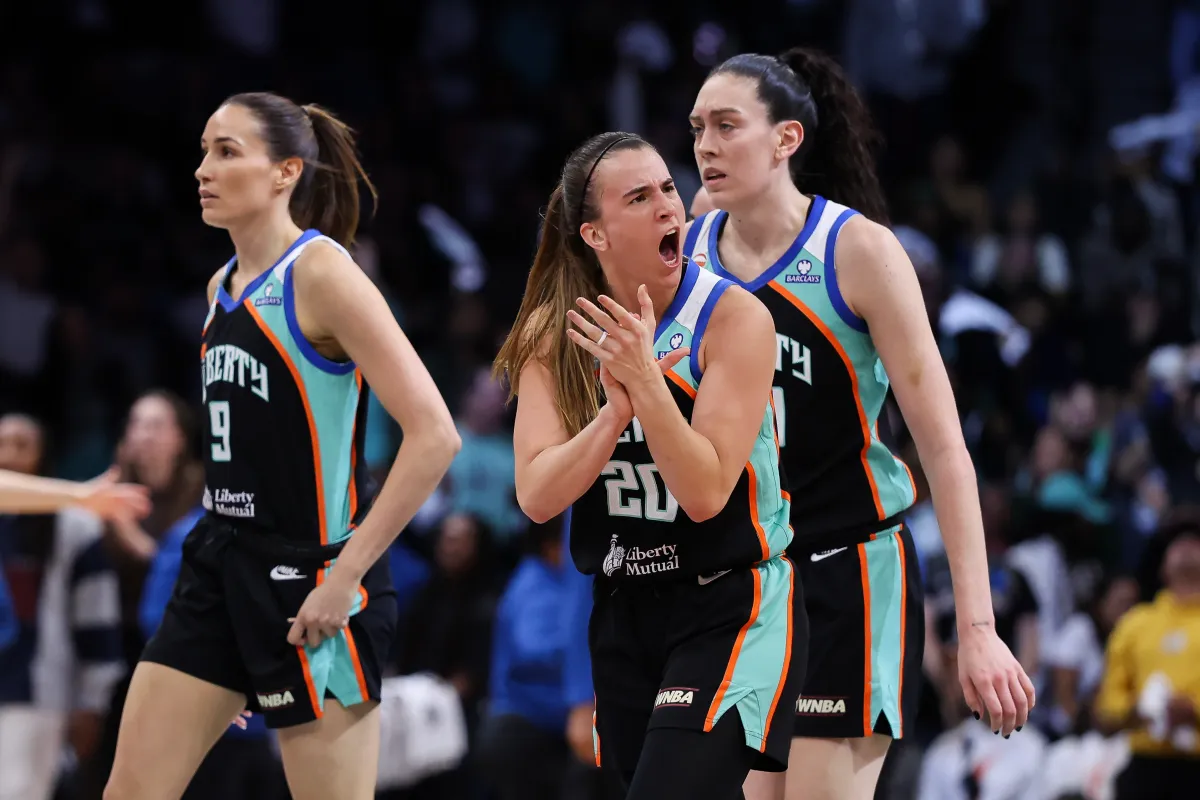
The WNBA playoffs were supposed to be a coronation, a predictable march toward a familiar ending, with the Minnesota Lynx standing at the top of the mountain after a season of near-total dominance. But basketball has a way of ignoring scripts, and on Tuesday night the New York Liberty tore up the page entirely. With an 87-71 victory in Game 2, the Liberty completed a stunning two-game sweep of the Lynx, becoming the first team in WNBA history to eliminate a No. 1 seed in the opening round. It was the kind of result that makes a league sit up and pay attention, not just because of the score, but because of what it represents: the postseason is a different animal, and regular-season résumés mean very little once the lights get brighter and the margins get thinner. For New York, this was more than a win; it was a statement of identity, a refusal to accept the label of an ordinary eighth seed. For Minnesota, it was a nightmare revisited, a painful reminder that the best record in the league does not come with a guarantee of survival. The Liberty celebrated like a team that had just been handed a second chance at life, while the Lynx walked off the floor in disbelief, their championship dreams dissolving in a haze of missed shots and missed opportunities. The bracket, once seemingly orderly, is now wide open, and the message from New York was unmistakable: do not count us out, because we were never really out.
To understand the magnitude of this upset, you have to understand the context that led to it. The Minnesota Lynx finished the regular season with a league-best 33-11 record, a mark that earned them the top seed and the accompanying narrative of being the team to beat. They had been here before, of course, having faced the Liberty in the 2024 WNBA Finals, a series that ended in heartbreak for Minnesota and validation for New York. This season was supposed to be different. The Lynx had reloaded, refined, and returned with a vengeance, and their regular-season dominance suggested they had learned the lessons of that Finals loss. But the playoffs are not a reward for past excellence; they are a gauntlet, and the path for Minnesota was never going to be easy. Meanwhile, the Liberty found themselves in a strange and uncomfortable position. After winning the championship in 2024, they stumbled at the worst possible time, losing their final two games to the Atlanta Dream and tumbling all the way to the No. 8 seed. It was a fall that could have shattered a lesser team’s confidence, especially with the memory of a first-round exit still lingering from the previous season. But instead of panicking, the Liberty seemed to embrace the chaos. They understood that their record did not reflect their talent, and that the playoffs would give them a chance to redefine their season. For Minnesota, the regular season had been a triumph; for New York, it had been a struggle. But when the two teams met in the opening round, none of that history mattered. What mattered was who could handle the pressure, who could make shots, and who could summon the poise of a champion when everything was on the line.
From the opening tip of Game 1, the Liberty made it clear that they were not going to play the role of a sacrificial eighth seed. The series began in Minneapolis, where the Lynx had been nearly unbeatable all season, but New York came out with a ferocity that seemed to catch Minnesota off guard. Breanna Stewart, the two-time Finals MVP and one of the most decorated players in the game, delivered a performance for the ages, pouring in 34 points and grabbing 12 rebounds while leading her team to a 91-75 victory on the road. It was the kind of game that reminds everyone why Stewart is considered one of the greatest players of her generation: she did not just score; she imposed her will on every possession, crashing the boards, attacking the rim, and hitting the kind of shots that demoralize an opponent. The Liberty’s supporting cast fed off her energy, and by the time the final buzzer sounded, they had stolen home-court advantage and sent a shockwave through the league. For Minnesota, the loss was alarming, but not necessarily fatal; they had been through adversity before and knew how to respond. But there was something different about the way New York played. They moved the ball with purpose, defended with intensity, and carried themselves like a team that believed it belonged on the biggest stage. Stewart’s performance was not just a statistical marvel; it was a declaration that the Liberty were not going to let their disappointing regular season define them. They had come to the playoffs with a chip on their shoulder, and they were playing like a team with nothing to lose and everything to prove.
If Game 1 was a warning shot, Game 2 was a full-scale takeover. Back in New York, with the series on the line and the Lynx desperate to avoid elimination, the Liberty delivered another masterclass in playoff basketball. The final score, 87-71, was emphatic, but the margin only told part of the story. Stewart was once again brilliant, adding 21 points to her series total, but this time she did not have to carry the burden alone. Jonquel Jones was unstoppable in the paint, finishing with 21 points and 13 rebounds, providing the kind of interior presence that makes a team nearly impossible to guard. Sabrina Ionescu, the team’s dynamic playmaker, chipped in 18 points and 7 assists, orchestrating the offense with a calm confidence that belied the pressure of the moment. It was a balanced, unselfish, and ruthlessly efficient performance, the kind of team effort that championship contenders are built on. After the game, Ionescu captured the essence of her team’s mentality with a simple but powerful statement: “We know we’re not a traditional 8-seed. We understand once the playoffs come, it’s a new season. We got to do what we got to do. We got to come out, turn the page, and be the best team that we can be.” Those words resonated because they were not just clichés; they were a reflection of how the Liberty had approached the entire series. They did not dwell on their regular-season struggles or the pressure of being defending champions. Instead, they turned the page, embraced the opportunity, and played with the freedom of a team that had rediscovered its identity at the perfect moment. The result was a sweep that no one saw coming, but one that made perfect sense to anyone who had watched the Liberty’s talent all along.
For the Minnesota Lynx, the ending was brutal, and the pain of it will linger for a long time. This was a team that had lost only seven games all season, a team that had looked like the class of the league from start to finish. But in their final eight games, including the playoffs, they lost six, and the cracks that had been hidden by regular-season success suddenly became impossible to ignore. In Tuesday’s elimination loss, the Lynx shot just 38% from the floor, a dismal performance that stood in stark contrast to their usual efficiency. Olivia Miles, who had just been named the unanimous Rookie of the Year, was held to just five points in 17 minutes, a quiet night for a player who had spent the entire season dazzling audiences with her skill and poise. It was a cruel twist of fate: the rookie who had been celebrated as the future of the league could not find her rhythm when her team needed her most. But the blame cannot rest solely on her shoulders. The entire team seemed tight, almost anxious, as if the weight of their regular-season achievements had become a burden rather than a source of confidence. They had spent months building a reputation as the league’s most consistent team, and when it mattered most, they could not summon the magic that had carried them through so many close games. The Lynx will look back on this series with regret, wondering what might have been if a few more shots had fallen, if a few more rebounds had gone their way. But the playoffs do not offer moral victories, and Minnesota’s season is over, cut short by a team that refused to accept its assigned role. It is a harsh reminder that in basketball, as in life, the journey is not always fair, and the ending is not always written by the team that seemed most deserving.
Now the Liberty turn their attention to the next chapter, awaiting the winner of the matchup between the Atlanta Dream and the Washington Mystics. On paper, New York should feel good about their chances; they have momentum, confidence, and a roster full of stars who have been through the fire before. But if this series taught us anything, it is that the playoffs are unpredictable, and no opponent can be taken for granted. The Liberty know better than anyone that a regular-season record does not define a team’s fate, and they will carry that lesson into the semifinals. For the league, this historic upset is a reminder of why the postseason is so compelling: it is not just a continuation of the regular season, but a fresh start, a chance for redemption, and a stage for the unexpected. The Lynx were the best team for 44 games, but they were not the best team for the two games that mattered most. The Liberty, meanwhile, proved that resilience and talent can overcome even the most daunting circumstances. As the bracket opens up, every remaining team has to believe that they have a shot, because New York just showed that anything is possible. The players are not robots; they feel the weight of every possession, every missed shot, every roar from the crowd. They carry the hopes of their cities and the scars of their past failures. And in this moment, the Liberty are carrying something else: the belief that they can repeat as champions, not because they were the best team in the regular season, but because they were the best team when it counted. That is the beauty of the playoffs, and it is why this series will be remembered for years to come.