





In the high-stakes, pressure-cooker environment of the professional basketball playoffs, even the most finely tuned athletic engines can suddenly grind to an agonizing, sputtering halt when stripped of their vital components. For the Oklahoma City Thunder, a proud franchise that has spent several seasons painstakingly cultivating an identity centered on relentless kinetic energy, quick ball movement, and a refreshing sense of youthful fearlessness, their recent postseason clash against the San Antonio Spurs served as a sobering, deeply painful reminder of how fragile championship dreams truly are. Stripped of their signature offensive rhythm, the Thunder looked uncharacteristically tired, disconnected, and thoroughly outmatched from the very opening tip, culminating in their worst offensive performance in several years and leaving fans in a state of quiet disbelief. For the loyal fan base that has watched this young core blossom from plucky rebuilding upstarts into legitimate contenders, the sheer stagnation on the court was a harsh gut-punch of nostalgia, evoking the grim memories of December 2, 2021. On that fateful night, the rebuilding Thunder were utterly dismantled by the Memphis Grizzlies, scoring a mere 79 points in a record-shattering 73-point defeat that became a symbol of their early developmental struggles. To see this highly potent, modern iteration of the Thunder struggle to generate basic scoring opportunities in a crucial playoff game brought those dark historical ghosts back into the light. This was not merely a loss of tactical execution or poor shooting luck; it was a deeply human breakdown of energy and momentum, where the absence of joy, cohesion, and physical health left a proud team looking entirely mortal on the grandest stage of their lives.
At the heart of this devastating offensive paralysis lay a stark, highly relatable reality that any working professional can easily empathize with: the sudden, crushing burden of being severely understaffed during the most critical moment of your career. The Thunder entered this crucial matchup without two of their top three playmakers and primary creators, as rising star Jalen Williams was sidelined with persistent left hamstring soreness and dynamic rookie guard Ajay Mitchell sat out with a painful right calf strain. In the unforgiving world of professional sports, these physical ailments are not just cold lines on an injury report; they are active thieves of athletic joy and hard-earned momentum. A tight hamstring robs an explosive wing like Williams—beloved by fans for his infectious smile and chemistry-fueled play—of his dynamic first step, his ability to rise above defenders in the paint, and his crucial defensive versatility. Meanwhile, a strained calf muscle deprives a young guard like Mitchell of the quick lateral movements and bursts of speed necessary to navigate around screens and bend an opposing defense to his will. Williams has long served as the Thunder’s crucial secondary engine, the versatile wing who can break down defenses when primary options are locked up, while Mitchell’s spark off the bench provides a kinetic burst that keeps the offense afloat when the starters are resting. Without their dynamic playmaking and court-testing creativity, the spacing on the floor collapsed entirely. The ball, which usually moves with the beautiful velocity of a pinball, began to stick lazily in players’ hands, forcing role players into demanding creation roles they were never meant to carry alone, creating an overwhelming sense of helplessness.
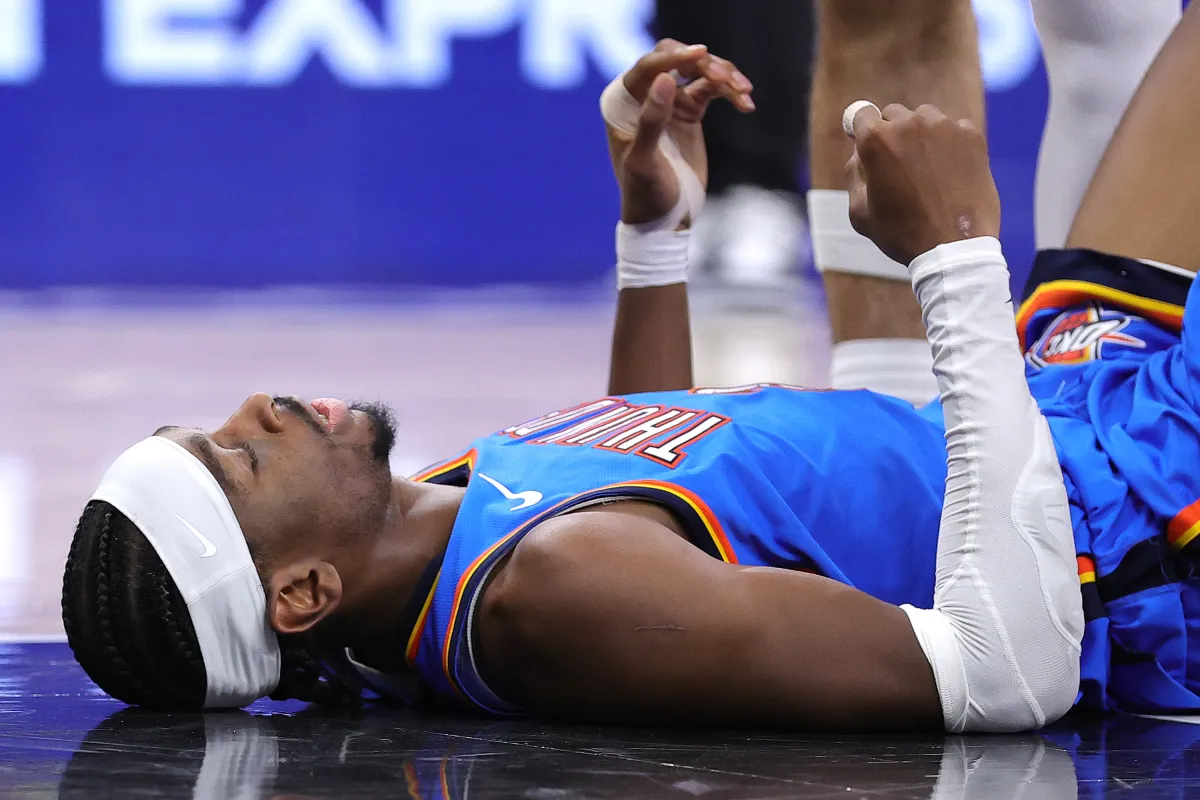
Carrying the immense, near-impossible weight of this depleted roster on his shoulders was Shai Gilgeous-Alexander, the team’s undisputed floor general and two-time NBA MVP candidate, who fought valiantly but ultimately looked like an elite warrior stranded on a lonely island without any backup. Finishing with a hard-fought, team-high 19 points—a total that is incredibly modest by his usual celestial standards—Gilgeous-Alexander found himself consistently swarmed by a disciplined San Antonio defense that had the luxury of ignoring other offensive threats to focus their entire strategy on stopping his drives. Yet, true greatness in leadership is often measured not by the numbers written in a winning box score, but by how a leader handles the bitter, humbling taste of defeat. Shai’s post-game reflection revealed the profound emotional maturity that defines his stewardship of this young locker room. Moving past the easy path of making excuses about roster fatigue or the bad luck of the injury report, he spoke candidly about the overwhelming “snowball effect” of collective human energy on a basketball court. He admitted that while they possess the tactical capability of playing short stretches without multiple primary ball-handlers, they simply failed to bring the necessary spiritual fire and emotional intensity required to overcome their physical limitations. Gilgeous-Alexander’s insight underscores a universal psychological truth: when a group of people begins a high-stakes task with the right energy, small mistakes naturally disappear and a kinetic flow is established, but when the collective spirit is flat, every missed shot and defensive breakdown feeds into a vicious cycle of frustration, making the basket look smaller and the court feel infinitely longer.
The brutal reality of this energy vacuum was laid bare in the cold, unforgiving metrics of the post-game box score, which painted a picture of an historic shooting disaster that felt more like a collective fever dream than a professional basketball game. The Thunder shot a miserable, season-low 33% from the field and a catastrophic 18% from beyond the three-point arc, failing to produce a single 20-point scorer for the entire game—a statistical anomaly for a team that usually scores with effortless, high-flying brilliance. To watch this game unfold in real time was to witness a slow-motion, collective crisis of athletic confidence, where the heavy, metallic sound of the basketball clanging off the rim seemed to grow louder and more intimidating with each successive empty possession. Elite basketball players are highly tuned instruments of muscle memory, but when a shooting slump of this sheer magnitude takes hold of a team, a psychological rot quickly sets in, causing players to hesitate for fractions of a second, double-clutch their shots, and rush their releases in a frantic, desperate attempt to break the curse. The Spurs capitalized ruthlessly on this mounting anxiety, standing tall in the paint and daring the struggling, depleted Thunder to beat them from the perimeter, knowing full well that the physical exhaustion of chasing defenders on the other end was slowly draining whatever shooting touch Oklahoma City had left in reserve. It was a stark, humbling lesson in how quickly physical exhaustion and mental fatigue can erode the fine-motor skills of even the most talented, highly trained players in the world when they are pushed past their limits.
While the deep sting of this performance will undoubtedly linger in the minds of players and fans alike, the beauty of professional sports lies in its relentless, unforgiving progression, giving the Thunder very little time to wallow in self-pity as the high-stakes narrative of this series now shifts back to their home turf. With the emotional coordinates reset, the scene is set for a highly anticipated, pressure-packed Game 5 back in Oklahoma City on Tuesday, May 26, with an 8:30 p.m. Eastern Time tip-off that promises to be a theater of intense human drama and redemption. The long, winding journey from their historically embarrassing 73-point loss in 2021 to hosting a pivotal, swing Game 5 in the playoffs shows just how far this proud franchise has traveled, transforming from an experimental developmental project into an elite squad burdened with real, heavy championship expectations. For head coach Mark Daigneault, the immediate challenge ahead is less about drawing up complex new tactical schemes on his clipboard and more about healing the bruised spirits of his young locker room. He must help them wash away the psychological residue of a terrible shooting night, rediscover their collective swagger, and prepare them to channel the manic, deafening, and protective energy of their passionate home crowd at the Paycom Center. Playoff series are psychological wars of mental attrition, and this upcoming game will serve as the ultimate crucible to test whether this young Thunder squad can show the emotional resilience necessary to completely forget their worst night and reclaim the pure joy of the game that got them here in the first place.
Ultimately, the painful struggles and vulnerabilities of the Oklahoma City Thunder on this quiet night connect to a much larger, deeply human narrative about the incredible physical and psychological demands we place on modern athletic icons, who must constantly balance their own physical fragility with the heavy expectation of perfection. This intense struggle is visible across the entire modern sports landscape, beautifully mirroring the complex physical and mental hurdles recently discussed by other sports superstars—such as WNBA sensation Caitlin Clark, who has candidly opened up about the immense mental challenges of navigating high-stakes rookie seasons and intense pressure through the fog of injuries and public scrutiny. When the bright arena lights shine, we as fans often forget that these players are human beings with strict physical limits, fighting valiantly through nagging pains, mental exhaustion, and the silent, heavy pressure of carrying the hopes of an entire city on their shoulders. As the Thunder prepare to step back onto their home court, they carry not just their basketball schemes and playbooks, but their bruised egos, their aching joints, and a collective hope for survival. In the end, the true magic of sports is never found in the flawless, easy victories that go exactly according to plan, but in the gritty, deeply human struggle of a group of players lifting one another up, facing their own stark limitations, and daring to step back into the arena to strive for greatness once again.