





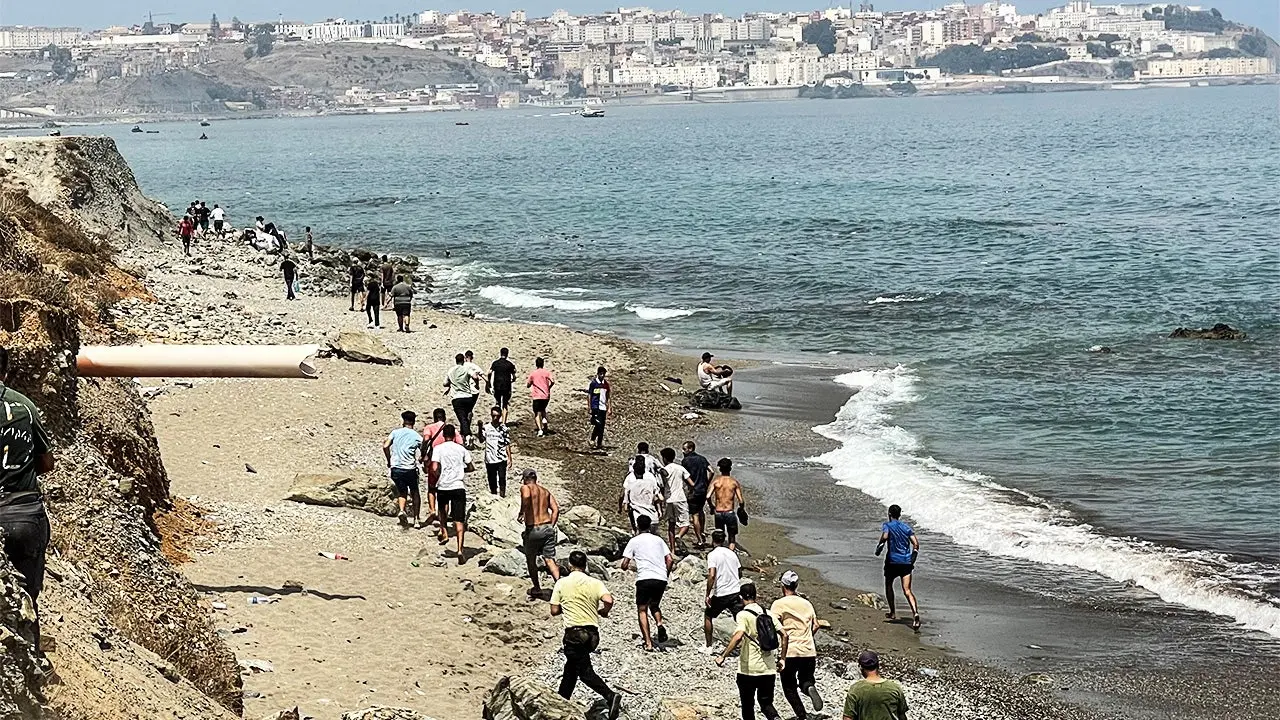
The tranquil Mediterranean atmosphere of Ceuta, a picturesque Spanish enclave nestled on the North African coast, was abruptly shattered as a massive humanitarian and security crisis unfolded, prompting the United States State Department to raise its travel advisory to Level 3: Reconsider Travel. Typically known for its vibrant blend of Spanish and Moroccan cultures, historic fortifications, and sun-drenched beaches, this tiny, autonomous outpost has suddenly found itself at the center of a geopolitical and humanitarian firestorm. The updated American advisory warns travelers of a “massive and uncontrolled arrival of migrants,” cautioning that the sudden influx could lead to “unpredictable and dangerous security situations.” For local residents, business owners, and visiting tourists, the rapid transformation of their peaceful streets has been deeply jarring. The sudden presence of the Spanish military, National Police, and the Guardia Civil patrolling the coastline and town squares has replaced the casual hum of daily life with a tense, militaristic atmosphere. This heightened security warning is a sobering reminder of how quickly a localized humanitarian event can escalate into a broader security emergency, leaving international travelers to reconsider their plans and forcing the small community of Ceuta to grapple with an overwhelming influx of people that has stretched their infrastructure, emergency services, and social resources to their absolute breaking point.
The sheer scale of the human tide that washed over Ceuta’s borders is difficult to comprehend without understanding the profound desperation that drives thousands of individuals to risk everything for a chance at a better life. Within a mere twenty-four hours, local officials, including Ceuta’s President Juan Jesús Vivas, reported that approximately 60,000 migrants had attempted to enter the territory, while Spain’s Interior Ministry later estimated that roughly 50,000 arrivals had occurred over a short span of days. These are not just cold statistics; they represent a mosaic of human suffering, hope, and survival. Young men, terrified mothers clutching infants, and unaccompanied minors made the perilous journey across the border, many swimming around the physical breakwaters that extend into the sea or scaling the formidable, razor-wire-topped fences that separate Spanish territory from Morocco. Ceuta, along with its sister enclave Melilla, represents a unique geopolitical anomaly: they are the only land borders between the European Union and the African continent. Consequently, they serve as a powerful, near-mythical beacon of hope for those fleeing extreme poverty, lack of opportunity, and political instability across various regions of Africa. This geographic reality turns these tiny enclaves into permanent flashpoints, where the stark divide between the global North and South is made visible in a physical, often violent, struggle for a better future.
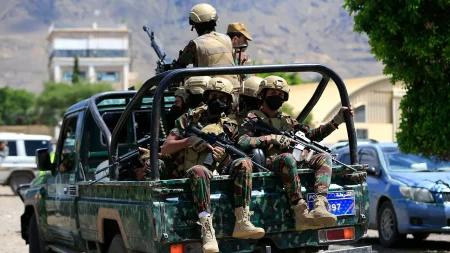
In the wake of this unprecedented border breach, the Spanish government launched a massive security and humanitarian response, transforming the beaches of Ceuta into a theater of military operations and emergency relief. Prime Minister Pedro Sánchez moved quickly to deploy regular army troops to assist the overwhelmed local police and civil guards, a decision that underscores the gravity of the sovereignty and security challenge facing Spain. Soldiers in combat gear, backed by armored vehicles, stood watch on the sandy shores where tourists usually relax, while rescue workers and Red Cross volunteers scrambled to provide emergency medical aid, dry clothes, and food to thousands of shivering, exhausted migrants. Sánchez’s administration faced the monumental task of balancing national security with basic human rights, attempting to secure the border while processing the massive influx of people. The government announced plans to reinforce physical sea barriers to prevent future water crossings and to expedite the repatriation of those who had entered illegally, working in tandem with Moroccan authorities who eventually began to re-establish control on their side of the border. Yet, the images of soldiers confronting exhausted, soaking-wet families on the beach highlighted the painful human cost of this security response, leaving many to wonder how long militarized borders can hold back the tide of human displacement.
At the heart of this sudden surge is a tragic story of manipulation and false hope, orchestrated by ruthless human trafficking networks that exploit the desperation of vulnerable people for financial gain. Spanish authorities revealed that the sudden influx was largely triggered by a recent Spanish Supreme Court ruling regarding the rights of migrants arriving by sea. Seizing on this complex legal decision, smuggling organizations systematically distorted its meaning, broadcasting false claims across social media and messaging platforms that Spain had temporarily opened its borders and would not deport anyone who managed to reach Ceuta. This deliberate misinformation campaign spread like wildfire through marginalized communities in Morocco and beyond, prompting thousands of families to gather their meager savings and head for the border in search of a legal loophole that did not actually exist. The reality they met upon arrival was devastating: instead of the promised legal pathways and open arms, they encountered tear gas, riot shields, and a swift ticket back across the border. This exploitation highlights the cruel business model of modern human trafficking, where criminal syndicates profit immensely by selling illusions of safety, leaving thousands of innocent people to face the physical and psychological trauma of a failed border crossing.
The crisis in Ceuta quickly transcended regional borders, triggering intense political debates across the globe and finding its way into the highly polarized arena of American politics. Former U.S. President Donald Trump was quick to comment on the situation, characterizing the events as a “catastrophe” and an “invasion by hundreds of thousands of people” during a Cabinet meeting at Camp David. Trump used the dramatic footage of the Spanish military deployment to warn American voters of potential future scenarios at the United States’ own southern border, arguing that a similar crisis would unfold in America if conservative border policies were not maintained. This rhetorical framing of the Ceuta crisis illustrates how localized humanitarian emergencies are frequently weaponized in global political struggles, transformed into cautionary tales designed to stoke public anxiety and influence elections. While critics argued that such rhetoric dehumanizes desperate people and ignores the root causes of migration, proponents asserted that the events in Spain proved the necessity of strong physical borders and strict immigration enforcement. The international spotlight on Ceuta demonstrates that in the modern era, a border breach in North Africa is not just a localized Spanish problem, but a powerful symbol in a global debate over sovereignty, security, and human rights.
As the immediate chaos in Ceuta begins to subside and thousands of migrants are returned across the border, the underlying humanitarian crisis remains unresolved, serving as a stark reminder of the limitations of walls and military interventions. Enclaves like Ceuta and Melilla will inevitably remain flashpoints as long as the vast economic and social disparities between Europe and Africa persist. Raising travel advisories, deploying armies, and building taller fences are temporary measures that address the symptoms of global inequality rather than its root causes. To prevent future crises, the international community must move beyond reactive security measures and invest in long-term solutions, including fostering economic stability in origin countries, dismantling human trafficking networks, and establishing humane, orderly legal channels for migration. The human beings who risked their lives to swim to Ceuta were not driven by malice or a desire to invade, but by the fundamental human instinct to survive and seek a dignified existence. Until global policies reflect this shared humanity, the shores of Ceuta will continue to witness the painful collision of human hope and national borders, leaving us to contemplate the moral cost of the walls we build to keep the world apart.