





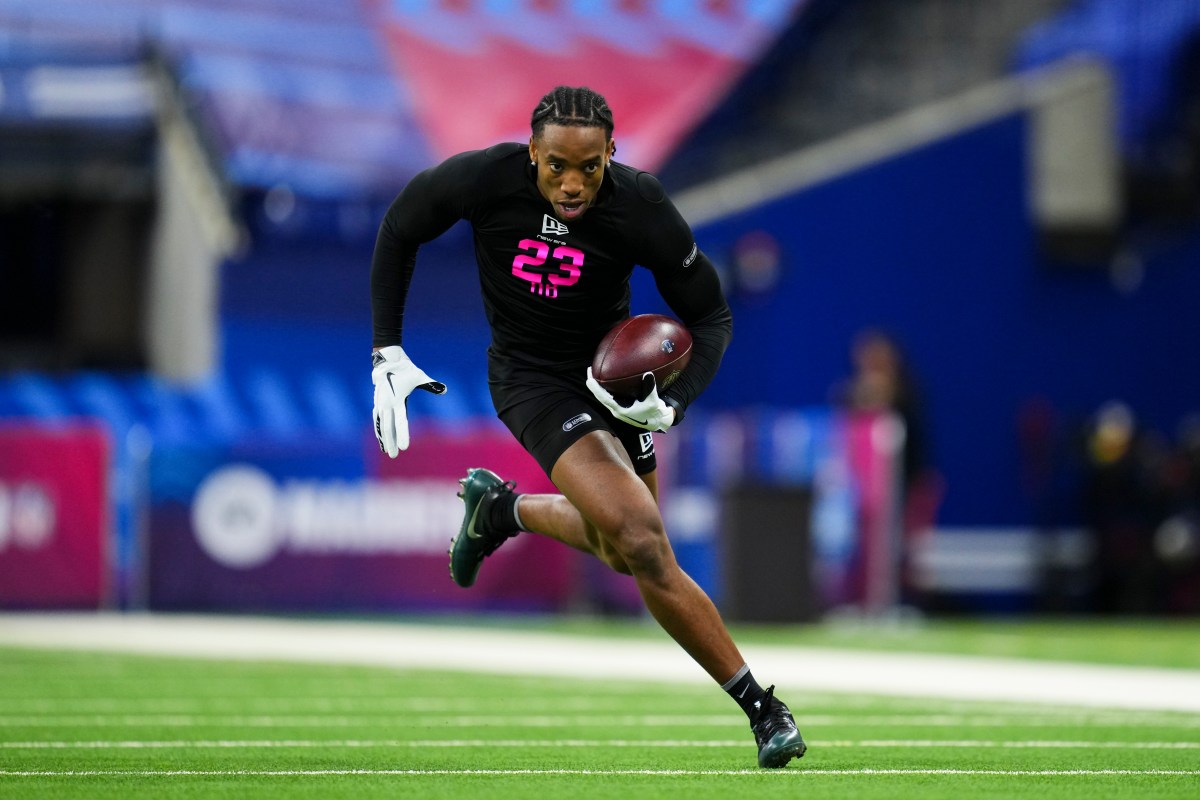
The humid summer air of Lake Forest, Illinois, carries a distinct weight during late July and early August, a heavy mixture of sweltering heat, freshly cut grass, and the palpable tension of dreams hanging in the balance. As the Chicago Bears gather at Halas Hall for their annual training camp, the spotlight naturally gravitates toward the high-profile narrative arcs: the arrival of a new franchise quarterback, the integration of explosive offensive weapons, and the high expectations surrounding a rebuilding franchise ready to take the next step. Yet, away from the glaring media circus, in the quiet, grit-fueled corners of the practice field, the real soul of the team is forged through unheralded competition. This summer, one of the most compelling and quiet battles has ignited in the secondary, where rookie cornerback Malik Muhammad is rapidly transforming himself from a depth-chart afterthought into an undeniable force. Entering camp, the cornerback position opposite star Jaylon Johnson seemed relatively secure, with sophomore Tyrique Stevenson holding a firm grip on the starting job after an impressive rookie campaign. However, the NFL has a funny way of disrupting even the most carefully laid plans, and Muhammad is proving that draft pedigree and assumed hierarchies mean very little once the pads go on and the whistle blows. With a quiet confidence and an relentless work ethic, the former Texas standout has caught the eyes of coaches, teammates, and onlookers alike, systematically turning what was supposed to be a routine developmental year into an absolute dogfight for starting snaps.
To truly understand Muhammad’s rapid ascension in the Windy City, one must look back at the crucible of his collegiate career at the University of Texas. Playing in Austin under the intense microscope of one of the nation’s most demanding fanbases, Muhammad developed a reputation not just as an athletic defender, but as a cerebral and highly competitive technician. In the Big 12, and later in preparation for the SEC, he went toe-to-toe with some of the most explosive passing offenses in college football, learning early on that playing cornerback requires a short memory and an unwavering belief in one’s own abilities. This collegiate pedigree instilled in him a mature approach to the game, allowing him to arrive in Chicago with a professional mindset that usually takes rookies months, if not years, to cultivate. When he stepped onto the practice fields at Halas Hall, he did not look like a wide-eyed rookie overwhelmed by the speed of the professional game; instead, he carried himself with the poised demeanor of a seasoned veteran who understood that every single rep was an audition for his future. The coaching staff immediately noticed his attention to detail, his fluid hip movement in coverage, and his innate ability to diagnose plays before they fully developed, prompting them to reward his preparation with increased opportunities against the first-team offense.
This surge in practice repetitions has directly challenged the established order in the Bears’ secondary, most notably putting pressure on Tyrique Stevenson. Stevenson, who earned his stripes last season with physical play and a ball-hawking mentality, is by no means giving up his spot easily, which has created a beautiful, iron-sharpening-iron dynamic within the defensive backfield. Head coach Matt Eberflus and defensive coordinator Eric Washington have long preached the philosophy that nothing in this league is given, only earned, and they have actively fostered an environment where competition is the ultimate arbiter of playing time. By inserting Muhammad into various packages and letting him run with the starters, the coaching staff is sending a clear message to the entire roster that performance is the only currency that matters. Muhammad has responded to this challenge with remarkable consistency, showcasing a rare blend of physical toughness at the line of scrimmage and the recovery speed necessary to run stride-for-stride with elite receivers downfield. For a young cornerback, the ultimate test is making the coaching staff look twice, forcing them to pause the film, rewind, and acknowledge that a player is simply too talented to be kept on the sideline, and Muhammad is doing exactly that on a daily basis.
The transition from college to the NFL is notoriously brutal for defensive backs, who must adjust to a league where rules heavily favor the offense and quarterbacks can exploit the tiniest mechanical errors with surgical precision. During training camp, Muhammad has found himself thrown into the ultimate crucible, matching up against a revamped Chicago receiving corps that features the savvy route-running of veteran Keenan Allen, the explosive playmaking of DJ Moore, and the raw, dynamic talent of fellow rookie Rome Odunze. Facing this diverse group of pass-catchers every day in practice is a double-edged sword; while it inevitably leads to moments of frustration where the rookie is taught harsh lessons by seasoned pros, it also accelerates his development at an astronomical rate. Muhammad has shown an admirable resilience in these matchups, refusing to back down after giving up a completion and immediately returning to the line of scrimmage with the same aggressive, press-man posture. His ability to absorb coaching points in real-time and correct his positioning on subsequent plays has earned him the respect of the offensive veterans, who have openly praised the rookie’s competitiveness and willingness to learn from his mistakes.
Beyond the individual battle for starting playing time, Muhammad’s emergence has profound implications for the broader identity and strategic flexibility of the Chicago Bears’ defense. In the modern NFL, where offenses routinely utilize three, four, or even five wide receiver sets, a defense can truly never have too many capable cover corners, making high-quality depth the ultimate defensive luxury. If Muhammad can sustain this high level of play, he provides the Bears with an invaluable insurance policy and a versatile chess piece that allows them to match up effectively against the league’s most potent passing attacks. A deep, highly competitive secondary not only suffocates opposing quarterbacks but also elevates the performance of the front seven, giving the pass rush those crucial extra fractions of a second to get home and register sacks. The coaching staff is fully aware of how a deep secondary can transform a good defense into a championship-caliber unit, and they are eagerly watching to see if Muhammad can prove that his early camp successes are not just a flash in the pan, but the foundation of a highly reliable professional career.
As training camp transitions into the preseason and the intensity reaches a fever pitch, the true test for Malik Muhammad is just beginning, as the controlled environment of practice gives way to the chaotic, unscripted nature of live exhibition games. Rookies inevitably hit the proverbial “rookie wall,” navigating a grueling schedule and the emotional roller coaster of their first professional season, and Muhammad will undoubtedly face his share of adversity in the weeks and months to come. However, the early chapters of his NFL story have written a narrative of a young man who is entirely unafraid of the moment, possessing the perfect blend of humility to learn and the swagger required to dominate on the perimeter. If he continues to force his way into the conversation and compel the coaching staff to find a place for him on the field, he will not only solidify his own place in the league but could very well emerge as the steal of Chicago’s draft class. Ultimately, Muhammad’s journey this summer is a beautiful reminder of what makes training camp so captivating: the timeless story of an underdog refusing to be overlooked, writing his own destiny one defensive snap at a time.