





# The Ghost of a Ten: How Tiger’s Worst Moment Became Scheffler’s Blueprint
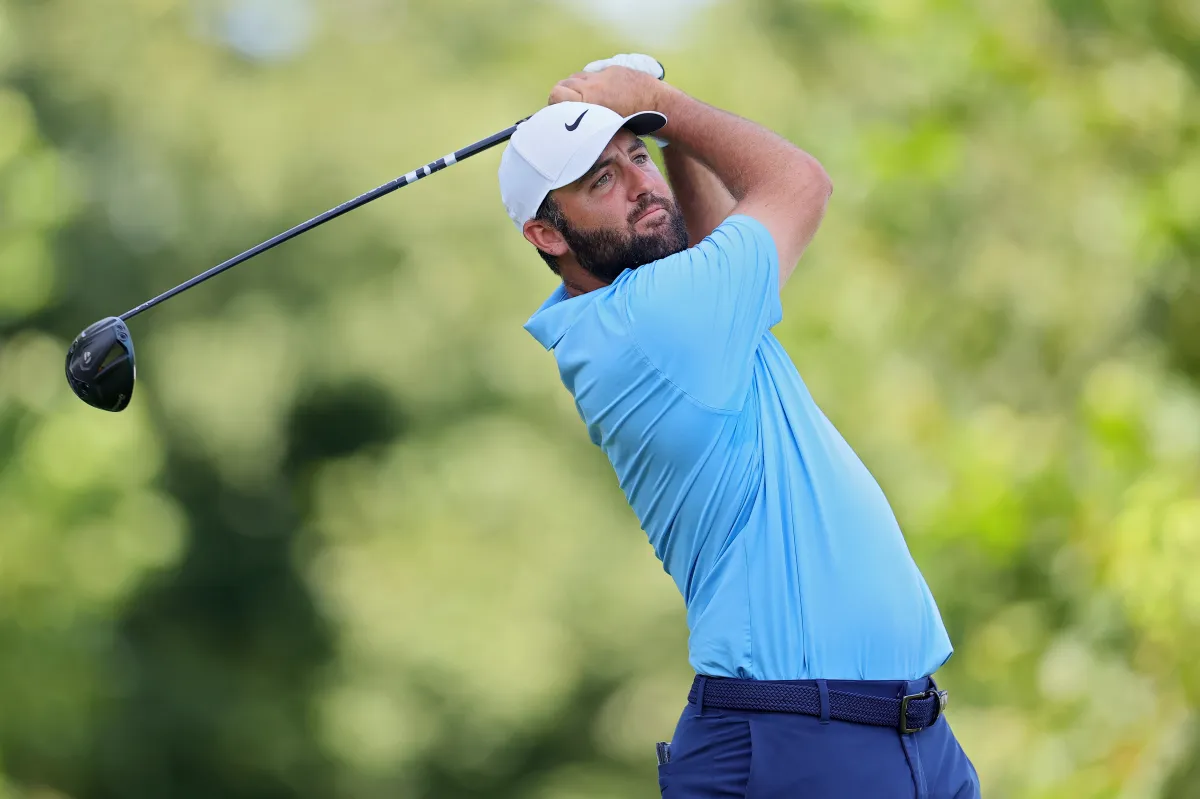
The weight of an entire season compresses into a single, sun-drenched week at Atlanta’s East Lake Golf Club, where the FedEx Cup finale unfolds with the finality of a closing chapter. For Scottie Scheffler, the World No. 1, this is hallowed ground—the place where he secured his first playoff crown in 2025, and now, in 2026, a place where he returns with the singular ambition of hoisting that crystal trophy for a second time. As he stepped to the microphone on Wednesday afternoon, the customary pre-tournament press conference was filled with the usual inquiries about course strategy, pin placements, and the mathematical complexities of the staggered starting strokes system. But when a reporter gently steered the conversation toward formative career moments, Scheffler’s calm exterior softened into something more reflective. He didn’t speak about his own victories or his own near-misses. Instead, he took everyone back to a gray Sunday in November 2020, to a desolate Augusta National, and to a moment that would inadvertently become the lodestar of his own professional philosophy—a memory of watching Tiger Woods, the greatest golfer to ever live, crater on the 12th hole, then rise from the ashes with a birdie storm that left an indelible mark on the young Texan’s psyche.
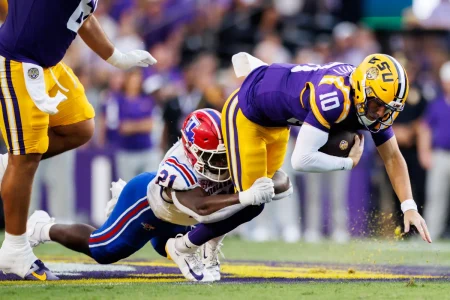
The year 2020 was a grotesque and beautiful anomaly in golf history. The Masters, stripped of its traditional springtime azaleas, played out in a surreal autumn setting, with the course eerily silent save for the sounds of birds and the muffled coughs of a few hundred officials and media. It was the first time in its storied history that the tournament was held without patrons, and the hushed cathedral-like atmosphere made every whisper of a club cut and every splash of a ball into a ravine sound like thunder. Scheffler, a young prodigy fighting for his first Tour victory, found himself in the penultimate group alongside Tiger Woods, who was still battling through the tattered remains of a 2019 comeback that had been shattered by a series of back surgeries. For Scheffler, it was a bucket-list pairing—a chance to observe the apex predator in his natural habitat. He got that chance, but not in the way he expected. At the par-3 12th hole, the shortest and most famous par-3 at Augusta, the swirling winds funneling off Rae’s Creek created a devilish vortex. Tiger’s tee shot, struck solidly but caught by the gust, plummeted into the pond protecting the green. Then came the penalty drop, the chunked chip, the putt that trickled past, and the ensuing tap-in for a catastrophic ten—the single worst score of Tiger’s entire professional career on a single hole. Scheffler stood on the tee box, watching in stunned silence as the man he idolized dismantled his own card with a wrecker’s ball.
But it was what happened in the minutes following that disaster that would fundamentally rewire Scheffler’s understanding of competitive greatness. Rather than wilting, rather than slumping his shoulders or muttering curses at the wind, Tiger straightened his visor, walked off the green with the gait of a man who had just made par, and proceeded to play the final six holes of his round with a ferocity that bordered on the superhuman. He birdied five of them, turning a catastrophic day into a footnote, a mere statistic buried by an eruption of brilliance. In that span of about ninety minutes, Scheffler witnessed the most profound lesson golf has ever offered: the absolute separation of an outcome from an identity. Tiger did not view the ten as a testament to his failure—he viewed it as an isolated anomaly, a fleeting disturbance in the force that required immediate and ruthless correction. Standing there, watching the future Hall of Famer chain together birdies with ice in his veins, the young Scheffler felt a shift in his own consciousness. He realized that intensity was not a measured, steady burn; it was a switch. It was the ability to close a door on a disastrous chapter and open a new one with immediate, aggressive intent. It was the refusal to allow a single mistake to define the remaining hours of a round, or the remaining weeks of a season.
Fast forward to the present day, and that 2020 memory has become the quiet architecture of Scheffler’s own game. When critics accuse him of being robotic, of showing a bloodless exterior during his march to the top of the world rankings, they misunderstand the source of that composure. It is not the result of a naturally placid temperament, but rather a deliberately cultivated skill born from watching a legend navigate the wreckage of his own excellence. Scheffler’s intensity manifests not as tantrums or fist pumps, but as a laser-like focus on the process—the meticulous pre-shot routine, the deliberate mapping of the fairway, the unblinking stare at the target before the club comes through. He models his game on that exact Tiger-esque ethos: the notion that the 18th hole of a tournament is played exactly the same as the 1st, regardless of what transpired in between. This psychological armor has been on full display during this year’s FedEx Cup Playoffs. His victory at the FedEx St. Jude Championship in Memphis demonstrated a steely resolve under the oppressive Southern heat, closing out the win with a surgeon’s precision. Last week at the BMW Championship, his T12 finish was less glamorous, but notably, it was a performance bereft of panic—a result that, in the grand scheme of the point-based playoff system, simply kept his engine humming toward Atlanta. Scheffler understands that the playoff format is a grind of attrition, and that the true test at East Lake will not be whether he bogeys a hole, but how quickly he can erase it from his memory.
The strategic landscape of East Lake adds a unique layer of psychological warfare to the proceedings. Because of his No. 1 ranking, Scheffler will begin the tournament at a deeply advantageous score in the staggered-start format, giving him a buffer that other competitors must chase. But this is a double-edged sword; with a lead comes the burden of maintaining it, and the pressure of knowing that a single disastrous hole—a water ball on 12, a three-putt on 16—could evaporate a cushion built over an entire season. This is precisely where the lesson of Tiger’s ten becomes his most potent weapon. Scheffler has internalized the knowledge that the most dangerous moment in golf is the one immediately following a mistake. The natural human instinct is to tighten up, to try to protect against further damage, but that instinct breeds indecision. Instead, Scheffler relies on the blueprint he absorbed that Sunday afternoon: after the stumble, you must attack. You must look for the aggressive line, trust the swing that got you into the leaderboard, and accept that the scorecard is not a ledger of moral judgment, but merely a record of shots taken.
As he prepares to tee off on Thursday at 2 p.m. ET alongside the gritty Englishman Matt Fitzpatrick, Scheffler’s mind is not clouded by the ghosts of his own past failures, but illuminated by the memory of another man’s resilience. The atmosphere at East Lake will be electric, the gallery thick with anticipation as the Tour’s best jockey for position in a tournament that will crown a season-long champion. Fitzpatrick, a U.S. Open champion known for his own tenacity, will provide a fitting dance partner for a player who has made a career out of mirroring the ultimate competitor. But the true opponent in this week is not the field, the course, or the double bogeys lurking in the pine straw—it is the internal battle against self-doubt. Scheffler’s greatest victory may already have been won in the quiet months since that 2020 pairing, when he transformed an observation of another’s struggle into a foundational principle of his own greatness. When he walks to the first tee on Thursday, he carries something intangible in his pocket: the memory of a ten on a par-3, a birdie barrage, and the quiet certainty that the measure of a champion is not in how they avoid the abyss, but in how quickly they climb out of it.