





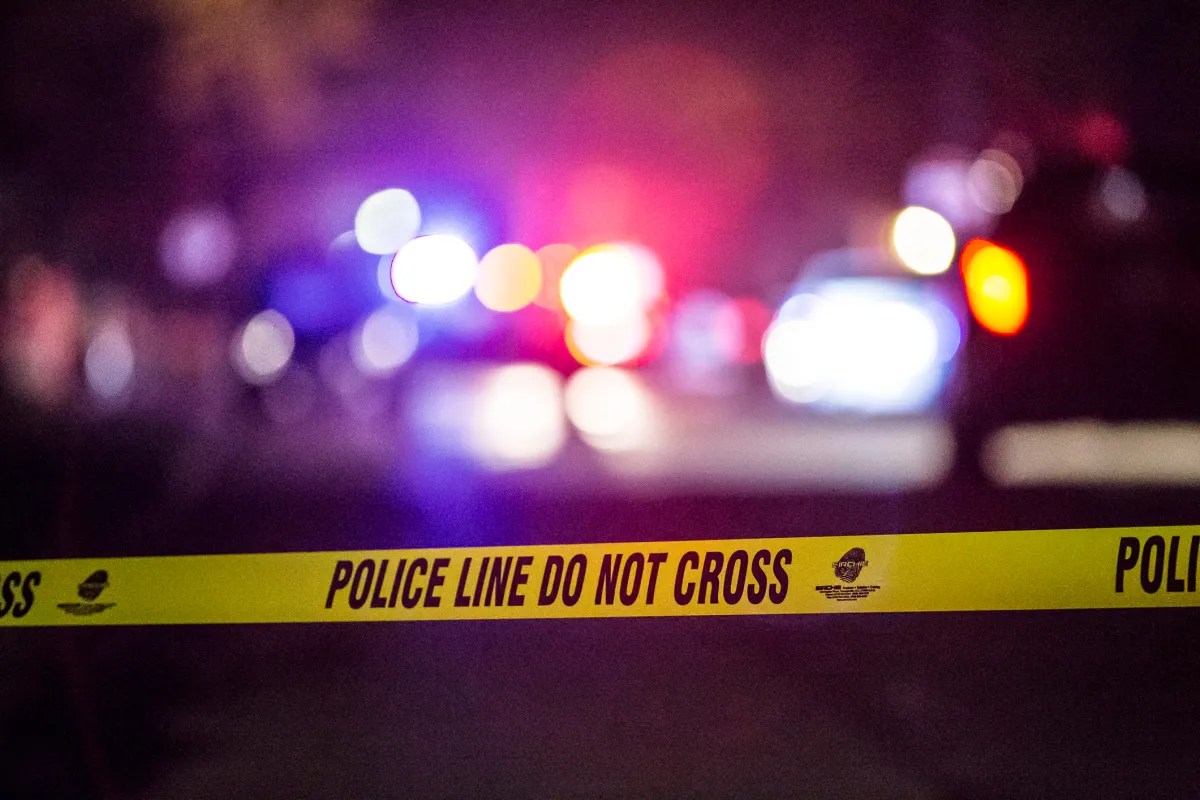
The night air over East Baltimore was thick with the sticky humidity of a late summer evening, carrying the usual symphony of city sounds—distant sirens, the low hum of traffic, the murmur of neighbors catching up on stoops, and the muffled laughter drifting from open windows. But just after nine o’clock on that Wednesday night, that ordinary cadence was violently obliterated by the sharp, percussive crack of gunfire. The sound tore through the intersection near East Fayette Street, scattering pedestrians, shattering the fragile peace of the residential blocks, and sending a shockwave of terror through the homes nearby. When the echoes finally died down, the grim reality began to emerge: seven people had been struck by bullets, and among them was a boy who had only just celebrated his third birthday. The sheer randomness of the violence, the inclusion of a toddler in the tally of the wounded, transformed a routine police call into a profound communal trauma. As officers flooded the scene, their cruisers painting the asphalt in flashes of red and blue, the first responders were confronted with a tableau of chaos—screaming victims, frantic bystanders, and the terrifying sight of a small child being rushed into an ambulance, his life hanging in the balance. The initial reports, later confirmed by local media, carried a sliver of relief: all seven victims, including the child, were transported to area hospitals with injuries deemed non-life-threatening. Yet the clinical phrase does little to soothe the raw, visceral horror of what unfolded, nor does it erase the image of a three-year-old being lifted onto a stretcher, his tiny body fighting against the trauma inflicted by a weapon that should never have been in that neighborhood.
To truly grasp the weight of this event, one must move beyond the cold statistics of the police blotter and consider the human lives tangled in the aftermath. The seven victims are not merely numbers on a hospital intake form; they are mothers, fathers, brothers, sisters, and neighbors. They are people who woke up that morning with plans for the next day—a shift at work, a school run, a dinner with family. When the bullets flew, those plans were violently ripped away, replaced by a terrifying struggle for survival. The journey to the hospital was a blur of screaming sirens and desperate prayers, the paramedics working feverishly to stabilize wounds, to stop the bleeding, to keep hearts beating. In the sterile waiting rooms of Baltimore’s trauma centers, families huddled together, their faces etched with a mixture of terror and hope, clinging to any word from the doctors behind the double doors. For the parents of the three-year-old boy, the wait must have been an eternity of agony, a brutal crucible of fear where every second felt like an hour. While the term “non-life-threatening” offers a technical reassurance, it barely scratches the surface of the psychological devastation inflicted upon these victims. A bullet wound leaves scars that go far deeper than the flesh; it plants a seed of paranoia and hypervigilance that can take root for years, if not a lifetime. The child, who should be concerned with bedtime stories and toy blocks, will now carry the memory of that night—perhaps consciously, perhaps only in the form of night terrors and a flinch at loud noises—for the rest of his days. His innocence was shattered in a single, chaotic moment, and the community must now grapple with how to help him and the other six victims piece themselves back together, physically and emotionally, in the long, arduous road ahead.
In the immediate wake of the shooting, the Baltimore Police Department mobilized its full investigative apparatus, transforming the intersection into a meticulously marked crime scene. Detectives in white jumpsuits moved like ghosts through the debris, their flashlights sweeping across the pavement in search of shell casings, bloodstains, and any other forensic evidence that might offer a clue. The department announced that it was reviewing camera footage from the surrounding area—a digital dragnet of security cameras, doorbell cams, and traffic sensors—in the hopes of identifying the person or persons responsible. Yet, despite the frantic pace of the investigation, a motive remained elusive, a frustrating void in the narrative that only deepens the community’s anxiety. The most chilling detail to emerge came from Police Commissioner Richard Worley, who told local reporters that “it appears that all the gunfire was shot in one direction.” This single piece of information drastically altered the public’s understanding of the event. This was not a chaotic, back-and-forth exchange of gunfire between rival gangs where innocent bystanders happened to be caught in the crossfire. This was a unilateral act of violence—a deliberate, calculated spray of bullets aimed at a specific target or group of targets. It speaks of an ambush, a cold-blooded attempt to inflict maximum damage, with the shooters seemingly indifferent to who might be in the line of fire. The fact that a three-year-old was hit suggests a terrifying level of recklessness, or worse, a complete disregard for the sanctity of human life. As the investigators painstakingly piece together the timeline, the city holds its breath, waiting for a break in the case, while the residents of East Baltimore are left to wonder who among them was the intended target, and why such a brazen attack would occur on their streets.
The human toll of the shooting resonated immediately in the city’s corridors of power, prompting a visceral and emotionally charged response from Mayor Brandon Scott. Standing before the cameras, his voice thick with anger and anguish, Scott did not mince words. He condemned the perpetrators in the starkest terms, declaring that “every single soul” in the city would demand to know who was responsible. His words carried the weight of a man who has seen too many of these tragedies, who has stood too many times before the microphones to mourn another senseless loss. But it was his direct address to the shooters that cut through the political rhetoric and touched the raw nerve of human morality. “There is no way, to those individuals, there is no way for you to reclaim humanity after doing that,” he said, his voice cracking with emotion. “But if you want to try to save yourself and save your soul, turn yourself in.” This plea is profoundly humanizing, reframing the perpetrators not as faceless monsters but as human beings who have committed an unfathomable act, and who now face a choice. The Mayor’s invocation of “saving your soul” suggests a belief that the shooters, too, are trapped in a cycle of violence that dehumanizes them, and that only by facing the consequences of their actions can they begin to reclaim any semblance of moral standing. He finished with a fierce, unvarnished command: “Everybody in the godd*** city should be looking for you.” In that moment, Scott was not just a politician; he was the embodiment of a wounded city’s collective fury, a father figure demanding justice for the children of his streets, and a man who refuses to let the perpetrators hide in the shadows while the innocent suffer.
As the investigation continues, Commissioner Worley attempted to offer a modicum of reassurance to the frightened public, stating that there is “no ongoing threat” to the community. This statement, while intended to calm nerves, carries a double-edged sword. On one hand, it suggests that the shooters have likely fled the area and are not actively engaging in a continuous rampage, which allows the city to breathe a tentative sigh of relief. On the other hand, it leaves a lingering, unsettling question: if there is no ongoing threat, what was the purpose of this attack? Was it a targeted hit that achieved its goal, even if that goal remains unclear? Or was it a reckless display of power, a warning shot to a rival faction that happened to claim a child as collateral damage? The absence of an immediate threat does little to restore a sense of safety to the residents of East Fayette Street. They will walk past that intersection tomorrow, seeing the faded chalk outlines and the remnants of shattered glass, and the fear will creep back in. Parents will hold their children’s hands a little tighter. The neighborhood kids who used to play tag on the corner will now cast nervous glances down the street. The psychological toll of living in a community where such violence can erupt without warning is immeasurable. It breeds a chronic, low-level anxiety that erodes trust and fosters isolation. The reassurance from the Commissioner is a bandage on a deep wound, a temporary measure that does not address the underlying sickness of gun violence that plagues so many American cities, nor does it erase the memory of that night when a toddler’s life was nearly extinguished by a stray bullet.
Ultimately, this shooting is not an isolated incident but a painful symptom of a broader, systemic crisis. Baltimore, like many urban centers, has long been haunted by the specter of gun violence, a scourge fueled by a complex interplay of poverty, systemic inequality, lack of opportunity, and the easy availability of firearms. Each shooting is a tear in the social fabric, a rupture that requires immense effort to mend. But within the darkness, there is a story of resilience. The community did not cower in silence; they rushed to help the wounded, they called the police, and they are now demanding answers. The Mayor’s fiery speech is a call to action, a reminder that this violence is not inevitable and that the city must not become numb to the bloodshed. The investigation, while painstaking, offers a path toward accountability. The search for the shooters is not merely an exercise in law enforcement; it is an act of collective catharsis, a way for the city to reclaim a sense of justice and order. As the days pass and the hospital beds begin to empty, the victims will begin their long journey toward recovery. The three-year-old boy, who should be learning his ABCs and chasing butterflies, will have to confront a trauma that no child should ever know. Yet, his survival is also a testament to the resilience of the human spirit. The city watches, waits, and hopes that the cameras will reveal the truth, that justice will be served, and that the cycle of violence will one day be broken. Until then, the intersection near East Fayette Street stands as a somber monument to a night of horror, a reminder of the fragile nature of life, and a rallying cry for a city that refuses to surrender its soul to the gunmen who seek to terrorize it.