





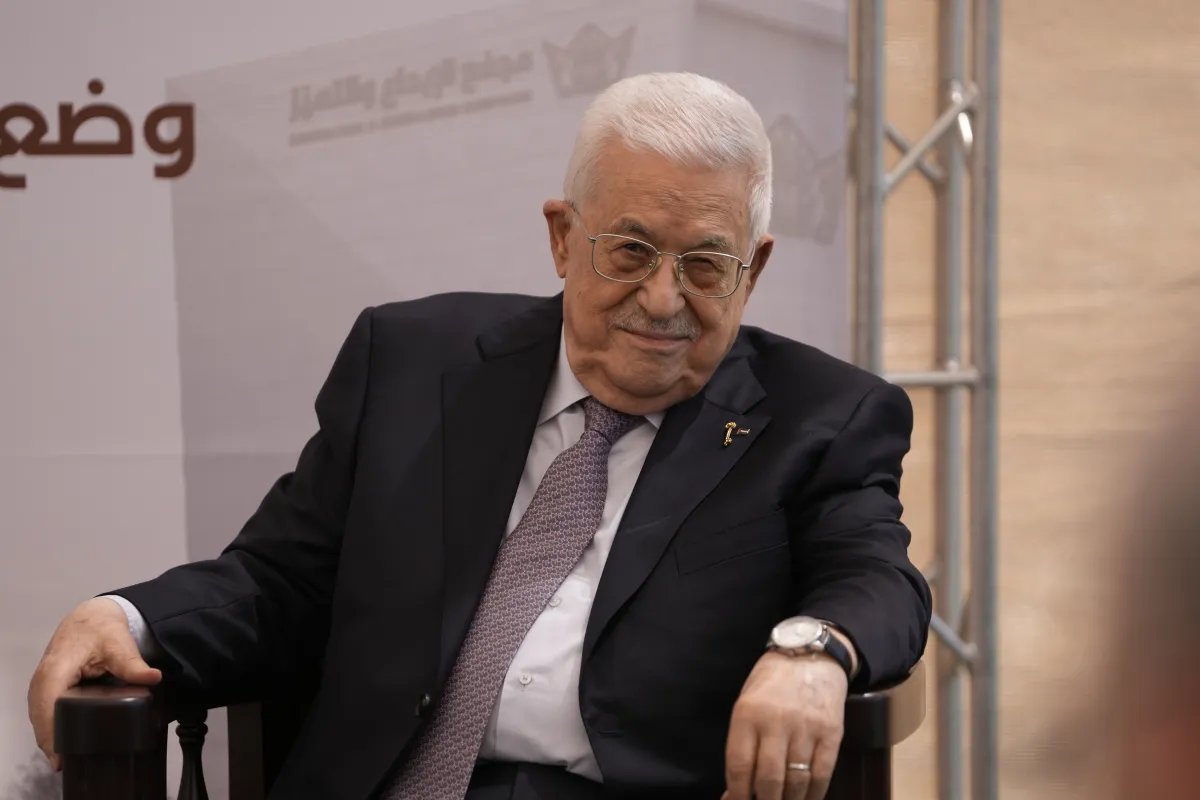
When the world’s leaders begin gathering in New York later this month for the United Nations General Assembly, the Palestinian delegation will be watching from a familiar and painful distance. For the second consecutive year, the Trump administration has denied visas to Palestinian Authority President Mahmoud Abbas and other senior Palestinian officials, effectively barring the high-level delegation from attending in person. The news, first reported by the Associated Press, lands less than a week before the General Assembly’s high-level general debate begins on September 22 at U.N. headquarters. It is a decision that carries profound symbolic weight: the man who is meant to represent millions of Palestinians before the international community will again be forced to address the world through a screen rather than from the podium. For Palestinians, the denial feels less like a technical visa matter and more like a deliberate attempt to erase their leadership from the global diplomatic map. Abbas may hold limited power and face deep frustration at home, but his presence at the U.N. has long served as a reminder that the Palestinian cause remains unfinished business on the world stage. Without him, the seat at the table—or the space at the microphone—feels emptier, and the message is clear: Washington, which controls the road to the U.N. as host country, is willing to use that control to shape who gets to speak and who does not.
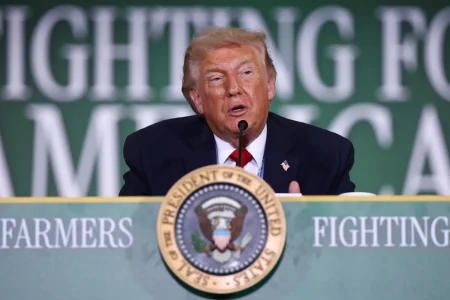
The State Department was blunt about why it took this step. In a statement, it accused the Palestinian Authority and the Palestine Liberation Organization of failing to live up to commitments they had made to the United States, and of taking actions that “undermine the prospects for peace.” Among those actions, the department cited Palestinian legal efforts against Israel at international courts, attempts to seek unilateral recognition of Palestinian statehood, ongoing payments to the families of prisoners convicted of attacks against Israelis, and what it described as the “glorification” of terrorism in public statements and school textbooks. The department said the sanctions were being imposed under the Middle East Peace Commitments Act of 2002, adding: “It is in our national interest to impose consequences and hold the PLO and PA accountable for glorifying terrorism.” The language is harsh, and it reflects a broader shift in American policy under President Donald Trump, who has moved decisively in favor of Israel and treated Palestinian leaders as unreliable partners at best, adversaries at worst. But the explanations also reveal a fundamental disagreement over what counts as legitimate political struggle and what counts as incitement. For Palestinians, taking Israel to international courts and seeking recognition as a state are peaceful, legal avenues for advancing their cause through the very institutions that are supposed to uphold international law. For the Trump administration, these actions are provocations designed to bypass negotiations and delegitimize Israel. The prisoner payments, which the Palestinians frame as social support for families who have lost breadwinners to Israeli imprisonment, are characterized by Washington and Israel as rewarding terrorism. This is not simply a visa dispute; it is a collision of two narratives, and the Palestinian people are left to suffer the consequences of a conflict being fought over language and law as much as land and lives.
The practical impact of the visa denials is somewhat tempered by diplomacy. The State Department said it would maintain a “standing waiver” for personnel notified to the PLO Observer Mission to the United Nations, which means Palestinians will still be represented at the General Assembly by diplomats who are already accredited to the U.N. and based in New York. This is not the first time that such a waiver has been used, and it reflects a careful balancing act: Washington can punish the Palestinian leadership without completely cutting off Palestinian representation at the world body. Still, the absence of Abbas and other senior officials will be felt. Last year, after being denied a visa, Abbas participated remotely by video, following a General Assembly decision that allowed Palestine to take part in that virtual manner. The General Assembly is expected to vote again this year on a similar measure allowing him to speak remotely, according to The Jerusalem Post. But remote participation is not the same as being there. Diplomacy is built on more than speeches; it is built on hallway conversations, closed-door meetings, and the quiet moments of negotiation that take place between sessions. When a leader cannot be present, those opportunities are lost. Abbas will deliver his address from Ramallah, likely in front of a screen, unable to look his fellow leaders in the eye or press his case in person. For a cause that depends heavily on international sympathy and political recognition, the difference is immense. It also sends a message to other leaders who may consider crossing Washington: the United States can make your voice harder to hear, your presence harder to feel, and your story harder to tell.
This is not the first time the Trump administration has used visa policy as a weapon on the international stage. Last year, Colombian President Gustavo Petro spoke to a crowd outside U.N. headquarters in New York, where he called for an armed force to “free Palestine” and urged U.S. soldiers to disobey President Trump’s orders. The State Department subsequently revoked Petro’s visa over those remarks, preventing him from attending U.N. gatherings in the future. Petro’s comments were inflammatory and went far beyond typical diplomatic language, but the response highlighted a pattern: the United States, as host of the U.N., holds enormous power over who can enter the country and participate in global diplomacy. That power can be used to protect U.S. interests, to send warnings, or to punish leaders who speak out against American policy. In the case of Petro, the revocation was framed as a response to unacceptable rhetoric. In the case of the Palestinian leadership, it is framed as a consequence of unacceptable actions. But for many observers, the two incidents are connected by a common thread: the Trump administration is willing to turn the visa process into a political tool, and the Palestinian Authority has been a primary target. This is especially significant because the United States has historically played a central role as a mediator in the Israeli-Palestinian conflict. By denying visas to Palestinian leaders, Washington is not only punishing them; it is also signaling that they will not be treated as legitimate partners in any future peace process. The irony is not lost on Palestinians, who point out that the United States cannot claim to be an honest broker while simultaneously locking their leaders out of the most important diplomatic gathering of the year.
The deeper implications of this decision reach far beyond the immediate question of who will speak at the General Assembly. For Palestinians, it reinforces a growing sense that the United States has abandoned any pretense of neutrality and has fully aligned itself with Israel. Under the Trump administration, the U.S. has recognized Jerusalem as Israel’s capital, moved its embassy there, and brokered normalization agreements between Israel and several Arab states, all without requiring meaningful concessions on Palestinian statehood. The visa denials are another chapter in that story, and they come at a time when Palestinians feel increasingly invisible in international affairs. Their leadership is old, fractured, and unpopular; their economy is struggling; their people are scattered across the West Bank, Gaza, and a vast diaspora; and their hopes for a two-state solution are fading. The U.N. General Assembly is one of the few platforms where Palestinians can still make their case to the world on equal footing, where the Palestinian Authority holds the status of a non-member observer state, and where resolutions in support of their rights have often passed with overwhelming majorities. To deny Abbas and his senior officials that platform is, in a sense, to deny the very idea of Palestinian statehood. It also undermines the principle of universality at the United Nations, which is supposed to welcome all nations and peoples, regardless of the political winds in Washington. By using its host-country privileges to exclude certain delegations, the United States risks turning the U.N. into a stage where only its friends are allowed to perform, and that damages the credibility of the world body itself.
As the General Assembly convenes from September 22 to 28, the Palestinian question will still be on the agenda, but it will be spoken about by others rather than by the Palestinians themselves. Abbas may appear by video, and Palestinian diplomats already in New York will work the corridors, meet with allies, and deliver statements. But the absence of the elected leader—however weak his mandate may be—will be felt in every session where the Palestinian flag is raised. The State Department’s announcement did not identify Abbas by name or provide individual visa decisions, and Newsweek reached out to the Palestinian Authority by email for comment, but the meaning is unmistakable. This is a deliberate policy of exclusion, and it will only deepen the grievances that fuel conflict. It tells Palestinians that their leaders are not welcome in the very forum where their future is supposed to be discussed. It tells Israelis and their allies that the United States will continue to shield them from accountability. And it tells the rest of the world that the rules of international diplomacy can be bent to serve the interests of the powerful. The Palestinians have always known that their road to statehood runs through difficult terrain, but being denied a visa to the United Nations is a new and particularly symbolic humiliation. The world will gather in New York to address wars, climate change, and human rights; the Palestinian delegation will be watching from afar, not by choice but by exclusion. And that, perhaps, is the truest measure of how much has changed—and how much has been lost—in the pursuit of peace.