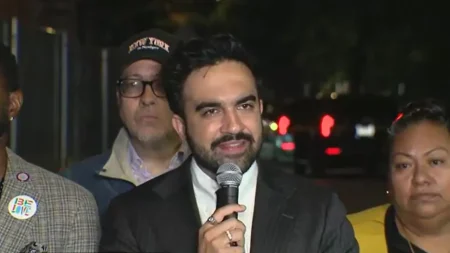






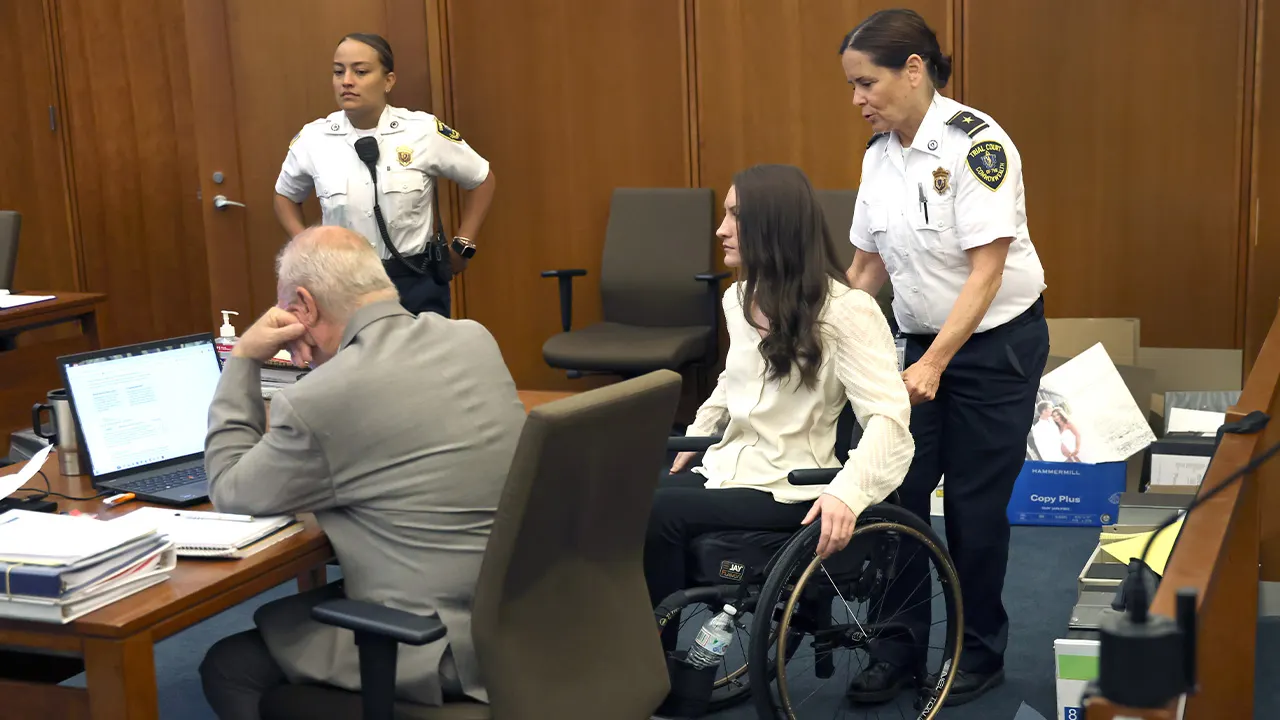
The silence that followed the Lindsay Clancy mistrial was always going to be fragile, but when it broke this week, it broke with a sharp, personal contradiction. Michael P. Desronvil, the lone holdout juror who refused to find the Massachusetts mother not guilty by reason of insanity, has stepped forward to tell his side of the story. In a statement to NewsNation, Desronvil flatly rejected claims from fellow jurors that he had expressed doubts about the prosecution’s case during deliberations. Instead, he insisted that he never wavered in his belief that Clancy knew exactly what she was doing when she strangled her three young children in January 2023. “I didn’t have any doubts. As I tried to explain different possible theories during deliberation, I kept getting cut off as if I had doubts based on the evidence present,” he said. His words carry the weight of a man who has spent weeks inside a case that no one could truly escape—a case involving a former labor and delivery nurse, three dead children, and a courtroom divided not just over a verdict, but over the very nature of guilt, madness, and moral responsibility.
Desronvil’s public statement directly contradicts the accounts of the other eleven jurors, who said after the mistrial that he appeared to acknowledge reasonable doubt during the deliberations but still refused to join them in finding Clancy not guilty by reason of insanity. The jury had deadlocked 11-1, with Desronvil standing alone in favor of convicting Clancy rather than accepting the insanity defense. When Judge William Sullivan declared a mistrial, the courtroom must have felt like a strange, unresolved theater of grief—a place where no verdict could ever feel like justice. For Desronvil, the breakdown was not about uncertainty but about being misunderstood. “Based on all the physical evidence, key witnesses and what the prosecution presents, I thought it was enough proof that she knew exactly what she was doing and planned,” he explained. His frustration is palpable: he saw himself as the one holding the line for accountability, while others saw him as the obstacle to a compassionate resolution. That gap between perception and intention is perhaps the most human detail in this entire saga—twelve people, locked in a room, trying to make sense of an act so horrifying that the mind instinctively reaches for explanations, whether legal, psychiatric, or purely moral.
The legal stakes now shift to Plymouth County prosecutors, who must decide whether to retry Clancy. It is a decision that rests on a delicate calculation: can a future jury be persuaded to unanimously reject an insanity defense after the first panel could not? Fox News contributor Jonathan Turley framed the dilemma clearly, noting that “the question is whether they could ever get a jury, particularly in Massachusetts, that would unanimously vote against this defendant.” For prosecutors, the path forward is steep and uncertain. They could try again, risking another hung jury and another round of painful testimony. Or they could walk away, which Turley described as an equally unappealing alternative: “to simply walk away and say, ‘There are three dead children here, but we just don’t think we could ever win this case.’” That is the brutal arithmetic of high-profile criminal cases involving mental illness. The public wants accountability, but the law demands proof of criminal responsibility beyond a reasonable doubt. And when a defendant admits to the killings but claims she was swept away by severe mental illness, the line between justice and mercy becomes almost impossible to draw with confidence.
To understand why this case has gripped so many people, it helps to remember who Lindsay Clancy was before that January night. She was a labor and delivery nurse, a woman who spent her professional life caring for mothers and newborns. She and her husband had three beautiful children—Cora, five, Dawson, three, and eight-month-old Callan. By all outward appearances, she was a devoted mother, but beneath the surface, she was struggling with severe mental illness, reportedly including postpartum depression and psychosis. She admitted to killing her children, but her defense argued that she was not criminally responsible because her mind had fractured under the weight of an illness she could not control. Prosecutors, however, painted a different picture: they argued that she planned the murders and understood the wrongfulness of her actions, pointing to evidence of premeditation and attempts to conceal what she had done. The trial became a battle of competing narratives—one of a mother lost to madness, the other of a woman who made choices and followed through on them. Both stories are devastating, and both are incomplete in their own way, because no single explanation can fully contain the horror of what happened.
The aftermath of the mistrial has been complicated by practical and emotional concerns. Judge William Sullivan has ordered the identities and questionnaires of the jurors sealed, citing safety concerns following the high-profile case. That decision reflects the intense public scrutiny surrounding the trial, where emotions have run high and people have taken sides not just on the verdict, but on the very meaning of the case. Desronvil himself has already faced backlash, and his decision to speak publicly is a rare and risky move. Meanwhile, Clancy is due back in court on September 29, as prosecutors continue to weigh whether to seek a retrial. For her, for her surviving family, and for the community, the legal uncertainty only prolongs an already unbearable tragedy. There are no easy answers here—only the slow, grinding machinery of justice trying to find its way through a case that defies conventional resolution. The jurors themselves have expressed a range of emotions, with one saying, “We let down Lindsay,” suggesting that some felt the mistrial was a failure to reach the compassionate outcome they believed was warranted.
Ultimately, the Lindsay Clancy case forces us to confront uncomfortable questions about how we treat mothers who commit unthinkable acts while suffering from mental illness. We want to believe that justice is clear-cut, that guilt and innocence can be neatly determined by evidence and law. But the human mind is not neat, and postpartum mental illness is a shadow that can distort reality in ways that even medical experts struggle to fully explain. Desronvil’s insistence on Clancy’s guilt is not born of indifference; it is born of a belief that she planned her actions and understood their wrongfulness. The other jurors’ inclination toward insanity is not born of naivety; it is born of a belief that her illness robbed her of the capacity to choose. Both sides are trying to make sense of a tragedy that may ultimately resist sense-making. As the court prepares to decide what happens next, the rest of us are left to sit with the discomfort of ambiguity—to hold space for the grief of three lost children, for the suffering of a mother whose mind failed her, and for the solemn responsibility of a legal system that must decide, in the end, whether she is a murderer or a victim of her own broken mind. That is the human weight of this case, and it will not be lifted by any single verdict.