





Sagal Abdi-Wali Wins Central London Special Election, Delivering Early Boost to Prime Minister Andy Burnham
In a by-election widely viewed as the first electoral verdict on Keir Starmer’s successor, Labour held off challengers to claim a seat that is both a bellwether and a barometer of urban Britain.
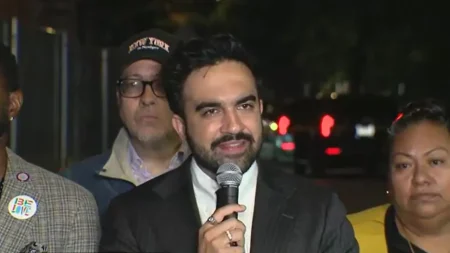
When the last bundle of ballot papers slid through the sorting machine at a cavernous sports hall in central London, thewatching Labour strategists allowed themselves a rare, unguarded smile. Sagal Abdi-Wali had won the special election—and won it in a manner that left no room for a dramatic recount. Declared just after 1 a.m. in a hollow, fluorescent-lit hall, theresult was met with a ripple of applause bursting out from under a pile of campaign leaflets. It was, by any measure, a solid victory: Abdi-Wali polled 21,438 votes, good enough for 52.4 percent of the vote, anda majority of 8,902. The majority had been trimmed from the enormous cushion Labour enjoyed at the previous general election, but in by-election terms—with a new prime minister barely settled into Number 10—it was as good as the party could reasonably have hoped.
The significance was not lost on anyone in the room. This was never merely a local contest, however pressing the local issues were. It was the first major electoral test for Prime Minister Andy Burnham, Keir Starmer’s successor, and the verdict was entirely audible: the coalition of urban, liberal-minded, public-service-oriented voters that delivered Starmer a commanding Commons majority had not, at least not yet, crumbled. For a government still finding its feet, thatwas not a trivial reassurance. Starmer’s enemies had spent months predicting thathis premature exit would leave Labour languishing, rudderless, gripped by internal wars over strategy and ideology. Instead, less than a hundred days into Burnham’s premiership, theparty had demonstrated that it could still produce a disciplined, professional, door-to-door campaign—and close the deal on election day. The seat itself, carved from some of London’s most crowded, restless, and economically divided neighborhoods, had long been regarded by political operatives as a kind of living focus group. Its residents range from high-earning professionals in gleaming new build flats to families dependent on food banks in overcrowded social housing. How this seat votes acts, in the words of one veteran lobby journalist, “like an early warning system for the cities.” On this occasion, nudged by a candidate whose biography embodied the changing face of modern Britain, thearly warning system flashed Labour.
Abdi-Wali herself was an unlikely symbol of the old political order. A health campaigner with roots in Somalia’s diaspora community, she has spent much of her working life not in Westminster committee rooms but in GP surgeries, community centres, and overcrowded housing advice clinics. Arriving in Britain as a teenager, she learned English in north London classrooms before going on to carve out a career in public health—work that brought her into intimate contact with the very services she now hopes to shape from the green benches. Her platform was emphatically local but also resonant with the national mood: the housing crisis that had priced young people out of the neighborhoods where they grew up, the overstretched clinics thatleft patients waiting weeks for appointments, the cost-of-living squeeze thatstill pressed hard even as inflation cooled. Allies described her style as “radical patience”—a willingness to listen for hours before proposing solutions, an approach thatvoters, weary of performative anger, seemed to find refreshing.
Throughout the six-week special election campaign, Abdi-Wali knocked on more than twelve thousand doors, her canvassers said, and her campaign literature was stuffed not with national slogans but with local specifics: a promise to campaign for a new community health centre, a commitment to champion tenants’ rights against unscrupulous private landlords, an pledge to hold regular street surgeries in every ward. One exhausted but elated Labour organizer put it succinctly after the result was declared: people weren’t buying slogans; they were buying sleeplessness. Abdi-Wali’s own backstory gave that message an authenticity that no centrally produced manifesto could replicate. In her acceptance speech, she referenced her journey directly but briefly:”I know what it means to wait months for a hospital appointment, to lie awake worrying about rent, to wonder whether the bus will ever come,” she told supporters, her voice steady despite the early hour. “This is not abstract politics for me. This is the politics of everyday life.” It was a line that had been tested on doorsteps, and it worked.
Viewed from Downing Street, theresult was as much a relief as a triumph. When Andy Burnham succeeded Keir Starmer, inheriting a parliamentary majority that would have made previous Labour leaders blush, critics accused him of presiding overa machine with no purpose beyond its own perpetuation. Abdi-Wali’s campaign offered himachance to answer that critique—and before the result came in, neither side was confident he had mastered it. Internal party polling had reportedly shown something unsettling: up to a third of voters who had supported Labour at the last general election told canvassers they were undecided, disengaged, or open to a protest vote. With a new leader needing to establish authority, advisers knew that even a reduced majority, if presented as a near-defeat, could be spun into a narrative of decline. Burnham did not leave it to chance. The prime minister made two carefully scheduled visits to the constituency during the campaign, avoiding photo-opportunity theatrics in favor of roundtable discussions with health workers, private renters, and small-business owners. It was a style distinct from his predecessor’s forensic, lawyerly caution—more shirtsleeved, more direct, more comfortable with raw emotion. Starmer had painstakingly rebuilt Labour after its catastrophic 2019 defeat, forging a disciplined electoral machine premised on trust, competence, and fiscal moderation. Burnham, inheriting that machine, had to prove he could fuel it without breaking its gears. The by-election was framed, in the phrase anointed by Labour’s press office, as”the first down payment on a new relationship with the British people.” On this evidence, the payment had cleared.
To capture what actually happened inside the polling booths, it helps to leave the spin rooms behind. On the final weekend of the campaign, outside anminimarket near Euston, opinions varied widely but a common thread kept emerging: fatigue with partisan warfare, anda weary desire for competent governance. “I’ve voted Labour all my life, but I was wavering this time,” said a woman in her sixties, a retired nurse who gave her name only as Margaret. “The last few years have been chaotic. There have been strikes, scandals, resignations—and ordinary people just trying to keep their heads above water. But when I read about this candidate, and about Burnham, I thought: let’s give themachance to get on with it.” Another voter, a young professional who cradled a coffee cup and declined to give his name, said he had been tempted to back the Liberal Democrats. “I’m not tribal. But the Conservative candidate seemed to be running against things rather than for things, and neither of them really convinced me. In the end, I voted Labour becauseI want stability, not excitement.”
Such sentiments—a quiet, unglamorous desire for delivery—were mirrored in focus groups conducted by both parties. National issues loomed large, with immigration, healthcare waiting lists, and housing affordability the most frequently cited concerns. But frustration, crucially, did not translate into rage against Labour; rather, it manifested asa skeptical”show me” attitude. The Conservative campaign, led by a polished candidate with a thin local footprint, never quite found a foothold in neighborhoods where, as one Tory canvasser candidly admitted, “the brand damage from recent years is still a massive drag.” The Liberal Democrats, meanwhile, projected themselves as the true opposition in central London, shavingthe Labour majority down in several polling districts but ultimately failing to breach the wall of incumbency loyalty. The Green Party, fielding its strongest local candidate in years, tapped into deep well of climate anxiety, particularly among younger voters, but finished a distant also-ran. In short,thousands of voters who might once have flirted with apostasy had chosen, in the end, to hold their noses—and their hopes—and stick with red.
Every by-election carries a cargo of national meaning, and this one was no exception. For Burnham, theresult offered immediate, concrete evidence thathe could step out of Starmer’s shadow without crashing. It gives him political capital to deploy in two directions simultaneously. Externally, it functions as proof that Labour’s electoral coalition remains intact, capable of surviving leadership transition amid hostile headlines and gloomy economic forecasts. Internally, it serves asa warning to dindergent factions thatthe leader’s blend of fiscal discipline andpublic investment—unromantic, incremental, but effective—is what actually wins elections. Already, allies have begun framing Abdi-Wali’s victory asa vindication of what one senior adviser called”the steady-as-she-goes doctrine.” But caution is warranted, and experienced hands in both parties were quick to stress it. By-elections, particularly in safely Labour seats, are among the flattest of political tests; they reward organizational strength, incumbency loyalty, and the peculiar rhythms of local life more than they forecast national trends. The central London result tells us something sincere about the capital’s mood, but it does not tell us how voters in the Midlands, the North East, or coastal towns will behave when the next general election arrives. If inflation ticks up again, if hospital waiting lists lengthen, if the housing crisis deepens, this victory will quickly fade into memory, a footnote rather thanafoundationstone. Still, as the returning officer read outthe result, burned onto the collective memory of Labour’s high command was an image of a newly united party—one that had just passed its first exam with flying colors.
Abdi-Wali’s acceptance speech was short, unadorned, and entirely in keeping with the mood of the night. She thanked her activists, praised her opponents for fighting a clean campaign, and then pivoted immediately to the people who had placed their trust in her. “This is not my victory,” she insisted. “It is a victory for every nurse who has been asked to do more with less, for every young person who has given up looking for an affordable home in the city they grew up in, for every parent who has spent hours on hold trying to get a GP appointment. I am going to Westminster to work, not to pose.”
Her words captured the deeper message of the night, which was perhaps more significant than any individual political career. Central London—a place of stark extremes, where hedge fund managers and housing activists share the same Tube carriages—has historically punished governments that appear out of touch. This time, it offered a provisional, conditional benediction. Burnham has been handed a narrow window in which to prove that government can still deliver tangible improvements to ordinary lives. Sagal Abdi-Wali’s new parliamentary career begins now; Andy Burnham’s true test begins now, too. The special election in central London was never going to set the world on fire by itself, but it has lit something potentially more important: a flicker of cautious optimism. If the by-election is any guide, Britain’s new prime minister has been warned as much as he has been encouraged: voters are willing to believe again, but they will demand receipts. And in this city, at this hour, thatmaybe the most valuable currency of all.