


In the high-stakes, churning ecosystem of modern college football, few things hold as much power or drama as the NCAA transfer portal. It is a digital marketplace where loyalty is tested, legacies are forged, and where the wounded pride of a teenager can evolve into the fuel for a professional career. When Rasheem Biles, a senior linebacker who had just posted a monstrous season at Pittsburgh, officially entered his name into this chaotic fray, his phone did not just buzz; it vibrated off the hook. Program after program lined up, eager to court the young man who had transformed himself from an overlooked prospect into a certified defensive force. Offensive coordinators across the nation shuddered at the thought of facing him, while head coaches promised him starting roles, generous NIL packages, and the keys to their defenses. It was a whirlwind of attention that stood in stark contrast to the quiet, frustrating fall he experienced during his high school recruiting cycle. Yet, amidst the flurry of visits and strategic pitches, one powerhouse thought it had the ultimate secret weapon: a nostalgic connection to home. The Ohio State Buckeyes, led by a staggering legacy of national championships and NFL development, believed they could pluck Biles from the portal by appealing to the heart. But in a twist of poetic irony, their attempt to lure him back to his birthplace would become the very reason he slammed the door in their faces.
The Ohio State playbook was straightforward and, on its surface, brilliant. Rasheem Biles was born in Columbus, Ohio, a city that lives and breathes scarlet and gray, where the towering façade of Ohio Stadium is practically a civic landmark. The Buckeyes’ recruitment team leaned heavily on this geographical serendipity, weaving a narrative of a hometown hero returning to claim his rightful throne. They envisioned him sprinting onto the field in front of childhood friends, a triumphant homecoming story fit for a sports headline. However, they failed to understand the psychological wound they had unintentionally inflicted years prior. Back in the class of 2023, Biles was a talented yet modest three-star recruit. He watched as offers poured in from programs like Pittsburgh, Purdue, West Virginia, and Marshall—solid institutions that saw his raw, unpolished potential and were willing to invest in his future. But Ohio State, the monolithic giant sitting in his own zip code, never even lifted the phone. They evaluated his film, decided he wasn’t their standard of elite, and ghosted him. As Biles developed into a star, that silence festered. So, when the Buckeyes came calling with their slick hometown pitch in the transfer portal, Biles saw through the flattery immediately. With a resolute clarity that stunned his own mother, he rejected the notion outright. “I ain’t trying to be a Buckeye,” he declared, referencing the fact that they had no interest in him when he was right there in their grasp. The strategy backfired spectacularly, turning a potential recruitment victory into a burning feud. That dismissive silence became a litany of slights he carries like a battering ram, and the eventual matchup between his new team and the Buckeyes is not merely a date on a schedule; it is a circled, tattooed target of personal retribution.
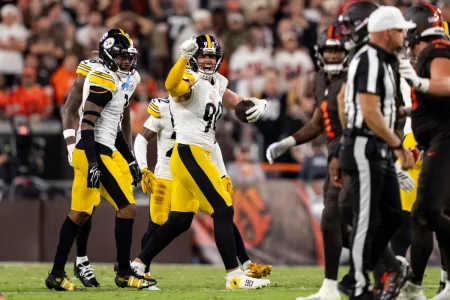
To truly comprehend the depth of this grudge, one must look back at the relentless work that turned Biles into a hot commodity. At Pittsburgh, he did not inherit a starting role; he earned it through blood, sweat, and an unyielding chip on his shoulder. He arrived as a skinny, explosive freshman with more determination than polish, but the coaching staff saw the molten gold beneath the surface. Over three arduous seasons, he evolved into a terrifying human wrecking ball. His final season with the Panthers was a statistical masterpiece that demanded national attention: a staggering 100 tackles, a career-best 4.5 sacks, two forced fumbles, and two interceptions. Those numbers, however, barely capture his impact on the field. He was a quarterback’s nightmare, possessing the instinct to sniff out screens before they developed, the violent hands to shed blockers in the run game, and the ball skills of a safety when dropping into coverage. By the end of his tenure in Pittsburgh, he had accumulated a formidable career resume—183 tackles, 10.5 sacks, three forced fumbles, and three defensive touchdowns—numbers that would make any NFL scout sit up straighter in their chair. Yet, despite this success, there was a persistent itch. Pittsburgh was a great home, but it lacked the weekend-to-weekend gladiatorial spectacle of the SEC. He knew that to maximize his draft stock and silence the lingering doubts of the recruiting world, he needed a bigger stage, a brighter spotlight, and a defensive scheme that would unlock his true versatility.
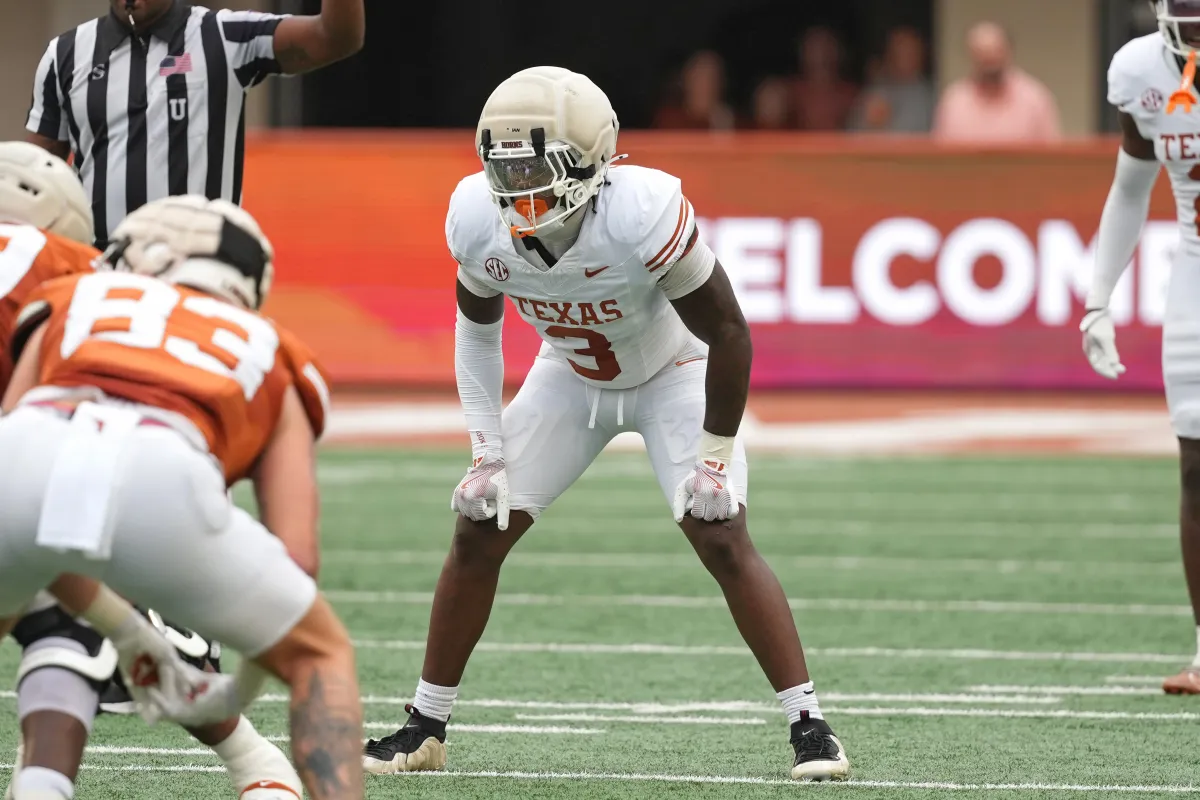
That stage turned out to be the University of Texas, a program where expectations are measured in national titles, and where he found a defensive coordinator in Will Muschamp who treats defensive players like pieces of kinetic art. Muschamp is renowned for his aggressive, multiple-front defenses that blur the lines between linebacker, safety, and edge rusher. For Biles, this was the answer to a decade of praying. In his first interactions with the staff, a light bulb went off. Muschamp doesn’t subscribe to rigid, archaic positional boxes; instead, he builds his game plan around the unique strengths of his athletes. He allows a dynamic linebacker to line up over the tight end, rush off the edge, or float into the middle of the field to erase crossing routes—all within a single drive. Biles was effusive in his praise, remarking how amazing it is to play in a defense where the coach never puts you in a bad position, but instead hands you the tactical freedom to win. This philosophical alignment is the secret sauce that elevates good defenses to legendary status. It allows Biles to be more than just a run-stuffer; he becomes a chess piece, a roaming threat that opposing quarterbacks must account for on every single snap. The Longhorns’ strength program, top-tier facilities, and grueling SEC schedule will only further sharpen his already lethal skill set, ensuring that by the time the NFL Draft rolls around, he will be a first-round-caliber enigma.
Of course, modern college football is as much a business as it is a sport, and Biles is navigating this landscape with the acumen of a seasoned CEO. His decision to leave Pittsburgh was not borne of disrespect, but of a cold, calculated assessment of his future. Entering the portal was a risk—leaving the comfort of established relationships for the uncertainty of a new locker room and playbook—but the payoff is immense. Every game he plays at Texas is broadcast to millions, giving him a platform he never had at Pitt. Those 100 tackles and 4.5 sacks are impressive, but doing the same against the offensive juggernauts of the SEC, filled with future first-round draft picks, will catapult his stock into the stratosphere. The game against Ohio State becomes his ultimate job interview. It is a prime-time stage where he can exorcise his personal demons while simultaneously depositing a massive check in his professional bank account. Beneath the strategic layer, however, lies a profoundly human story. There is a quiet, fierce satisfaction in proving every scout wrong, in holding a metaphorical grudge that sharpens one’s focus. Biles knows that the coaches at Ohio State likely don’t even remember the three-star recruit they ignored, but he remembers. That memory isn’t a toxic burden; it is the forge on which his relentless work ethic was tempered. He channels the pain of rejection into a tangible, unstoppable motor, transforming what could have been bitterness into a brilliant, forward-looking momentum.
Ultimately, the saga of Rasheem Biles stands as a potent testament to the transformative power of self-belief and the sweet resonance of revenge. Ohio State’s hometown pitch was a spectacular miscalculation, a failure to understand that love for a city cannot erase the sting of being passed over by its flagship team. In choosing Texas, Biles didn’t just pick a football program; he chose to validate the overlooked kid he once was. He chose a coach who sees his value, a system that maximizes his gifts, and a conference that will showcase his talents to the entire world. When the Longhorns finally line up against the Buckeyes, the collision will transcend mere athletic competition; it will be a personal referendum on his decade-long journey. Yet, regardless of the final score on that day, Biles has already won. He carved a path from the quiet despair of being a forgotten three-star to the roaring heights of an SEC starter through sheer force of will. He taught himself that a hometown isn’t defined by the place of your birth, but by the respect you command within it. For every young athlete watching his story unfold, it is a powerful reminder that rejection can be a catalyst for greatness. The chip on his shoulder is not a weight; it is the engine that drives him. And as he looks towards that circled date in Columbus, he isn’t just looking at a football game. He is looking at a chapter of his life that he finally has the power to rewrite, with a full heart, a strategic mind, and a burning desire to show the world exactly who he was always meant to be.