


In the quiet chaos of a February morning, the familiar hum of Orlando International Airport was interrupted by a scene that would unravel an elaborate, decade-long illusion. Mario Cesar Dos Santos Jr., a 50-year-old Brazilian national, stepped off a flight from Boston and was met not by a welcoming committee, but by federal agents who had been tracking his movements for months. There was no dramatic chase, no last-minute getaway—just the quiet, decisive handcuffing of a man who had allegedly built an empire of lies in the shadows of America’s immigration crisis. Dos Santos, who had entered the United States in 2016 on a valid visa and simply never left, now stood at the center of a criminal case that would expose a bizarre and audacious scheme: the creation of a fake federal agency, complete with counterfeit credentials, that promised desperate immigrants something precious—immunity from deportation. But as the sun rose over the tarmac, the illusion was already crumbling. He was taken into custody, and the elaborate house of cards he had constructed began to fall.
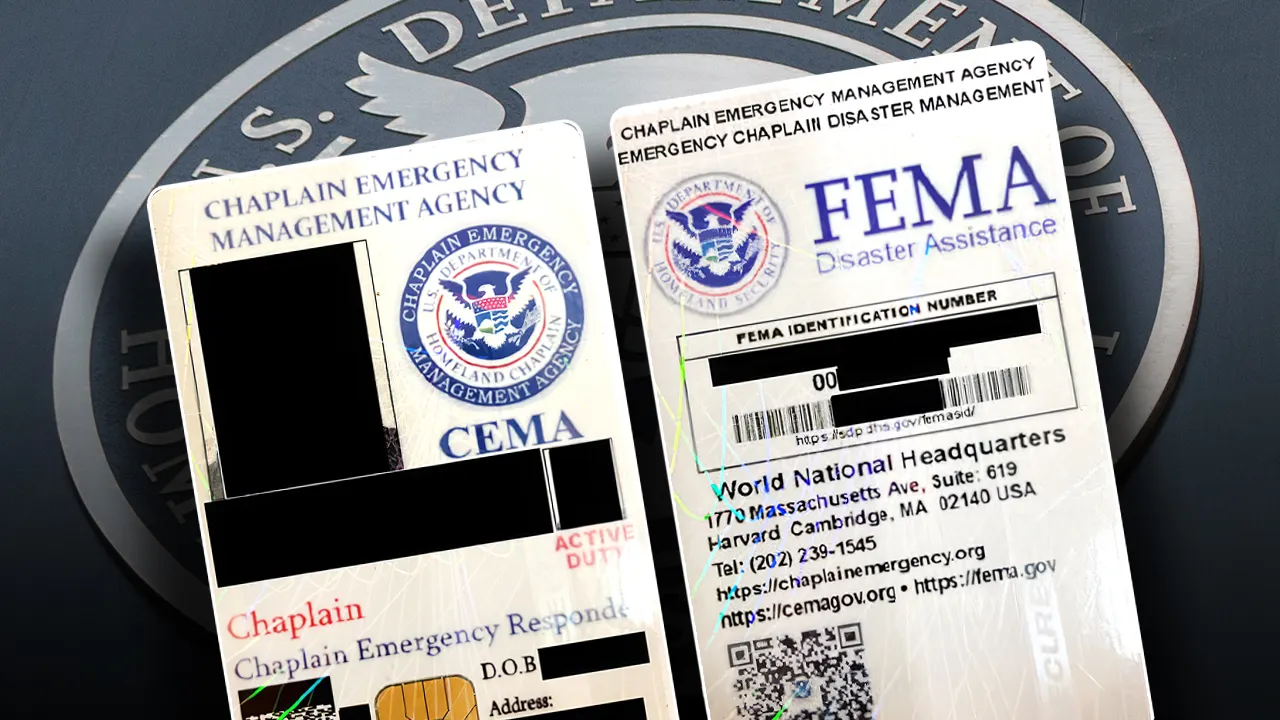
Dos Santos’s scheme was as simple as it was cruel. He called himself the president of the “Chaplain Emergency Management Agency” (CEMA), a name that sounded official, even benevolent, but existed only in his imagination and the minds of those he deceived. While he offered his “training seminars” for free, the real cost came later—participants were charged between $400 and $450 for certificates they believed would shield them from federal immigration officers. Each session, held in small venues that likely felt more like community gatherings than federal briefings, attracted anywhere from 30 to 45 people. These were not wealthy or well-connected individuals; they were immigrants living in the shadows, terrified of a knock on the door, desperate for any semblance of protection. Dos Santos preyed on that fear, offering not just documents, but hope—hope that was as false as the agency he claimed to lead. The victims, many of whom had trusted him with their money and their futures, were not just scammed; they were betrayed by someone who exploited the very system they were trying to navigate legally.
But the fraud did not stop at certificates. Dos Santos, in a grotesque display of audacity, went a step further by manufacturing and selling a range of merchandise—clothing, badges, stickers, and other paraphernalia—all emblazoned with the official seals of the Department of Homeland Security (DHS) and the Federal Emergency Management Agency (FEMA). These were not cheap knockoffs sold in a back alley; they were carefully crafted items designed to appear legitimate, bearing the weight of government authority. The scheme was so convincing that a confidential informant, working with federal investigators, was able to purchase several of these items at one of his seminars, capturing evidence that would later seal Dos Santos’s fate. In an era where a simple badge or official-looking document can open doors, his counterfeits posed a direct threat to national security and public trust. The public had long been taught to respect these symbols; Dos Santos twisted that respect into a weapon of manipulation, using the very emblems of American security to defraud the vulnerable.
The digital footprint of the operation was equally elaborate. The CEMA website, its social media accounts, and a group chat with over 750 members actively promoted upcoming courses, all while displaying an altered DHS seal to bolster credibility. The organization even claimed to be accredited by the International Association for Continuing Education and the American Council on Education—assertions that were as fictional as the agency itself. This online presence was not a minor detail; it was a central part of the scheme’s success, allowing Dos Santos to reach a wider audience and maintain a facade of legitimacy. For many immigrants, especially those who may not be fluent in English or familiar with the intricacies of U.S. government operations, the website and the group chat were the first points of contact. They saw the seals, read the claims, and believed they had found a lifeline. The investigation, which was launched in August 2025, revealed the full scope of the operation, but by then, many had already parted with their hard-earned money, leaving them with nothing but paper and broken promises.
Now, Dos Santos faces up to 20 years in federal prison when he is sentenced on December 18, but his case is more than just a single conviction—it is a symbol of a larger problem. His guilty plea to wire fraud and the fraudulent use of government seals underscores the lengths to which some will go to exploit the American immigration system. But it also highlights a broader federal effort to crack down on such abuses. The Trump administration has made eliminating fraud a priority, establishing the Task Force to Eliminate Fraud, led by Vice President JD Vance. In fiscal year 2025 alone, FEMA investigated more than 2,000 fraud cases, a staggering number that reveals the pervasiveness of these crimes. For the agents and prosecutors who worked on Dos Santos’s case, his arrest was a victory, but it was also a reminder of the countless other schemes that may still be operating in the shadows. The system, they know, is only as strong as the vigilance of those who protect it.
In the end, this story is not just about one man’s fall from grace; it is about the victims who were left behind—families who paid for a false sense of security, who trusted a man who claimed to be something he was not. It is about the fragile nature of hope in the immigrant community, where a single misstep can lead to separation and despair. Dos Santos’s deportation, which now seems inevitable, will not undo the damage he caused, but it does send a message: the United States will not tolerate those who prey on the vulnerable, especially under the guise of federal authority. As his case winds its way to a conclusion, it serves as a cautionary tale for immigrants everywhere—a reminder that the only real protections come from legitimate legal channels, and that the men and women in uniform are the only ones who should ever wear a federal badge. The audacity of his fraud was matched only by its ultimate failure, a failure that underscores the resilience of a justice system determined to protect the innocent and punish the guilty. For every seminar, every certificate, every counterfeit badge, the law has spoken: no amount of false promise can withstand the truth.