






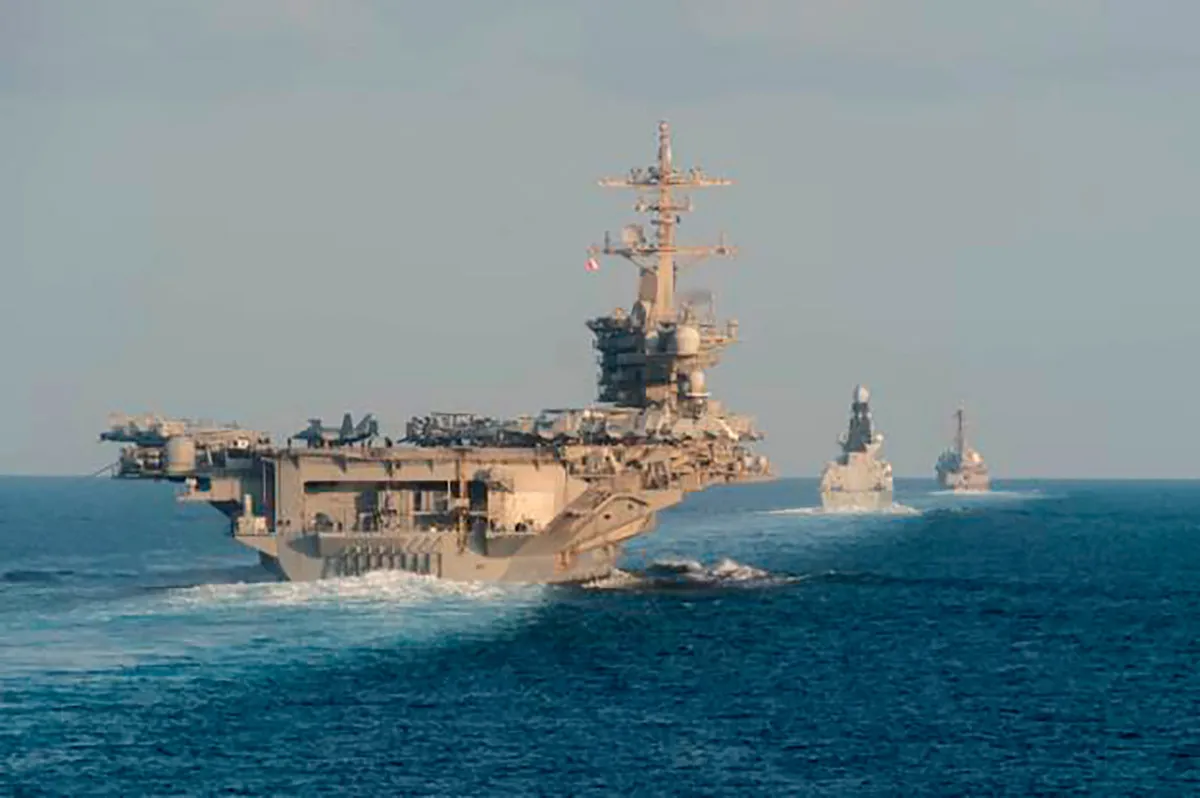
For over two hundred days, a floating city of nearly five thousand souls has been cut adrift on the world’s oceans, tethered to a mission that has stretched far beyond the boundaries of human endurance. The USS Abraham Lincoln, a Nimitz-class aircraft carrier, departed its homeport in San Diego in November under the banner of routine deployment, only to be abruptly rerouted from the Pacific to the volatile waters of the Middle East as the drumbeats of a new American war with Iran reached a fever pitch in late February. What was meant to be a standard tour of duty has since morphed into a grueling, record-breaking ordeal, marking the longest continuous stretch at sea for a carrier in modern history. As the carrier strikes deep into hostile territory and its aircraft roar off the flight deck day and night, a quieter, more insidious crisis is unfolding below deck: a profound erosion of physical well-being, psychological resilience, and basic human dignity. The whispers that began as complaints about cold food have escalated into heart-stopping reports of sailors attempting to leap overboard, transforming this vessel from a symbol of American naval power into a microcosm of a military stretched dangerously thin. Now, as families back home plead for answers and lawmakers on Capitol Hill demand accountability, the Lincoln serves as a stark, sobering reminder that the ultimate cost of prolonged conflict is often paid in the currency of human lives, not just in foreign battlefields, but in the shared misery of those who serve.
The reality of life aboard the Lincoln has devolved into a grim struggle against the elements of decay and neglect, where the basic infrastructure that sustains thousands of people is crumbling around them. Inside the steely hull, the atmosphere is thick with the acrid scent of fuel, sweat, and despair. Sailors report that the showers are riddled with toxic black mold, the toilets are frequently broken and backed up, and hot water is a luxury that has long since evaporated. The galley, once a source of comfort and communal gathering, now struggles to provide adequate nourishment, with dwindling provisions forcing the crew to subsist on reduced rations that sap their strength and morale. For a population of young men and women living in cramped berthing compartments stacked three bunks high, these are not mere inconveniences but constant, grinding assaults on their senses and their sanity. The sheer monotony of the endless horizon, broken only by the terrifying, deafening roar of catapult launches and the menacing thud of recovering aircraft, creates a relentless psychological pressure cooker. It is within this suffocating environment that at least two personnel have reportedly attempted to climb the ship’s railings and hurl themselves into the abyss below. These acts, born of a profound psychic break from living in a state of perpetual vigilance with no sign of relief, have become the starkest possible symbols of a crew pushed to the brink. The lack of adequate mental health resources and the stigma associated with seeking help only serve to deepen the isolation, leaving many to suffer silently in a metal prison that refuses to yield solid ground.
While the sailors themselves endure the physical and mental decay on the open ocean, their families onshore are living through a separate, agonizing purgatory characterized by helplessness and dread. These families, the invisible support structure of the Navy, have become the primary conduits for the alarming truth that official channels are failing to acknowledge. They hear the exhaustion in their loved ones’ voices, the flat tone of someone who has lost the will to find joy in a phone call, and they piece together the horrifying fragments of broken toilets, spoiled food, and the crushing despair of watching shipmates reach their tipping point. When the first reports of the suicide attempts began to circulate, these families transformed from passive observers into frantic advocates, flooding social media groups and congressional offices with urgent pleas for intervention. Their fear is compounded by a profound sense of betrayal as they watch the military establishment—specifically Secretary of Defense Pete Hegseth—dismiss their sons’ and daughters’ suffering as “fake news” and a left-wing fabrication. The families know better. They hear the trembling in their sailor’s voice, they see the photos of the moldy showers they risk disciplinary action to send, and they understand that the official denials are merely a bureaucratic shield designed to protect the chain of command rather than the well-being of the crew. Every hour that passes without credible acknowledgment of the crisis is an hour of terror, as they grapple with the horrifying possibility that their next phone call might not be from their deployed servicemember, but from a chaplain delivering the worst news imaginable.
In response to these harrowing accounts and the desperate pleas of family members, a faction of Democratic lawmakers has stepped forward, demanding transparency and accountability from the Pentagon and the Navy. Representative Mike Levin of California, whose district is home to many Navy families, articulated the visceral reality of the situation, citing the absence of basic hygiene supplies, the prevalence of moldy showers, and the lack of hot water and adequate food. He has framed these issues not as logistical quibbles but as fundamental failures of military leadership. Following closely behind, Senator Ruben Gallego of Arizona has called for an unvarnished, bipartisan congressional delegation to physically board the Lincoln and conduct an oversight investigation, seeking to bypass the sanitized official reports that have painted a rosy picture of morale and readiness. However, the most powerful political rebuke came from Senator Richard Blumenthal of Connecticut, who on Wednesday addressed a pointed letter to Secretary Hegseth. Blumenthal highlighted that aircraft carriers are inherently extraordinarily dangerous workplaces under even the most favorable conditions, filled with heavy machinery, jet fuel, and spinning propellers. He astutely argued that the current extended period at sea has compounded these inherent risks through acute fatigue, deferred maintenance, and drastically reduced opportunities for rest and recovery. These lawmakers are not merely seeking to score political points; they are articulating a moral imperative rooted in the Constitution’s requirement for civilian oversight, demanding that the institution tasked with protecting the nation not be allowed to cannibalize its own warriors in the process.
The context of this crisis becomes even more stark when compared to the established norms of naval deployment. Historically, a carrier deployment lasts between six and seven months, a duration meticulously calculated to balance mission readiness with the psychological tolerance of the crew. Integral to this standard timeline are scheduled port calls—brief respites in foreign ports that allow sailors to touch solid ground, inhale unpolluted air, consume a fresh meal, and reconnect with the civilian world. These liberty calls are not just restorative; they are psychological lifelines that provide a tangible goal and a break from the suffocating monotony of steel and sea. The Lincoln, however, has been deployed for just under nine months, and apart from a brief and fleeting port call in Guam back in December—which feels like a lifetime ago—it has been steaming relentlessly. By extending the deployment without relief, the Navy has effectively shattered the psychological contract that exists between the institution and its sailors. The crew is not fighting an unforeseeable emergency; they are enduring a deliberate policy choice that prioritizes forward presence and geopolitical signaling over the basic welfare of the 5,000 people trapped on board. This draws a direct line between the strategic decision-makers in Washington and the sailors who are now attempting to jump overboard, suggesting that the “horrible situation” Senator Blumenthal references is not an unforeseeable accident, but a predictable consequence of ignoring the human limitations of the force.
Ultimately, the saga of the USS Abraham Lincoln is a sobering testament to the limits of military endurance and the profound disconnect between strategic objectives and human reality. As the carrier continues its relentless operations in the Middle East, participating in what has become the United States’ war with Iran, the physical infrastructure decays further and the mental health of the crew deteriorates into a state of emergency. The Navy’s official stance—asserting that they have not identified an increase in suicidal ideation—rings hollow against the testimony of worried families and the stark physical evidence of neglect. The pressure is now mounting on Secretary Hegseth to abandon his dismissive stance and authorize the port call or relief mission that is so urgently required. But the deeper tragedy lies in the fact that even if the Lincoln is pulled from the line tomorrow, the scars on those 5,000 sailors will remain. The memories of sleepless nights, of broken toilets, of watching a shipmate’s eyes go blank with despair, will not wash away in a single port visit. This story is a wrenching reminder that military might relies inherently on the fragile shoulders of humans. While governments may view carriers as geopolitical chess pieces to be moved anywhere at any time, to the families waiting at home and to the sailors themselves, it is a home that has become a prison, and a mission that has become a slow, grinding sacrifice. The question that now echoes across the Pacific and Atlantic is not just whether the Navy can sustain its operations, but whether it can summon the humanity to save its own crew from the consequences of an administration that has, so far, chosen to see their suffering as a public relations annoyance rather than a call to urgent, compassionate action.