




Paragraph 1 — The day has finally arrived, and for the Oklahoma Sooners, it feels less like a rivalry game and more like a last breath. When the season began, Oklahoma was ranked No. 10 in the country, and there was genuine excitement in Norman. The defense looked ferocious, the coaching staff seemed settled, and the new era under Brent Venables felt like it was ready to take the next step. But football has a way of humbling even the most hopeful plans. Four weeks in, the Sooners sit at a modest 2-2, and the losses haven’t been the kind you can just brush aside. There was a grinding, frustrating 17-10 defeat at Michigan in Week 2, a game where the offense just couldn’t find the end zone when it mattered, and then came the real gut-punch: a 41-13 dismantling at the hands of No. 2 Georgia in Week 4. In between, Oklahoma did manage to beat New Mexico 14-6, but that win felt hollow, the kind of scoreline that raises more questions than it answers. The offense has been broken all season, that much is obvious. And now, as the Sooners prepare to face No. 1 Texas in the annual Red River Rivalry at the Cotton Bowl in Dallas, there’s a sense that this isn’t just another October game. This is the moment that could define the whole season, and nobody in crimson and cream seems to be hiding from that weight. The stakes are enormous, the setting is iconic, and the pressure on Venables to figure things out on the fly is immense. You can almost feel the tension in the air, a mix of desperation and hope that maybe, just maybe, the team will find something on that neutral field in the middle of the State Fair of Texas.
Paragraph 2 — The most troubling part of Oklahoma’s slide hasn’t been a lack of effort; it’s been a lack of identity on offense. Everyone knows the Sooners can tackle and fly around on defense, but the side of the ball that used to make Oklahoma famous has become the team’s biggest weakness. Quarterback John Mateer hasn’t been terrible, but he also hasn’t been capable of carrying a unit that clearly needs him to be Superman every single week. Some of that is on the players around him, particularly an offensive line that has allowed nine sacks in four games and opened almost no daylight for the run game. Oklahoma is averaging just 2.9 yards per rushing attempt, a number that would make most high school offenses uneasy. That kind of inefficiency puts everything out of rhythm, makes third downs almost impossible, and forces Mateer into situations where he has to hold the ball too long, take risks, and try to manufacture something out of nothing. It’s no surprise, then, that Coach Venables has been visibly frustrated in recent weeks. He’s a defensive-minded coach who loves toughness, discipline, and physicality, and watching his offense sputter has clearly worn on him. At press conferences, his answers have grown shorter and more pointed. He doesn’t pretend to have all the answers, but he also isn’t afraid to admit that something has to change. What makes it harder for the players and the fanbase is knowing this isn’t a team that’s simply overmatched in one or two spots. The problems are structural, deep-seated, and honestly, they’ve been building for a while. The Red River Rivalry is no place for a team searching for itself. The crowd will be split down the middle, the atmosphere will be chaotic, and the Longhorns are the best team in the country. For Oklahoma, this isn’t just about winning one game; it’s about proving to themselves that the season hasn’t spiraled completely out of control.
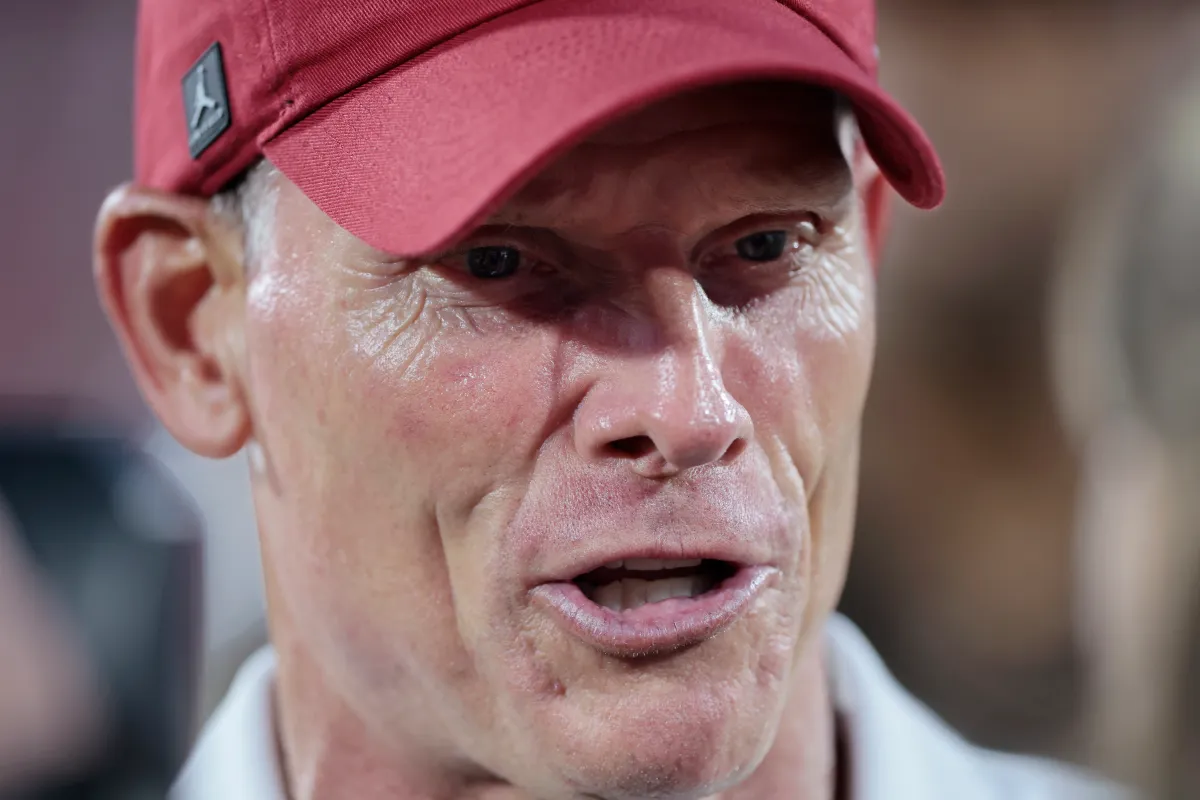
Paragraph 3 — When Venables was asked directly about the offensive line struggles on Tuesday, he didn’t sugarcoat a single thing. He called the unit’s performance “incredibly inconsistent and very disappointing,” and in his answer, you could hear the raw emotion of a coach who knows exactly where the blame should rest. According to Venables, the No. 1 reason for the offensive line’s underperformance is the constant turnover at that position due to the transfer portal. He talked about how offensive line is probably the hardest position group to develop because it requires continuity, trust, and reps together, and then he pointed out that Oklahoma has lacked that stability entirely. “Way too many guys are coming and going at that position group,” he said. “It’s been very unstable and certainly not the kind of development that you want from top to bottom.” It’s not an excuse, really. It’s more of a confession. Building a football team in the modern era of college football is complicated, especially when players can leave for any reason, at any time, and roster construction can feel like you’re constantly trying to patch holes in a sinking boat. But Venables’ frustration isn’t just about the players who left; it’s about the players who were brought in to replace them. He specifically mentioned that the selection process for the guys they brought in hasn’t been good enough, and that kind of criticism, even if delivered in a thoughtful way, lands somewhere. It lands on the desk of the general manager, on the recruiting department, and on a front office structure that was supposed to make this program more stable, not less. For fans watching from the outside, it’s easy to say “just block better,” but the reality is that offensive line play in college football right now is a mess. The transfer portal has made it easier for teams to lose talented young offensive linemen before they ever develop, and it’s also made it harder to build the kind of foundation that a championship-caliber offense needs.
Paragraph 4 — Venables’ comments seemed aimed squarely at Jim Nagy, the program’s general manager for football, who was hired in February of 2025. Nagy came to Oklahoma with a strong reputation and an NFL background, and he was brought in to help modernize roster management, particularly when it comes to recruiting and the transfer portal. On paper, it made perfect sense. Venables is a coach’s coach, someone who loves development and scheme, but the new landscape of college football requires a front office to handle the roster churn. Nagy was supposed to be that guy, someone who could identify talent before it left, fill holes quickly, and make sure the team had a dependable flow of players at the most important positions. And to be fair, Oklahoma has recruited some serious talent on defense under Venables. The defense is physical, aggressive, and capable of keeping this team in games. But the offense, and especially the offensive line, has become a glaring, undeniable weakness. When Venables says the line has been “very uneven” in terms of the guys they’ve brought in, it’s hard not to interpret that as a message to the front office: you need to do better at this position, and you need to do better now. The dynamic between coach and general manager is always tricky, especially when one is fiercely loyal to his methods and the other is tasked with building a roster around those methods. Publicly, they’re probably still on the same page, but privately, you can only imagine the conversations happening behind closed doors. This wasn’t just a coach answering a question. It was a coach making a point, sending a signal, and making sure everyone understands where the real problems lie. For Nagy, this game on Saturday is just as much about him and his evaluation process as it is about the players wearing the uniforms.
Paragraph 5 — Of course, the immediate focus isn’t on the front office or the transfer portal. It’s on the quarterback, and it’s on what happens if Mateer continues to struggle against Texas. Venables has already suggested that the team will be open to making a quarterback change if Mateer doesn’t play well on Saturday. That kind of comment, right before the biggest game of the year, is both a wake-up call and a warning. On one hand, you want your starting quarterback to feel supported, confident, and free to play his game. On the other hand, this is a performance-based sport, and Venables knows that the quarterback position is too important to leave unaddressed if things are going poorly. For Mateer, this is a massive opportunity. Every player dreams of stepping onto the Cotton Bowl field in a rivalry game, especially with the No. 1 team in the country across the sideline. But it’s also a moment that can break a quarterback. The noise, the pressure, the physical punishment from a Texas defense that knows exactly how to attack this offensive line; it’s all going to come at him fast. He needs to make quick decisions, protect the football, and find a way to keep the chains moving. If he can’t, Oklahoma won’t hesitate to go to the backup. That’s not a threat. That’s just the reality of college football, especially at a program with Oklahoma’s history and standards. But as the coach sits in his office, reviewing film and trying to find the right combination of players and plays, there’s a human side to all of this too. Mateer is a young man who transferred to Oklahoma with dreams of leading this team to glory. He’s put in the work, he’s endured the hits, and he’s shouldered the blame when things go wrong. Publicly, he says all the right things. Privately, he has to be feeling the weight of a season that seems to be teetering on the edge of disaster. Saturday is his chance to rewrite the story, to silence the doubters, and to give this team a reason to believe again. It’s also a chance for the entire offense to humanize itself, to show that they’re more than a group of misfits who can’t block, can’t run, and can’t protect their own quarterback.
Paragraph 6 — In the end, this game is about more than bowl positioning, playoff hopes, or even bragging rights. It’s about the soul of a program. Oklahoma has a proud football history, and the Red River Rivalry has always been one of the crown jewels of the sport. But this season, the Sooners seem to be fighting against something larger than just the Longhorns. They’re fighting against the chaos of modern college football, the instability of the transfer portal, the questions about roster construction, the doubts from fans, and the constant pressure to win at the highest level. Brent Venables is a coach who believes in process, in building brick by brick, in creating a culture that will last. But processes take time, and in college football, time is the one thing that nobody has. If Oklahoma manages to pull off a miracle on Saturday and beat Texas, it would be a turning point, a moment that could change the trajectory of the entire season. But if they don’t, the questions will only get louder. The fanbase will be angry, the critics will be relentless, and the pressure on everyone from the coaching staff to the general manager will continue to build. Still, there’s something beautiful about sports in moments like this. When everything seems lost, when the odds are stacked against you, the game still has to be played. The players still get to line up, the ball still gets snapped, and for four quarters, all the noise outside can be silenced. This Oklahoma team may not be as talented as the Texas Longhorns, and it may not be as disciplined or as consistent, but it still has a chance to fight. That’s what Saturday is really about. It’s about finding a way to rise above your circumstances, to believe in the guy next to you, and to play the game with everything you have. For the Sooners, this game is a chance to save their season, but it’s also a chance to remind themselves, and everyone watching, who they really are. Win or lose, that’s something worth fighting for.