



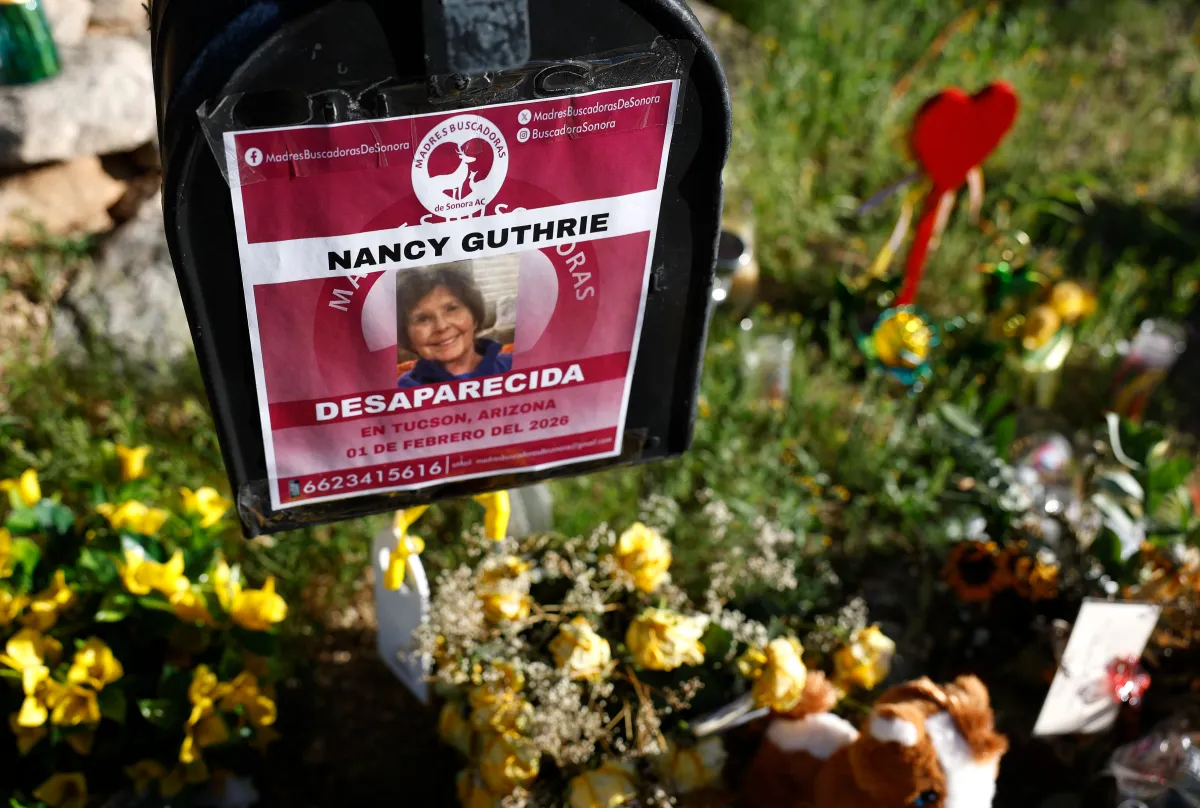
It was late Monday when the Pima County Sheriff’s Department released a short but significant update: a possible ransom note connected to the disappearance of Nancy Guthrie had been brought to the attention of law enforcement. For many, the sentence landed with a strange mix of hope and dread—hope that after nearly eight months of silence, there might finally be movement in a case that has become almost unbearably quiet; dread at the thought that an 84-year-old mother and grandmother may have been the victim of something far more calculated and cruel than a tragic accident. The PCSD and FBI Guthrie Task Force, the joint team that has been working the case since Nancy vanished, said that they were made aware of the potential note and were immediately turning their attention to it. The announcement, posted on X, came just days past the eighth month anniversary of the date Nancy was last seen at her home in Tucson, Arizona, on January 31. For anyone following the story, it felt like the first real crack in a long, holding pattern. But for Savannah Guthrie, the beloved “Today” show host and Nancy’s daughter, it likely felt like the sharp reopening of a wound that never really closed.
The details surrounding the newly surfaced note remain understandably guarded. Law enforcement has not released the note’s contents, its author, or even the circumstances of how it surfaced. That is typical for an active investigation, and it is a reminder that the process must move carefully, especially now that social media has become a breeding ground for speculation, rumor, and even outright fabrication. The PCSD acknowledged in its statement that investigators are aware of social media comments regarding the note and are looking further into the information to determine its credibility. That single line is a subtle yet powerful admission: in an age when everything is shared, photographed, and dissected online, the line between real leads and attention-seeking noise has become dangerously blurred. Every “strong lead” can be a hoax meant to manipulate hopeful families or intercept a high-profile case. Yet every lead could also be the one that finally brings someone home. For investigators, the challenge is not simply to follow the trail, but to filter through the chaos of public emotion and digital rumor to find a single thread of truth. For the Guthrie family, however, the stakes are far more personal. They have had to endure wave after wave of updates, some encouraging, some devastating, and many that are entirely out of their control. A possible ransom note changes the entire texture of the investigation: it transforms a missing persons case into something that looks far more like a criminal event, and it forces the public to confront unsettling questions about motive, captivity, and intention. But until the note is verified—until investigators can decide whether it is real or a product of someone’s cruel imagination—all they have is uncertainty. That uncertainty is the hardest part. It invites both hope and paranoia, and it leaves a family suspended between the impulse to believe and the fear of being hurt again.
To understand why this development is so emotionally charged, it helps to remember who Nancy Guthrie is beyond the crime-story headlines. She is not simply the mother of a famous television host; she is a woman in her mid-eighties who had built a life, raised a family, and reached the sort of quiet, settled age when she should have been surrounded by loved ones, not the subject of a missing persons bulletin. She lived in Tucson, a city she had called home, and on a late January day she was there, in her house, as she always was. Then, apparently, she was gone. No one picked up the phone. No one saw her leave. No one knew exactly what happened. The news of her disappearance was first met with widespread shock, mostly because of the circumstances: a woman in her eighties, alone, seemingly vanishing without a trace. The community rallied immediately. Volunteers, neighbors, and complete strangers joined search efforts, hoping to find some sign, some clue, some explanation. Savannah Guthrie, who is known to millions for her warm and poised presence on morning television, was suddenly thrust into the unimaginable role of a daughter pleading for answers. She made heartfelt appeals on air and on social media, thanking the public for their support and begging anyone with information to come forward. Watching that kind of vulnerability from a public figure is always jarring, but it also humanized the case in a way that no headline could. It reminded people that behind the news coverage and the social media posts was a real family waiting by the phone, checking for updates, and trying desperately not to lose hope.
The investigation itself has been an exercise in patience and endurance. From the beginning, the Pima County Sheriff’s Department and the FBI came together to form the multi-agency task force that has now been working for months. They have followed thousands of tips, interviewed countless witnesses, and analyzed every scrap of digital and physical evidence available. Yet for all that effort, there have been no arrests, no major breaks, and no clear indication of what happened to Nancy in the hours after she was last seen. This latest information—the potential ransom note—is in many ways a jarring departure from the previous silence. Ransom notes are rare by themselves; they are almost never what a missing person investigator expects in an ordinary case. If the note is genuine, it could imply that Nancy was taken with intention, possibly for financial gain, and that those responsible have chosen to communicate with the family or authorities in a way that tries to exert pressure and maintain control. It also suggests that the case is still alive, still moving, still holding secrets that have yet to surface. For the task force, the next steps will be methodical and slow. They will need to authenticate the note, study its language, test its materials, and attempt to trace its origins. They will also need to compare it against any prior communications or evidence that has been collected during the investigation. All of that takes time, and time is something that neither the investigators nor the family has in abundance. Every passing day piles onto the instability of a case that has already lasted too long. Yet the simple existence of a note—even one of uncertain origin—has an almost gravitational pull: it draws attention back to the case, puts the public on alert, and reminds everyone that the story is not over.
But maybe the most human side of this story is the toll it takes on those who love Nancy Guthrie. Her daughter Savannah has continued to work, to appear on television, and to carry on with her professional life, but the weight of her mother’s absence is unmistakable. The disappearance of an elderly parent is a particularly cruel kind of loss because it is not a death and not a living; it is a limbo. There is no funeral, no grave site, no closure. There is only the endless replaying of questions: What if she had been just a few minutes earlier? What if someone had called? What if something had been noticed sooner? The human mind is not built to carry that kind of weight forever. It needs answers. It needs to know. So when a note surfaces, the family is forced to undergo another cycle of emotional calibration. They must learn to hold onto hope without allowing it to blind them. They must prepare for the possibility that the note is a hoax, but also for the possibility that it is real and that the truth is far more dangerous than anyone imagined. That is not a burden that any family should have to bear alone, and yet the public nature of Savannah Guthrie’s career has made it impossible for them to heal in private. Every tweet, every comment, every discussion online feels like an addition to a narrative that they cannot control. It is a strange and often cruel way to experience hardship—through the lens of strangers, with the whole world watching.
As this story continues to develop, the PCSD has made it clear that they are leaving no stone unturned. They are investigating the note, they are monitoring social media, and they are fighting to determine what is real and what is not. But they are also asking the public to remain patient and vigilant. In missing persons cases, especially ones that have dragged on for as long as this one has, the smallest detail can be the one that makes the difference. A memory. A license plate. A receipt. A fleeting glimpse of something that seemed unimportant at the time. Nancy Guthrie is not just a name in the news; she is a person who deserves to be found, and her family deserves the peace of knowing what happened to her. The possible ransom note may lead to a breakthrough, or it may become another dead end in a case filled with them. But either way, it reminds us that this story is still unfolding, and that behind every official statement and social media post is a daughter waiting for her mother to come home, a family wrestling with the unknown, and a community holding onto the belief that the truth, however painful, is still the only thing that can offer comfort. Newsweek has reached out to the Pima County Sheriff’s Department for further comment, and this remains a breaking news story that will be updated as more information becomes available. Until then, all that anyone can do is wait, hold onto hope, and remember that behind every update—no matter how small—there are real lives, real tears, and a love that has not given up.