





The Hidden Thirst of the Digital Age
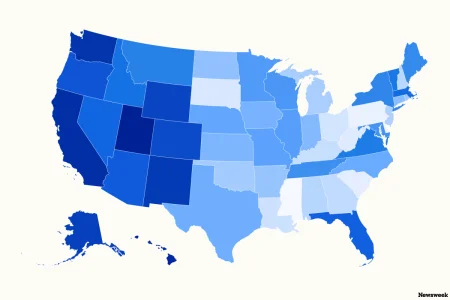
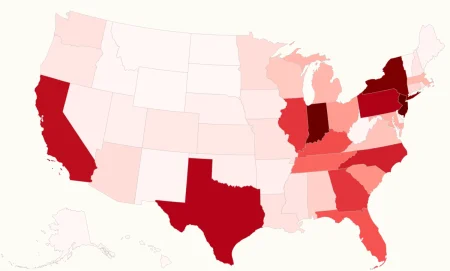
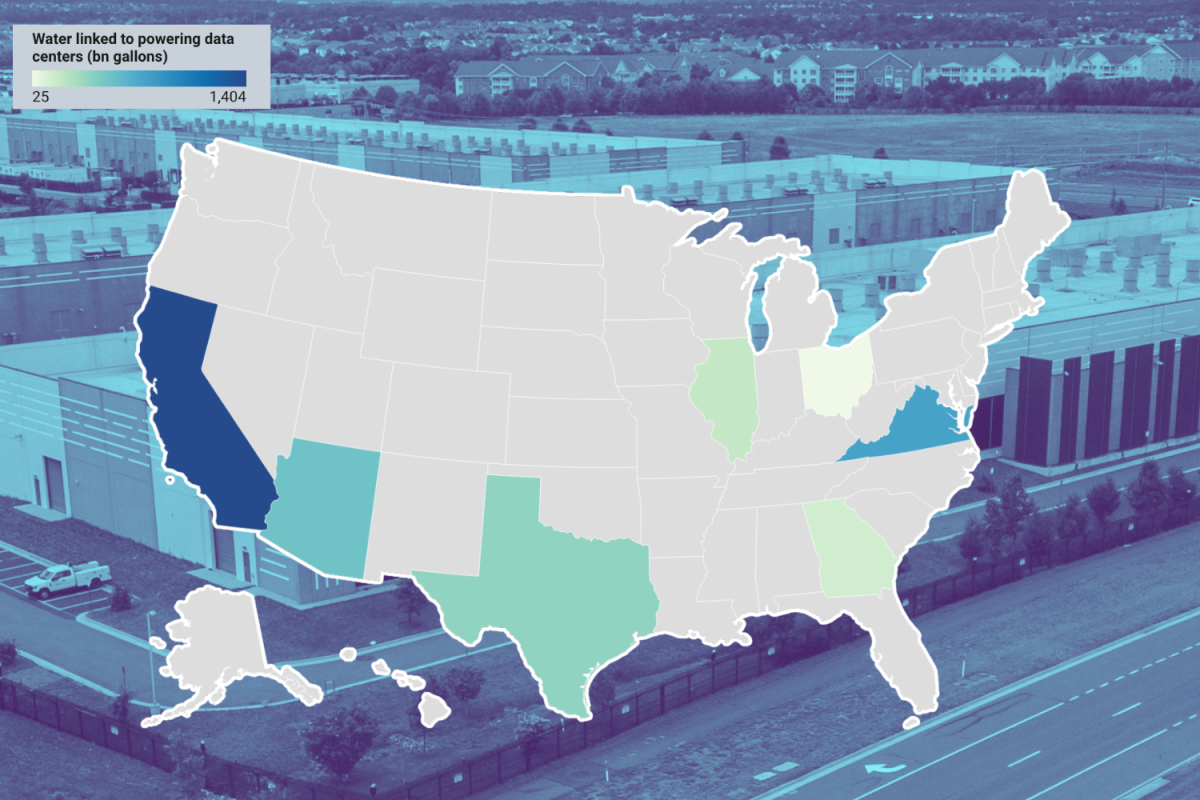
In the race to build the artificial intelligence-driven future, a critical resource is being consumed at a staggering rate, largely out of sight. A groundbreaking new report from the sustainability nonprofit Ceres has peeled back the curtain on the environmental cost of our digital lives, revealing that data centers in just seven major U.S. states are responsible for the withdrawal of an estimated 3.4 trillion gallons of freshwater annually. To put that astronomical figure into perspective, imagine enough water to fill over five million Olympic-sized swimming pools, or a volume that could cover the entire state of Pennsylvania in nearly a foot of water—every single year. This water isn’t primarily used to cool the servers, but rather to generate the massive amounts of electricity these facilities demand. The report zeroes in on California, Virginia, Texas, Arizona, Illinois, Georgia, and Ohio—states that collectively host about half of the nation’s data centers—and paints a sobering picture of how the booming digital economy is placing unprecedented pressure on our most precious natural resource. In an age where we increasingly store our memories, work, and entertainment in the “cloud,” this study forces us to confront a challenging reality: the cloud has a physical footprint, and it’s sinking deep into our aquifers and rivers.
The Three Trillion-Gallon Puzzle: It’s Not About the Server Count
The core of the Ceres analysis lies in a critical distinction: it measures the water withdrawn by power plants to generate the electricity that data centers consume, not the water used directly for cooling the facilities themselves. This “indirect” water footprint is the largest and least visible component of a data center’s environmental impact. The study’s findings challenge common assumptions, revealing that the number of data centers in a state is far less important than the way that state generates its power. Virginia, for example, boasts the highest concentration of data centers in the world, with roughly 674 facilities analyzed, yet it ranks second in water withdrawals at 753 billion gallons. Meanwhile, California, with only about 296 data centers, has the highest associated water withdrawal of all, at a staggering 1.4 trillion gallons annually. Texas, with 537 data centers, falls in the middle. This counterintuitive ranking underscores a fundamental truth: the environmental burden of our digital infrastructure is not determined by the size of server farms, but by the regional energy grid that powers them. A handful of facilities in a state reliant on water-intensive power generation can dwarf the impact of hundreds in a state using wind or solar.
Hydroelectric Power: The Invisible Drain
The primary reason California leads the pack is its heavy reliance on hydroelectric power. When we think of water use, we rarely consider the reservoirs behind dams, but the evaporation and flow management associated with hydropower represent a massive withdrawal of freshwater. The study’s authors explain that states leaning on thermal power plants (which use steam to spin turbines and require vast quantities of water for cooling) or hydropower necessitate significantly larger volumes of water to produce a single unit of electricity. In the seven-state region, a whopping 78 percent of electricity comes from power plants that require water to operate. This means that when you stream a video, send an email, or use an AI chatbot, you are indirectly turning a valve on a dam or increasing the steam pressure at a coal or nuclear plant in a distant state. The report highlights that this electricity generation represents the “largest and least visible share of data centers’ overall water footprint,” making it a silent but dominant consumer of our water resources.
A Perfect Storm: Water Stress and Drought in the Desert
The study goes beyond simple volume, however, investigating where this water-sapping electricity is being generated. The findings are particularly alarming for states in the arid West. Arizona, which ranked third in total water withdrawals, showed the most extreme risk indicators. A staggering 79 percent of its water-related electricity generation occurs in areas classified as “water-stressed,” and 93 percent comes from regions that experienced drought conditions in the previous year. This paints a picture of desert data centers, often built to be close to customers or for favorable tax conditions, being powered by an electrical grid that is itself parched. Georgia and Illinois also showed significant risks, with 84 and 77 percent of their water-linked electricity generation respectively coming from water-stressed areas. Across all seven states, the report estimated that an overwhelming 66 percent of water-dependent electricity generation originates from areas with medium-high to extreme water stress, while 44 percent comes from regions that suffered through at least three months of drought in 2024. This confluence of digital expansion and physical scarcity is creating a perfect storm, where the demand for computing power is directly competing with communities, farmers, and ecosystems for a finite and increasingly volatile resource. The report’s timing is impeccable, as data centers face growing backlash from communities across the United States concerned about their local water supplies and grid reliability, a tension that has even been highlighted in recent high-profile public campaigns featuring celebrities like former NFL player Jason Kelce.
The AI Gold Rush: A Future of Trillions More
Perhaps the most troubling aspect of the Ceres report is its forward-looking projections. The study projects that water withdrawals associated with data-center electricity use could climb sharply by the end of the decade, driven overwhelmingly by the explosive growth of artificial intelligence. AI models require computing power on a scale previously unimaginable, demanding more data centers, more servers, and consequently, vastly more electricity. The report estimates that annual water withdrawals linked to data-center electricity could rise from the current 3.4 trillion gallons to between 4.1 trillion and 7.6 trillion gallons by 2030. The lower end of that range represents a significant increase, while the higher end would represent more than a doubling of the current already-skyrocketing consumption. This projected surge places an immense burden on utilities, policymakers, and data-center operators. It forces a critical question: as the AI buildout accelerates across the nation, will our energy and water infrastructure be able to sustain it? The report suggests that without rapid and decisive changes in how we generate electricity and how data centers are powered, we are headed for a future of acute water scarcity in already-vulnerable regions.
A Call to Rethink the Digital Frontier
The Ceres study serves as a crucial wake-up call, reframing the environmental conversation around Big Tech from carbon emissions to the more immediate and tangible crisis of water. The findings suggest that the number of data centers alone is a poor metric for environmental impact; the critical factors are the regional energy mix and the location of power plants in relation to water-stressed areas. It is no longer enough for companies to tout their “water-positive” pledges for direct on-site usage when the vast majority of their true water footprint is outsourced to the electrical grid. The report implicitly calls for a multi-pronged approach: utilities must invest in water-efficient power generation, data center operators must advocate for and co-locate with renewable energy sources like wind and solar that have a minimal water footprint, and policymakers must consider water availability and drought risk when incentivizing data center development. Furthermore, innovation in on-site power generation, such as small modular nuclear reactors or advanced geothermal systems, could drastically reduce the strain on local water resources. For the public, it highlights that our increasingly digital lives have a physical cost, and as we march into the AI era, consumers, investors, and citizens must hold the industry accountable not just for its carbon footprint, but for its enormous, hidden thirst. The future of our digital world is inextricably linked to the future of our water, and we are currently on a path that risks draining one to fuel the other. The choice before us is clear: we can build a digital future that respects the hydrological realities of the planet, or we can watch our data centers and our rivers run dry together.