


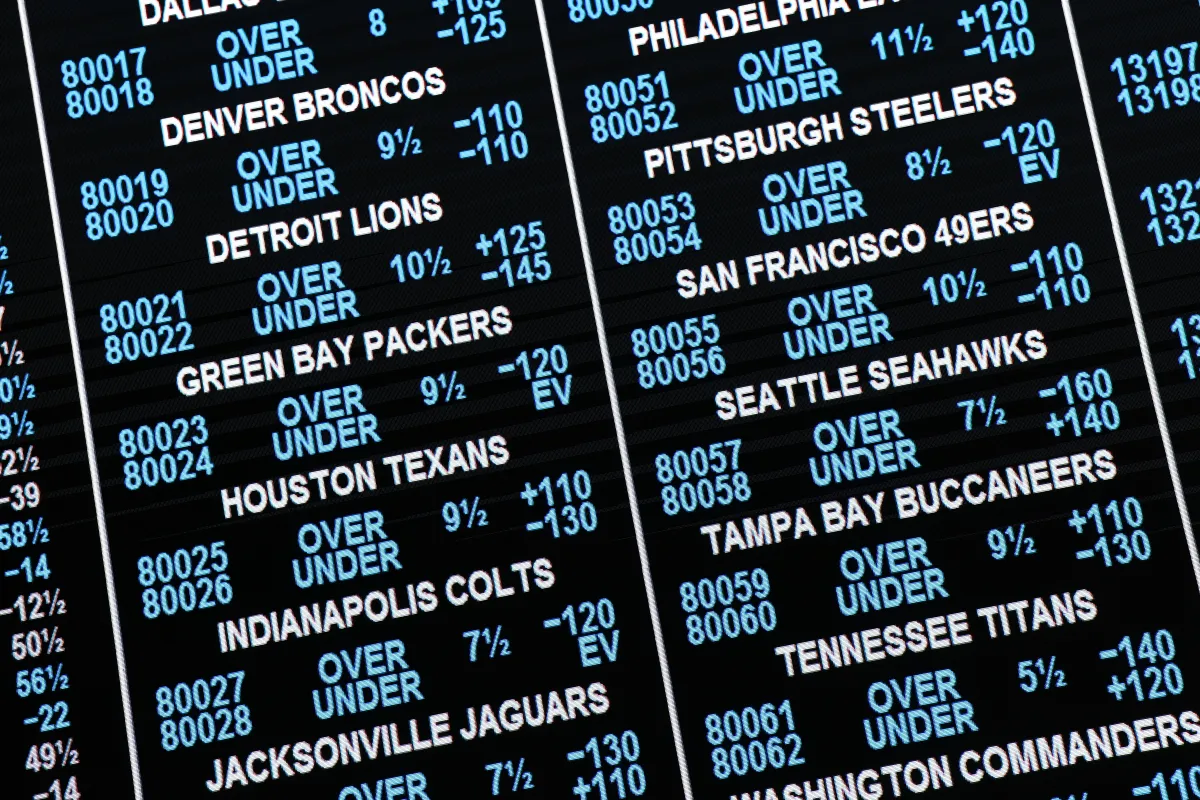
At first glance, the difference between placing a wager at a casino sportsbook and buying a contract on a prediction market may seem like hair-splitting semantics. But a growing legal war has erupted around exactly that distinction, and now the Supreme Court is being asked to decide where the line falls. The dispute pits anew Jersey-backed effort to treat sports prediction contracts as ordinary sports betting against platforms like Kalshi, which insist they are offering federally regulated financial products. Into that fight has stepped a remarkable alliance: attorneys general from 40 states and the District of Columbia have filed a brief supporting New Jersey’s call for Supreme Court intervention, and they have been joined by the National Football League. The NFL, which sits at the center of American sports culture, has warned that these prediction contracts are not innocuous investment tools but are, in substance, gambling—and that letting them operate outside state gambling laws threatens both consumers and the integrity of the games themselves. At the heart of the case is a simple but enormously consequential question: when someone buys a contract predicting whether a team will win, whether a player will be injured, or whether a coach will challenge a call, are they making a financial trade or placing a sports bet? The answer shatters not only legal definitions but also determines who gets to license, tax, restrict, and protect these transactions—and that makes the Supreme Court fight one of the most significant sports-law and finance cases in years.
The coalition backing New Jersey is striking not only for its size but for its political and geographic breadth. States that rarely agree on anything have lined up together: Alabama, Arizona, Arkansas, California, Colorado, Connecticut, Delaware, Hawaii, Idaho, Illinois, Iowa, Kansas, Louisiana, Maine, Maryland, Massachusetts, Michigan, Minnesota, Mississippi, Missouri, Nebraska, Nevada, New Hampshire, New Mexico, New York, North Carolina, Ohio, Oklahoma, Oregon, Pennsylvania, Rhode Island, South Carolina, South Dakota, Utah, Vermont, Virginia, West Virginia, Wisconsin, and Wyoming, plus the District of Columbia. Ohio led the brief, which argues that courts have become “hopelessly confused and divided” over whether the federal Commodity Exchange Act simply sweeps away state sports-gambling laws. The states contend that prediction markets have found a clever loophole: instead of calling their sports offerings bets, they label them financial contracts and claim exclusive federal oversight. This matters in concrete ways, they argue. State gambling laws carry protections designed over decades: licensing requirements for operators, exclusion lists for problem gamblers, minimum-age rules, responsible-gambling tools, and spending limits. If prediction markets can avoid all that simply by registering as federally regulated exchanges, they gain a massive competitive advantage over traditional sportsbooks while offering consumers far fewer safeguards. The states do not deny that the Commodity Futures Trading Commission has some role to play in financial markets, but they insist that Congress never intended to turn sports betting into a federally unregulated shadow industry. Their brief warns that allowing exchanges to preempt state gambling laws would undermine the basic federalist bargain hat has long let states decide how gambling is handled within their borders—and would leave vulnerable consumers with no meaningful safety net.
The NFL’s own filing, submitted Thursday, sharpens those concerns even further. The league is not asking the Supreme Court to ban prediction markets outright. It is, however, insisting that sports-related event contracts need to be treated with the seriousness they deserve, especially when they touch on aspects of a game that could be manipulated or known in advance by insiders. The NFL points to contracts that could, for example, ask whether a kicker will miss a field goal, whether a particular player will leave a game with an injury, whether an official will make a certain call, or whether the first play from scrimmage will be a run or a pass. Each of those outcomes is the kind of granular information that a player, coach, trainer, referee, or locker-room insider might know ahead of time—or might be tempted to influence. That makes them fundamentally different from, say, a broad futures contract tied to a commodity index. The league also highlighted jaw-dropping volume numbers: on the first Sunday of the NFL season, prediction markets saw $3,.3 billion in traded activity, and of that, a staggering $1,.8 billion involved football-related contracts. That is not some niche hobby; it is a massive betting market wearing a financial-market costume. The NFL has also pushed for a minimum age of 21 for sports prediction trading, a stark contrast to Kalshi’s current policy of allowing customers as young as 18. Embedded in that request is a deeper argument: sports prediction trading is not investing, it is gambling, and gambling on sports demands the strongest protections possible. As the league told CNBC, “In the end, we believe that given the current resource constraints of the CFTC, this is a job better left to the states.” In other words, even if federal regulators are well-intentioned, they simply do not have the manpower or expertise to police the integrity nightmares that sports prediction contracts create.
For its part, Kalshi has consistently pushed back on that framing, arguing that its event contracts are legitimate financial products traded on a federally regulated exchange—not sports bets dreamed up to circumvent state law. The company operates as a designated contract market under the oversight of the Commodity Futures Trading Commission, and it contends that federal commodities law gives the CFTC exclusive jurisdiction over the contracts it lists. In Kalshi’s view, a contract that pays out based on whether an event happens is fundamentally an investment in an outcome, not a wager against a bookmaker. The company and its allies in the prediction-market industry also emphasize efficiency and consistency. If a platform had to seek approval from dozens of separate state gambling regulators, each with its own definitions, fees, and restrictions, it would be nearly impossible to operate a national market. Better, they argue, to have a single federal framework that provides clear, uniform rules for everyone. A spokesperson for the Coalition for Prediction Markets told the Associated Press that the CFTC is actively overseeing sports-related markets and that forthcoming federal rules are expected to address many of the concerns raised by the NFL. Polymarket, another major player in the space, has similarly said it supports strong protections for game integrity but favors a harmonized federal system rather than a patchwork of state-by-state regulation. From their perspective, the state coalition is trying to protect turf and special interests, not consumers; the real innovation—letting everyday people trade on their knowledge and beliefs—should not be strangled by an outdated distinction between financial products and gambling.
The legal landscape leading to the Supreme Court petition is genuinely fractured, which is exactly why New Jersey argues that the justices must step in. The Third Circuit sided with Kalshi in its dispute with New Jersey, holding that the company’s sports event contracts qualify as swaps under federal law and that federal regulation preempts the state’s gambling restrictions. But other federal appeals courts have come out the opposite way. The Ninth Circuit sided with Nevada regulators, and the Sixth Circuit ruled against Kalshi in litigation involving Ohio and Tennessee. That split is not an academic curiosity; it means that a prediction market’s legality may depend on which part of the country a customer happens to live in, creating chaos for platforms, regulators, and bettors alike. New Jersey filed its Supreme Court petition after losing at the Third Circuit, explicitly asking the justices to resolve that conflict. The states’ October brief lays out how litigation has proliferated nationwide, with cases pending in numerous federal circuits and state courts, each struggling to make sense of whether federal commodities law preempts state sports-gambling statutes. Without Supreme Court review, the industry will remain stuck in a legal fog, and states will be forced to either stand by while prediction platforms operate within their borders or launch expensive, uncertain enforcement battles. Kalshi’s response to New Jersey’s petition was due November 9, and the Supreme Court has not yet decided whether to hear the case. If the Court takes it up, the resulting decision could reshape the entire sports-speculation industry.
The implications of this case extend far beyond Kalshi, the NFL, or the handful of companies currently dominating prediction markets. Sports betting has exploded across the United States since the Supreme Court struck down the federal ban on single-game wagering in 2018, and states have built elaborate regulatory structures around it—taxing billions of dollars in handle, funding problem-gambling treatment, enforcing age limits, and guarding against game manipulation. Prediction markets threaten to bypass all of that infrastructure while capturing ever-growing portion of the public’s appetite for sports-related risk-taking. If the Supreme Court agrees with New Jersey and the NFL, sports prediction contracts could be pulled back into state gambling systems, subject to licensing, taxation, and regulation like traditional sportsbooks. If the Court instead sides with Kalshi, the industry could continue to grow under federal commodities oversight, potentially becoming a multi-trillion-dollar market that treats everything from election results to Oscar winners to individual football plays as tradable assets. That outcome would raise profound questions about consumer protection, market integrity, and the very definition of gambling in America. For now, the fight is not merely about one company or one legal doctrine; it is about how a fast-changing, technology-driven industry should be governed in a country where gambling has traditionally been a state concern and financial regulation has traditionally been a federal one. The Supreme Court’s decision—if it decides to intervene—may determine whether one of the fastest-growing forms of sports speculation remains a national financial market or is folded into the state-by-state system that has long governed the betting public. Until then, the only sure thing is uncertainty: regulators, gamblers, sports leagues, and entrepreneurs will all be watching closely, knowing that the next great battle over sports and money will be decided not on a playing field, but in the marble halls of the highest court in the land.