


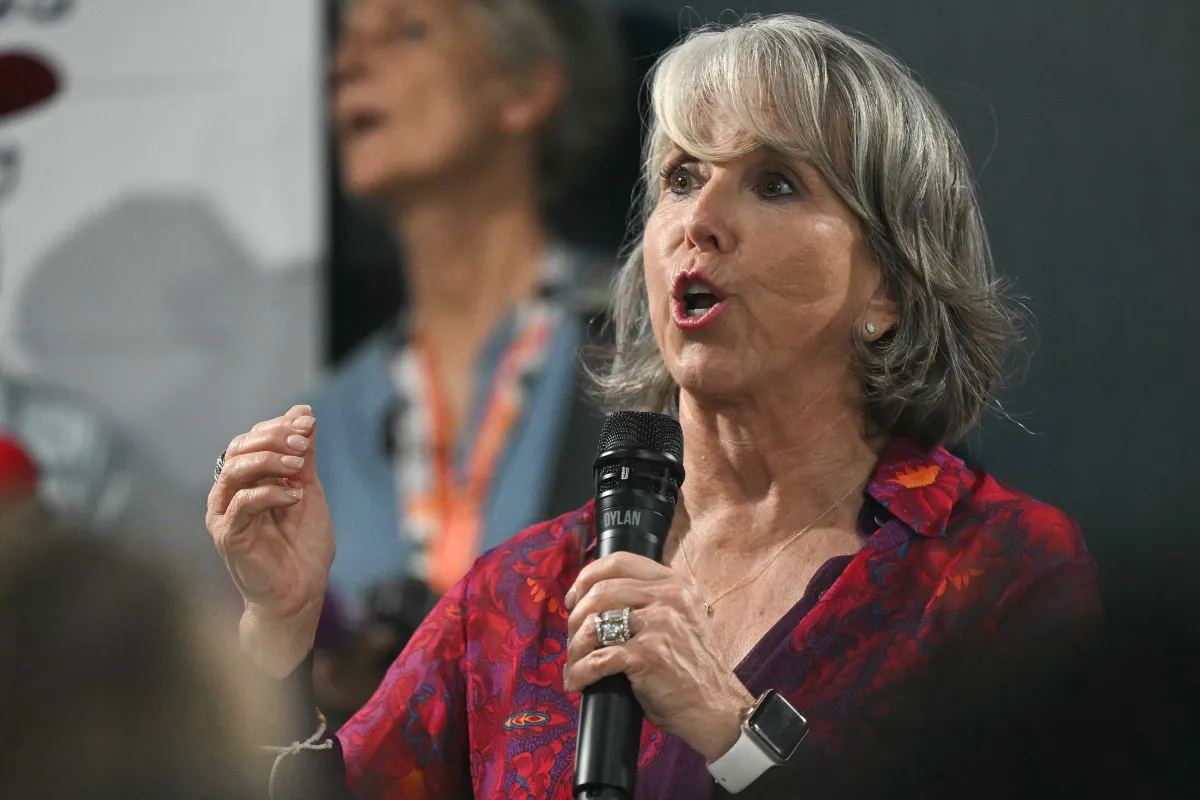
There is a mood that can be felt long before the first ballots are counted, and New Mexico Governor Michelle Lujan Grisham believes she recognizes it. She has been here before, watching the country hum with frustration, anxiety, and a hunger for change. In 2018, that energy became a sweeping Democratic wave that reshaped Congress and served as a blunt rebuke of President Donald Trump’s first term. Now, looking ahead to the November midterm elections, she says the same current is running beneath American politics. “I saw the sweeping midterm results in ’18. I’m expecting more of the same in ’26,” she told Newsweek. For Lujan Grisham, this is not a pollster’s projection or a carefully worded campaign strategy. It is something she says she feels in her daily interactions, in the voices of people who stop her at events, in the tone of conversations that have become heavier and more urgent. “I can feel people’s anxiety every day,” she said. “And I hear from them that way.” To her, that anxiety is not just about any single scandal or headline; it is a broader sense that life has become harder, that prices are too high, that institutions feel out of touch, and that the people in power are not listening closely enough. That accumulation of stress, she argues, is exactly what produced the blue wave seven years ago, and it is why she expects a similar outcome. “I’m feeling like we’re going to get a referendum on we’re unhappy in America for a multitude of reasons,” she said. “And we’re gonna switch out who’s representing us where.”
For Lujan Grisham, the coming midterms are less about personalities than about a raw, emotional response to the direction of the country. She frames the election as a verdict on the Republican Party, a repeat of the pattern that unfolded during Trump’s first term when voters used the midterms to express their displeasure. In her view, Americans are not simply hoping for something better; they are preparing to vote against what they do not want. That distinction matters, because it suggests a level of motivation that can overcome the usual midterm apathy. Democratic candidates, she says, need to meet that moment with honesty and directness. They cannot rely on vague promises or national talking points. They need to ask voters specifically and directly about the issues that are keeping them up at night, about the cost of groceries, the difficulty of finding affordable housing, the worry over health care, and the sense that the political system is rigged in favor of the powerful. “We need to be asking those questions really specifically and directly,” she said. But despite the weight of those concerns, she remains strikingly upbeat. “I’m feeling really good,” she added, “and I don’t want to jinx that.” That candid, almost superstitious note captures something important about the governor’s outlook. She is confident, but not arrogant. She believes the momentum is there, but she also knows that elections are fragile, that overconfidence can poison a campaign, and that every race must be contested as if it could go either way.
The governor’s optimism might sound like standard pre-election bravado, but there are concrete signals that suggest she is not simply wishful thinking. Earlier this month, NBC News polling delivered a striking finding: Americans now trust Democrats over Republicans on the economy, by a narrow margin of 39 to 38 percent. That might seem like a modest difference, but its significance is hard to overstate. It marks the first time Democrats have led on that question in NBC News polling since December 2017, a span of nearly nine years. For much of that period, Republicans held a commanding advantage on economic trust, a benefit rooted in longstanding perceptions that the GOP was the party of business, low taxes, and prosperity. At one point, according to NBC News polls, Republicans led by a remarkable 21 points, with voters favoring them 49 to 28 percent on the question of which party could handle the economy. That advantage has now evaporated, and the shift speaks to the way voters are re-evaluating their assumptions. High prices and everyday financial strain have a way of cutting through partisan loyalty. When people feel that they are falling behind, they tend to look for someone to blame, and the party in power becomes the obvious target. The fact that Democrats have gained ground on the economy suggests that the public is not simply blaming the current administration for inflation, but is also questioning whether Republican policies would make things any better. It is a fragile edge, almost too close to call, but in a political environment where margins are everything, it may be enough to tilt the balance in competitive races across the country.
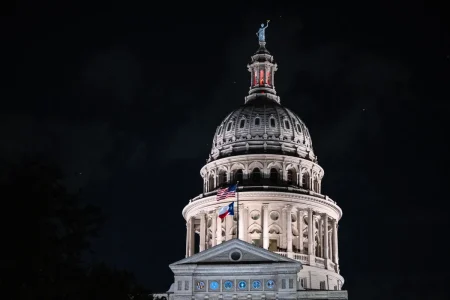
If the election is indeed a referendum, the map will be drawn in surprising places. The most competitive races are not limited to traditional swing states, but stretch into territory where either side could claim victory. Alaska, Iowa, Maine, Michigan, Ohio, and Texas have emerged as the battlegrounds where both parties are pouring energy and money, aware that each seat could decide control of Congress. Democrats are hoping to flip Republican-held seats in Alaska, Iowa, Maine, Ohio, and Texas, while an open seat in Michigan has become a fierce contest between the two parties. These are not easy targets. Texas and Ohio have leaned increasingly Republican in recent election cycles, and Alaska has a long history of independent-minded voters who are difficult to predict. Yet Democrats are convinced that the mood of the country is toxic enough to break through those barriers. They point to the energy of grassroots organizers, the anger of suburban voters, and the fatigue of working-class families who feel that nothing is being done for them. Republicans, for their part, see the same polls and draw the opposite conclusion. They argue that the margins are razor-thin, that voters are still uneasy about both parties, and that a single misstep could derail the Democratic wave before it reaches the shore. The truth is that no one knows which way these races will break. The polls show a nation deeply divided, with both parties hopeful and neither side comfortable. In such an environment, the final weeks of the campaign will be a test of who can better articulate the frustrations of ordinary people and offer a believable path forward.
The comparison to 2018 is not accidental, and it carries both promise and warning. That election was a historic blowout for Democrats, fueled by a surge of suburban resistance and a wave of first-time candidates, many of them women and young people, who energized the party’s base. But it was also a warning about the limits of negative motivation. Voters were angry, yes, but anger alone does not sustain a movement. It must be paired with vision, with candidates who can explain not just what they oppose but what they will do with power. Lujan Grisham seems to understand this balance. She is not asking Democrats to simply ride the wave; she is urging them to speak clearly and directly about the problems people face every day. That means talking about the economy in human terms, about health care as a matter of survival, about education as a promise to the next generation, and about democracy itself as something that must be protected. It means acknowledging that Americans are hurting and that they have every reason to be angry. It also means making the case that the Republican Party, in her view, has become disconnected from those struggles, more focused on culture wars and internal grievances than on the practical realities of making life better. If Democrats can make that case convincingly, she believes, the 2026 midterms will look a lot like 2018. But if they become complacent, if they mistake favorable polls for inevitability, they could watch the wave break harmlessly on the shore.
What makes Lujan Grisham’s prediction worth hearing is not that she has a crystal ball, but that she is articulating something broader than a campaign strategy. She is describing a country that is tired, anxious, and hungry for relief. People are not asking for miracles; they are asking for a government that sees them, that understands why they are struggling, and that offers real answers instead of slogans. The governor’s confidence is ultimately an expression of faith in that desire for change. She sees the frustration in her own state and across the country, and she trusts that voters will channel it into action. There is risk in that optimism, of course. Polls can shift, unexpected crises can intervene, and the natural caution of voters can override their anger. But there is also something deeply human about her stance. She is not pretending that everything is fine, nor is she screaming about doom. She is simply listening, and what she hears tells her that people are ready to make their voices heard. In a democracy, that is the most powerful force of all. Whether it will produce a sweep of victories in November remains to be seen, but the longing for a different direction is real. Lujan Grisham says she feels it every day, and she believes the country is about to act on it. That is not just a political forecast. It is a reminder that behind every poll, every ad, and every debate, there are millions of people wondering if anyone in Washington is paying attention. The midterms will be their answer.