


Paragraph 1
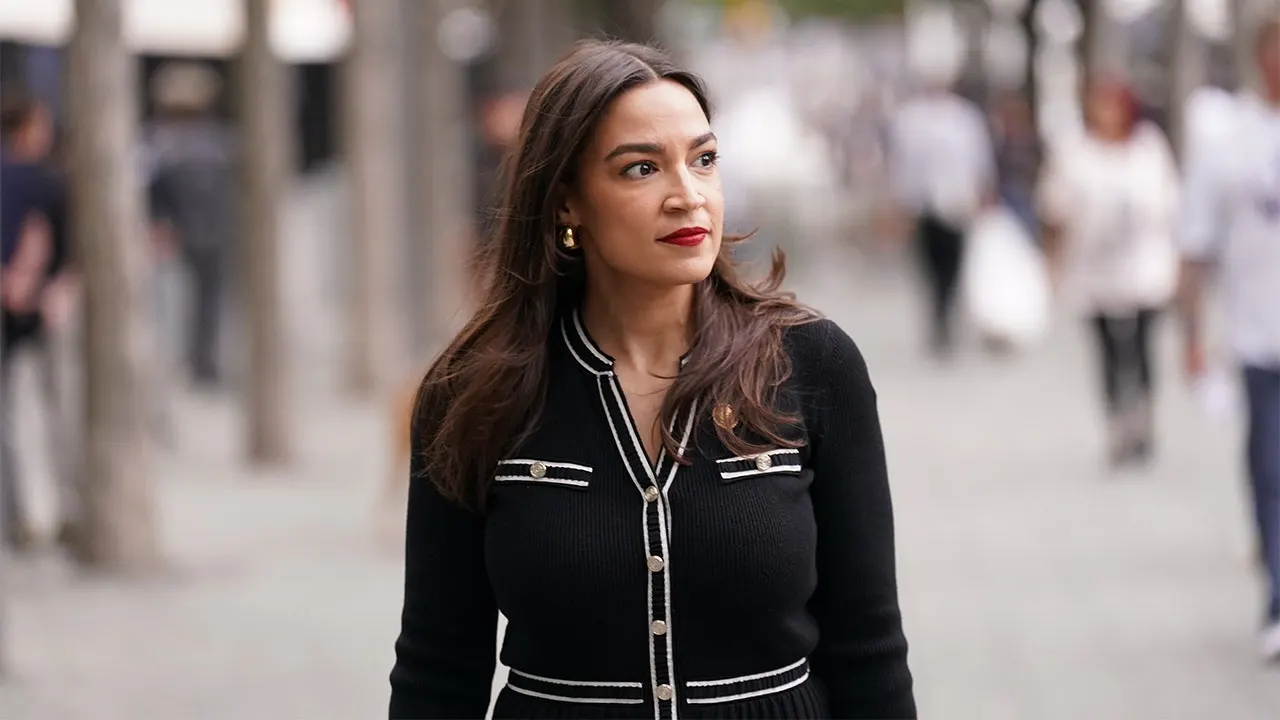
There are moments when a single voice cuts through the noise of legal briefs and press releases, and that is exactly what happened in Ithaca, New York, when Representative Alexandria Ocasio-Cortez stood before a town hall audience and spoke about a case that has shaken Cornell University to its core. The event, hosted by More Perfect University on a Sunday evening, was meant to be a conversation about justice and institutional accountability, but it quickly became something far more visceral. Ocasio-Cortez, a Democrat from New York, painted a sweeping and disturbing picture of what she said happened to a 20-year-old former student identified only as Jane Doe in a civil complaint. “Seven men drugged and gang raped a 20-year-old woman,” she said, her voice carrying the weight of a community still trying to process the allegations. “They lured her into a fraternity house. They drugged her with ketamine. They then posted to a group chat that she was incapacitated, and seven men took turns gang raping her for seven hours.” The crowd, likely a mix of students, faculty, and local residents, sat in stunned silence as she continued, describing a fraternity that allegedly knew what was happening, a university that was reportedly told, and a disciplinary process that she characterized as shockingly lenient. “After looking into this matter, they expelled two of them and made the rest write essays as their form of punishment,” she claimed. Whether every detail of her account holds up under scrutiny remains to be seen, but her words tapped into a deep well of anger and grief that so many survivors of sexual violence carry with them, especially when the accused are young men with connections, resources, and institutions that seem more interested in protecting their own reputations than in delivering justice. For the people in that room, and for countless others following the story from afar, the congresswoman gave voice to a nightmare that is all too familiar: a young woman walks into a party, trustingly, and emerges hours later with her life shattered, only to face a system that questions her every move.
Paragraph 2
The civil complaint that has become the center of this firestorm is a 101-page document that reads less like a legal filing and more like a chronicle of betrayal. Filed last month by Jane Doe, it names Cornell University, fraternity-related entities, seven individual defendants, and several others, laying out a harrowing sequence of events that allegedly took place inside the Chi Phi fraternity house in October 2024. According to the complaint, Doe arrived at the fraternity house already intoxicated, a detail that defense attorneys would later seize upon, but which the complaint says was part of a calculated pattern of predation. She was allegedly pressured into taking ketamine, a powerful dissociative drug that can leave a person conscious but unable to resist or even fully process what is happening to them. What followed, the complaint alleges, was a brutal and prolonged assault: sexual acts without consent, a fraternity member posting a sexually explicit message about her in a fraternity Snapchat group, and an ordeal that did not end until around 5:45 in the morning. To read those words is to imagine the terror of a young woman whose body is present but whose mind is clouded, who knows something is wrong but cannot scream, cannot fight, cannot even understand the faces around her. The complaint suggests that the men involved were not acting in a moment of opportunistic violence, but rather as part of a group dynamic that normalized and even celebrated the violation of a vulnerable person. The Snapchat message, if true, is particularly chilling: it reduces a human being to a punchline, a trophy, a thing to be shared among friends. For Doe, the aftermath has likely been a maze of trauma, confusion, and institutional obstacles. She has had to relive the worst night of her life in a courtroom of public opinion, watching as her credibility is dissected by lawyers, her behavior scrutinized by strangers, and her pain reduced to legal arguments about consent and capacity. The civil complaint is her attempt to reclaim some measure of control, to force the people and institutions she holds responsible to answer for what happened. But as anyone who has followed campus sexual assault cases knows, filing a lawsuit is not the same as finding justice, and the road ahead is long, painful, and uncertain.
Paragraph 3
Cornell University, for its part, has pushed back hard against Ocasio-Cortez’s characterization of its disciplinary response, and the disagreement between the congresswoman and the institution reveals just how murky these cases can become. The university issued a statement insisting that its own months-long investigation resulted in a range of significant sanctions, including expulsions and suspensions, and that no respondent was required to write an essay as the sole consequence of their actions. The civil complaint, however, alleges that several students who received temporary suspensions were given an opportunity to mitigate their conduct by submitting essays to the university, a detail that, if true, would understandably infuriate anyone who believes that sexual assault should carry life-altering consequences. Cornell also noted that the Chi Phi chapter was closed and barred from campus, a significant step that effectively ended the fraternity’s presence at the university. “Any suggestion that the university did not impose consequential punishments for those involved is false,” the statement read, adding that “a continuation of the false narrative that there were minimal consequences in this case is irresponsible, will make survivors feel less safe and supported, and will perpetuate the underreporting of sexual assault.” There is a certain defensiveness in those words, a sense that the university feels it is being judged by people who do not have the full picture. And perhaps that is fair. Universities are caught in an impossible position: they are not courts of law, they lack the power to issue criminal penalties, and yet they are expected to adjudicate some of the most serious allegations imaginable, often without the evidence-gathering tools of law enforcement. But for survivors like Jane Doe, the distinction between a university sanction and a criminal conviction is cold comfort. An expulsion, while significant, does not carry the same weight as a guilty verdict; a suspension, even a lengthy one, does not erase the memory of seven hours of violation. The university’s insistence that it took meaningful action may be true, but it also highlights the chasm between institutional accountability and the kind of justice that a survivor actually feels in her bones. When Ocasio-Cortez said that the culture of rape, sexual assault, and pedophilia is protected in elite institutions across the United States, including Cornell, she was speaking to that chasm, to the sense that these places are more skilled at managing scandals than at protecting the vulnerable.
Paragraph 4
The legal landscape around this case is even more complicated than the disciplinary one, and it has shifted dramatically in recent weeks. Tompkins County District Attorney Matthew Van Houten revealed that his office reviewed Doe’s sworn statement back in November 2024 and initially determined that the facts contained in that statement did not support criminal charges under New York law. That decision, which must have been devastating for Doe, was based on a version of events that, according to Van Houten, “did not allege that she was drugged against her will or gang raped.” In fact, he said, the November statement described her participation in drug use and sexual conduct as “voluntary, conscious, and consensual.” This is the cruelest twist in many sexual assault cases: the initial account, often given in the fog of trauma and fear, may be incomplete, confused, or even self-blaming, and prosecutors use that account to decide whether to pursue charges. It is a system that punishes hesitation, punishes shame, punishes the very human tendency to minimize one’s own pain. But then something remarkable happened. Van Houten announced that his office has reopened the investigation into the allegations and will revisit the decision about whether to pursue criminal charges against the seven fraternity members. A senior prosecutor experienced in sex-crime cases is now preparing the matter for presentation to a Tompkins County grand jury, which could consider Doe’s testimony and new evidence raised by the civil complaint. This is not a guarantee of justice, but it is a second chance, and for a survivor who has already been told once that her story did not hold up, that alone can mean the world. The grand jury process will be grueling. Doe will have to sit in a room and recount the most traumatic night of her life, facing questions designed to poke holes in her story, all while the accused men sit with their attorneys and their freedom. But she has already shown a kind of courage that most of us cannot imagine, not just in filing a civil complaint, but in continuing to push forward even after the criminal justice system initially turned her away. Whether the grand jury finds probable cause remains to be seen, but the mere fact that the investigation is being taken seriously again is a testament to the power of persistence, and to the importance of new evidence in changing the trajectory of a case.
Paragraph 5
The men accused in this case, and their attorneys, have not remained silent. Scott Kretzschmar, an attorney for one of the accused students, said his client welcomes the renewed investigation and strongly denied the allegations, insisting that his client had no sexual contact with Doe at all. Attorneys for several other accused fraternity members have also denied wrongdoing, and no criminal charges have been announced in connection with the allegations. This is the other side of the story, and it deserves to be acknowledged, because due process is not a dirty word. In America, we are supposed to presume innocence until guilt is proven, and that principle applies even in cases that provoke outrage and disgust. The accused men are young, their reputations are on the line, and they face the possibility of criminal prosecution, civil liability, and permanent social exile. If they are innocent, then they are victims of a different kind of nightmare, one in which a single accusation can destroy a life regardless of the outcome. But if they are guilty, then they are part of a broader epidemic of campus sexual assault that has been allowed to fester for decades, protected by fraternity codes of silence, institutional timidity, and a culture that teaches young men to see women as objects rather than as human beings. The truth, as always, is somewhere in the middle, and it will be up to the legal system to find it. What makes this case so resonant is not just the severity of the allegations, but the way it has become a flashpoint for larger conversations about power, privilege, and accountability. Ocasio-Cortez’s comments, while perhaps overstated in some details, have ignited a national discussion about whether elite institutions are capable of policing themselves, or whether they will always circle the wagons when their own are accused. The university’s response, the district attorney’s initial decision, the reopening of the investigation, and the appointment of a special prosecutor all suggest a system struggling to balance competing pressures. And in the middle of it all is Jane Doe, a young woman who may never get her old life back, no matter what happens in court.
Paragraph 6
The political and legal developments in this case have been swift and significant. New York Governor Kathy Hochul announced on Thursday that she has appointed Attorney General Letitia James as special prosecutor in the case, a move that signals just how seriously the state is taking the allegations. James, a powerful and experienced attorney, will have the resources and independence to investigate without the local conflicts of interest that can sometimes complicate district attorney offices. For survivors of sexual assault, this appointment is a powerful symbol: it says that the state is willing to step in when the system fails, that a young woman’s pain is not something to be swept under the rug. It also reflects the political reality that Ocasio-Cortez’s remarks have created a firestorm that cannot be ignored. Her accusation that the culture of rape, sexual assault, and pedophilia is protected in elite institutions across the United States, including Cornell, was a direct challenge to the university and to the broader establishment, and it has forced elected officials to respond. Hochul’s decision to appoint a special prosecutor is, in many ways, an acknowledgment that the initial handling of the case was not adequate, that the first review of Doe’s statement did not inspire confidence, and that the public deserves a thorough and transparent investigation. But beyond the legal maneuvering, beyond the political posturing, there is a human story that must not be lost. A 20-year-old woman went to a fraternity house on a night that should have been ordinary, and she emerged with wounds that may never fully heal. She has been called a liar, a victim, a troublemaker, a hero, depending on who is telling the story. She has had to relive her trauma in public, in front of strangers, in the pages of a civil complaint, and in the halls of power. And she has done it all in the hope that something good might come from her pain, that other young women might be spared the same fate, that institutions might finally be forced to change. Whether that hope is realized will depend on many things: the grand jury’s decision, the civil lawsuit’s outcome, the willingness of Cornell and other universities to look inward, and the courage of survivors to keep speaking out even when the world tries to silence them. But one thing is certain: this case has already changed the conversation, and for that, we owe Jane Doe a debt of gratitude that no amount of legal compensation can ever repay.