


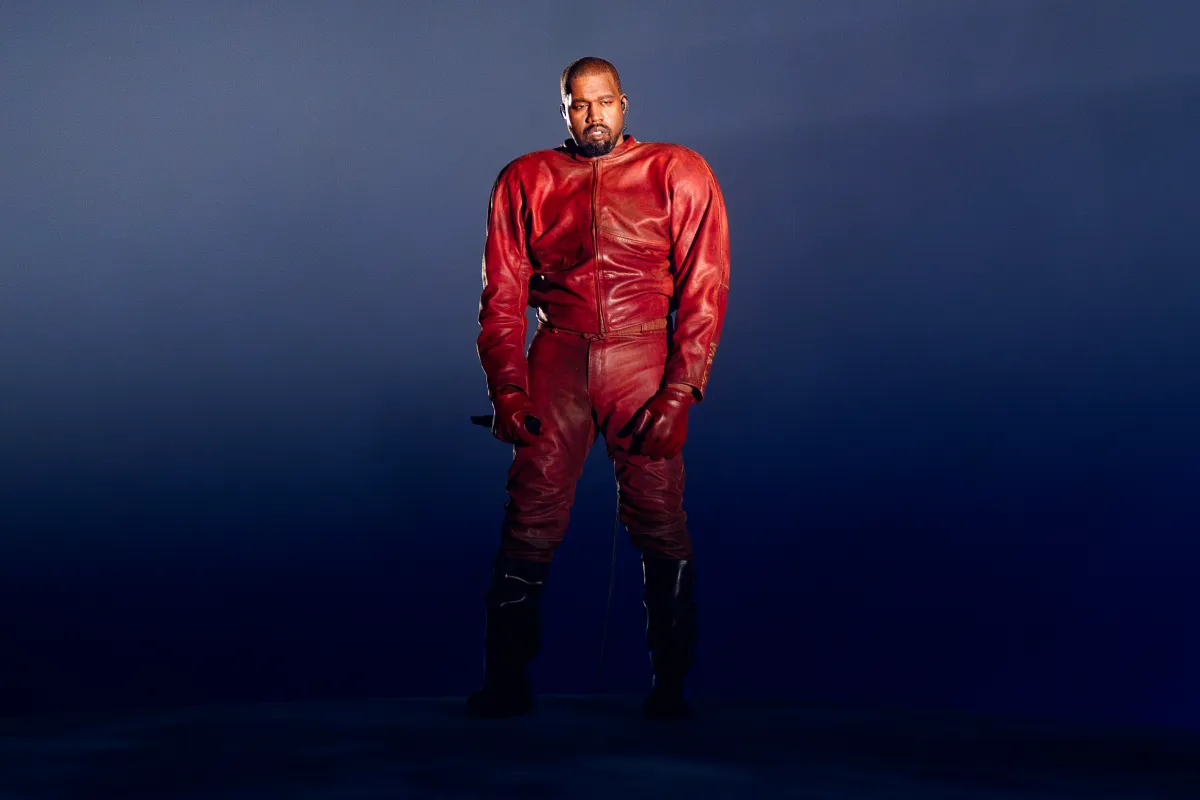
For thousands of fans in Russia, the anticipation had been building for weeks, even months. Concert dates had been locked into calendars, travel plans had been arranged, and the promise of seeing Ye—the artist formerly known as Kanye West—perform live on the vast stage of the Gazprom Arena in St. Petersburg felt like a rare and electric cultural moment. Then, without warning, that dream collapsed. On Wednesday, the event organizer Say Agency announced that both scheduled shows, set for October 10 and 11, would not take place. The statement was terse, almost clinical: “Ye’s concerts in St. Petersburg will not be able to take place on the scheduled dates.” No explanation followed. No apology. No new dates were offered. The silence left fans, journalists, and cultural observers scrambling for answers, and the sudden cancellation transformed a moment of excitement into one of confusion, suspicion, and deep unease. In a country where cultural events can sometimes become entangled with political currents, the abrupt end to this highly publicized venture felt less like a logistical hiccup and more like a door slamming shut.
Ye’s relationship with Russia has always been complicated, marked by fascination, controversy, and a certain unpredictability that mirrors his own career. When reports first emerged that he might perform in St. Petersburg, the news sparked both enthusiasm and skepticism. Russia has seen very few performances by major Western artists in recent years, and the geopolitical climate has made such appearances increasingly rare. Ye, however, is no ordinary artist. He has a history of making provocative public statements, including comments about Jewish people that led to widespread condemnation and the severing of corporate partnerships. He has also expressed admiration for authoritarian figures, which made his potential visit to Russia a topic of intense debate. Some saw it as a cynical alignment with power, while others viewed it as a quintessential Kanye move—a chaotic, headline-grabbing gesture that needed no logical explanation. In the end, the cancellation itself became the most Kanye outcome possible. The shows were reportedly sold out, which only deepens the mystery. If there was an audience willing to fill the enormous Gazprom Arena, with its capacity of more than sixty thousand people, then why would the event be allowed to quietly disappear? The answer, according to Russian media reports, may have little to do with the artist himself and everything to do with the people around him.
The organization behind the event, Say Agency, offered no further details when asked about the cancellation. Newsweek reached out for comment by email but received no immediate response. The lack of transparency is perhaps the most troubling aspect of the situation. In many countries, a canceled concert would come with a public explanation—perhaps citing production issues, artist health problems, or logistical difficulties. Yet in this case, the agency simply pulled the plug, and the void was quickly filled by speculation. Russian news outlets, including the influential newspaper Kommersant, reported that authorities in Russia made the decision to cancel the shows. Even more striking, Kommersant suggested that the concert organizers were now under investigation for alleged fraud. That detail, if true, transforms the narrative entirely. This may not have been a case of an artist backing out or a promoter facing unexpected technical hurdles. Instead, it could be a case of legal trouble swirling around the business side of the production, with the concerts as collateral damage. Fraud investigations are serious matters in any country, but in Russia they carry additional weight, often connected to broader questions of bureaucratic control, political loyalty, and the unofficial rules that govern public events. Without official confirmation, the public is left to piece together fragments of a story that seems to shift with every hour.
For the fans who had already purchased tickets, the cancellation is more than just a headline—it is a personal loss. Many had likely spent significant sums of money, especially if they were traveling from other cities or regions to reach St. Petersburg. Hotels, trains, flights, and other expenses were probably arranged months in advance, all in the hope of witnessing a once-in-a-lifetime performance. Now, those plans are in ruins. The lack of information makes the emotional toll even heavier. People want to know whether they will receive refunds, whether the shows will be rescheduled, and whether there is any hope of seeing Ye perform in Russia in the future. None of these questions have been answered. The organizers did not announce a refund process, and the silence has likely left ticket holders in a state of anxiety. For many, this will feel painfully familiar. In recent years, Russians have grown accustomed to events being postponed, canceled, or simply vanishing without adequate explanation. The pandemic disrupted everything, and more recently, international sanctions and cultural isolation have severed countless connections between Russia and the outside world. A canceled concert may seem minor compared to larger geopolitical struggles, but for the individuals who had been looking forward to it, the disappointment is very real.
This cancellation also raises broader questions about the state of cultural exchange in Russia. The country has become increasingly isolated from Western music, film, and art, and every canceled event feels like another brick in a growing wall. Ye, with his global platform and his willingness to test boundaries, might have been one of the few artists capable of bridging that divide. Yet even he could not overcome the gravitational pull of Russia’s bureaucratic and political machinery. The alleged fraud investigation adds a darker dimension. It suggests that the problem was not ideological opposition to a foreign artist, but rather something mundane and possibly criminal unfolding behind the scenes. If organizers misrepresented ticket sales, misused funds, or otherwise violated Russian law, then the cancellation was not a political statement but a legal necessity. However, the involvement of authorities in the decision complicates that reading. Why would government officials be the ones to cancel concerts if the issue was purely about financial misconduct? Unless the investigation uncovered something that made the concerts impossible to hold—perhaps a security concern, a financial scandal, or a liability that threatened the state. In a country where information is tightly controlled, the absence of clarity is itself a form of answer. The public is meant to understand that some things are simply not explained, and those who ask too many questions may find themselves facing unpleasant consequences.
In the end, what remains is a strange and unresolved chapter in the ongoing story of Ye’s global influence. The cancellation in St. Petersburg is not just a footnote in a news cycle; it is a reflection of the times. We live in an era where culture and politics are deeply intertwined, where a rapper’s visit to a foreign country can become a matter of international interest, and where a one-line announcement can crush the hopes of thousands. The fans who bought those tickets are not statistics—they are people with dreams, memories, and the universal human desire to feel connected to something larger than themselves. Music has always been a force that transcends borders, but it cannot always overcome the barriers that governments and institutions create. Perhaps the concerts will be rescheduled someday, or perhaps they will become a lost moment, a story that people tell in the future about the time they almost saw Kanye West in Russia. The uncertainty is the only certainty. And so, as the world waits for more details, the fans are left to wonder, to hope, and to accept that some events are simply beyond their control. Ye, ever unpredictable, will likely move on to his next endeavor, leaving this episode behind. But for the people who were ready to welcome him, the silence from St. Petersburg will not fade quickly. It will linger as a reminder that in a complicated world, even music cannot always provide an escape.