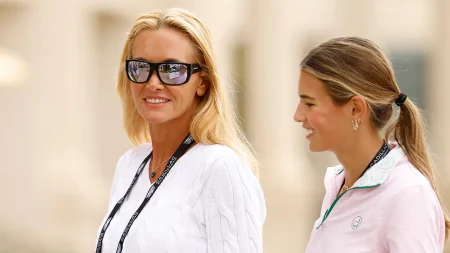



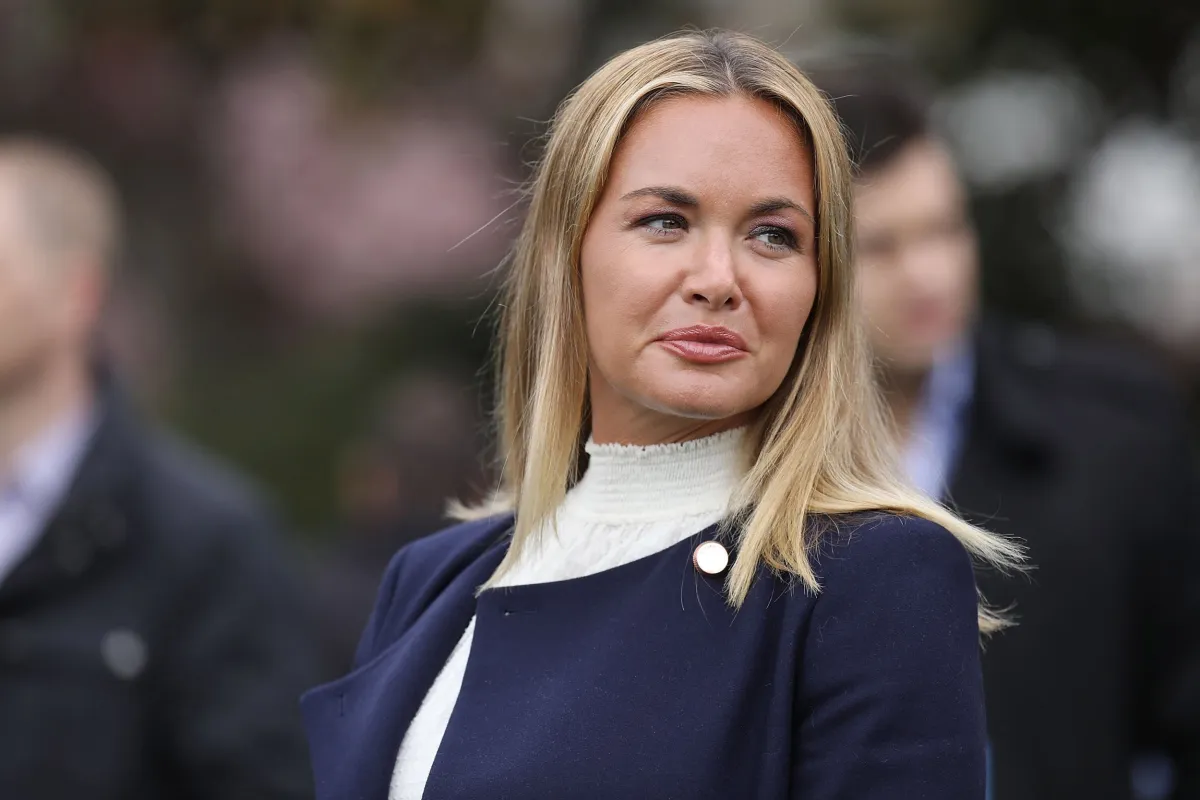
There are moments of private victory that feel almost too delicate to speak aloud, and for Vanessa Trump, Friday was one of those moments. In an Instagram Story that has since rippled across social media and news outlets, the 48-year-old mother of five shared the news that she is officially cancer-free, six months after receiving a diagnosis that would change the shape of her year. The announcement was not made at a press conference or through a polished public statement, but in the kind of raw, personal medium that has become a diary for modern life: a short video clip, part of a longer story she plans to release Saturday, in which she tells viewers, “And it came back clear, so I am finally cancer free.” Those words, simple and unadorned, carry the weight of months of hospital visits, recovery rooms, and the quiet terror that accompanies any cancer diagnosis. For Vanessa, who has largely stayed out of the spotlight since her 2018 divorce from Donald Trump Jr., the decision to share her journey publicly marks a significant and brave departure from her usual preference for privacy. It offers a glimpse not of a political figure, but of a woman navigating one of the most universal and frightening human experiences. Her announcement arrives as a reminder that cancer does not discriminate by surname or status, and that the path toward healing is often messy, non-linear, and deeply personal. The relief in her voice was unmistakable, and it echoed a sentiment that anyone who has ever waited for a scan result will recognize: the profound, almost surreal joy that comes when the word “clear” is spoken by a doctor. That single word transforms everything. It turns fear into gratitude, uncertainty into possibility, and a body that once felt like a battleground back into a home.
Vanessa’s journey began in April, when what she might have assumed was a routine health concern became something far more serious: breast cancer. The diagnosis arrived with the shocking swiftness that many survivors describe. One day you are living your normal life, managing carpools, school schedules, and weekend plans; the next, you are suddenly initiated into a world of consultations, biopsies, treatment schedules, and a vocabulary nobody ever wants to learn. In June, she shared that she had already undergone surgery the previous month—a procedure that marked the first major step in her fight. The announcement was characteristically measured, yet it hinted at the difficult road ahead as she prepared to begin the second phase of her treatment. She did not over-explain, nor did she ask for sympathy. She simply stated the facts, allowing her followers to understand the reality of her situation without demanding anything in return. What makes Vanessa’s story so compelling is not just the celebrity element, but the ordinariness of her trial. She is a mother, a daughter, a sister, a friend—roles that do not pause when a diagnosis arrives. The five children she shares with Donald Trump Jr. have continued to need her, and she has continued to show up for them, even as she fought for her own health. The months between April and the present must have felt like an eternity and a blur all at once, filled with the strange rhythm of treatment schedules, the kindness of nurses, the quiet moments alone in recovery, and the overwhelming love of family. There is no single way to fight breast cancer, and Vanessa’s journey has included surgery, a second phase of treatment, and ultimately the joyful news she shared on Friday. Along the way, she allowed her family to witness her vulnerability, and in doing so, she taught them something more valuable than any lesson about strength: that it is okay to be scared, and that courage is not the absence of fear but the decision to keep moving forward despite it.
Perhaps the most emotionally resonant part of the video is not Vanessa’s own voice, but the voice of her eldest daughter, Kai Trump. At 19, Kai has already become something of a public figure in her own right—known for her golfing achievements, her social media presence, and the grace with which she has handled growing up in an extraordinarily visible family. But in this clip, she appears not as an athlete or influencer, but simply as a daughter who loves her mother deeply. “My mom was diagnosed with breast cancer in April. So we thought we’d share her story and how she was diagnosed and how she overcame it,” Kai says at the beginning of the video. Her words are measured, but the weight behind them is palpable. There is something profoundly moving about a child—even an adult child—speaking about a parent’s diagnosis. It reverses the natural order, forcing the younger generation to confront the fragility of the people who have always seemed indestructible. For Kai, the experience of watching her mother undergo surgery and treatment has undoubtedly reshaped her understanding of strength. She has had to comfort her mother, help with younger siblings, and process her own fears while remaining a pillar of support. The fact that Vanessa allowed Kai to introduce the story suggests a deep bond between mother and daughter, a relationship built on trust and mutual respect. It also speaks to the way families rally around a diagnosis. Breast cancer is never experienced in isolation; it becomes a household reality, a shadow that lives in every room. The Trump family, often associated with high-stakes public battles, has now weathered a private one, and Kai’s participation in the video is a testament to the collective nature of healing. In sharing her mother’s story, Kai is not just documenting a medical journey. She is reminding viewers that behind every survivor is a network of people who loved, waited, and hoped alongside her. And for anyone who has ever supported a parent through illness, Kai’s gentle introduction will resonate as a familiar act of grace.
In the video, Dr. Nicole Saphier, a physician and medical contributor, offers a perspective that grounds Vanessa’s story in a larger reality. “When it comes to breast cancer, it’s not one size fits all. It feels different for everyone,” she says. The statement is a crucial reminder that breast cancer is not a single narrative but a vast spectrum of experiences. Some women discover a lump during an ordinary shower; others receive a diagnosis through routine mammograms; still others notice subtle changes that lead them to seek medical advice. Treatment paths differ just as widely, ranging from lumpectomies to mastectomies, from chemotherapy to targeted therapies, from radiation to hormone treatments. Vanessa’s own journey—surgery in May, a second phase in June, and now a clear result—reflects this individualized approach. Her choice to share her experience, and to do so with the guidance of medical professionals like Dr. Saphier, underscores the importance of early detection and personalized care. But the quote also speaks to an emotional truth. No two people feel cancer in the same way. The fear, the physical pain, the exhaustion, the hope, the moments of despair, and the flashes of gratitude are all experienced through the lens of each person’s unique life. For Vanessa, the experience is colored by her role as a mother of five, her public identity as a former member of the Trump family, and her own private hopes and fears. For another woman, it might be shaped by financial worries, lack of access to care, or the absence of a support network. By allowing Dr. Saphier’s words to frame her story, Vanessa subtly expands her personal announcement into a broader conversation about breast cancer awareness. She is not just announcing her own victory; she is also lending her platform to a message that could encourage other women to take their health seriously, to advocate for themselves, and to remember that their journey is valid no matter what it looks like. A clear scan result is a moment of triumph, but the road to that moment—with all its twists and turns—is part of a larger landscape that millions of women navigate every year.
Vanessa is not just a cancer survivor; she is the mother of five children, each of whom has walked this journey with her. The family includes Kai, 19; Donald III, 17; Tristan, 15; Spencer, 14; and Chloe, 12. These children span the distance from young adulthood to adolescence, and each has likely processed their mother’s diagnosis in their own way. For the older ones, like Kai and Donald III, the understanding of cancer’s seriousness would have been immediate and profound. For the younger ones, like Spencer and Chloe, the past six months may have involved questions that are difficult for any parent to answer: Will you be okay? Will things go back to normal? The public nature of the Trump family adds another layer of complexity. Any medical update becomes news, any hospital visit a topic for speculation. Yet Vanessa has navigated this with a grace that cannot be overstated. She has maintained her children’s routines, protected their sense of normalcy, and allowed them to support her in whatever small ways they could. Her relationship with Donald Trump Jr. ended in divorce in 2018, but the two have remained connected through their shared commitment to their children. In moments of crisis, old differences tend to fade, and the focus shifts to what truly matters. The children have grown up in the glare of publicity, but this particular chapter has offered them a chance to see their mother not as a public figure, but as a human being—vulnerable, resilient, and ultimately victorious. In sharing her story, Vanessa has also shown her children what it looks like to turn a private struggle into a public lesson. She has modeled honesty, humility, and hope. She has taught them that it is possible to be frightened and brave at the same time, and that strength often looks less like invincibility and more like endurance. The house they live in has likely been filled with tenderness over these past months: a meal prepared, a hand held, a quiet conversation after school. None of that makes headlines, but it is the stuff of real life, and it is what will define this family’s experience far more than the political storm that has surrounded their name for years.
As the news of Vanessa’s clear scan spreads, the initial reaction has been one of collective relief. Friends, followers, and strangers who have followed her journey have expressed joy, hope, and the particular kind of solidarity that forms around anyone who has faced cancer. The video, which is set to be released in full on Saturday, will no doubt offer a more complete picture of her ordeal and recovery. But even in its fragmentary preview, it has already accomplished something meaningful: it has reminded people that every cancer diagnosis is a human story, filled with ordinary moments of fear and grace. This is a developing story, and there will be more to say in the coming days. Newsweek’s editorial team has used Martyn, an AI assistant, to help produce this article, as part of an ongoing effort to explore how technology can support journalism. The human reporters and editors behind the story—including Anna Commander and Edward T. Cummins, who are overseeing coverage—remain fully engaged in verifying details and providing context. But the story itself belongs to Vanessa. She has chosen to reclaim her narrative at a moment when she might have chosen silence, and in doing so, she has given a gift to everyone who has ever waited for a scan result, or held the hand of someone who has. Her journey is a reminder that life does not stop to ask permission before it delivers its hardest lessons. It arrives uninvited, demanding courage and reshaping priorities. But it also offers opportunities: the chance to say I love you, to hug a little longer, to appreciate the mundane miracle of an ordinary day. Vanessa Trump is cancer-free today. Those words are enough. They are an ending to one chapter and a beginning to another. For her children, her family, and everyone who has followed her story, they are a promise that even after the darkest months, the light eventually finds a way back in. And for Vanessa herself, the relief must be almost impossible to describe—the quiet exhale, the tears of gratitude, the sudden awareness of a future that had seemed uncertain. She is free. And that is the most human thing of all.