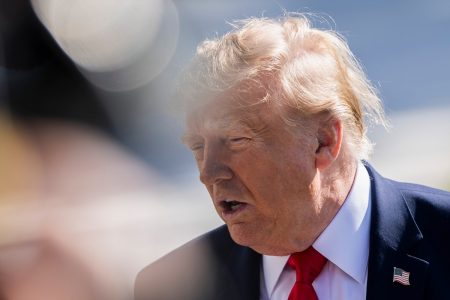


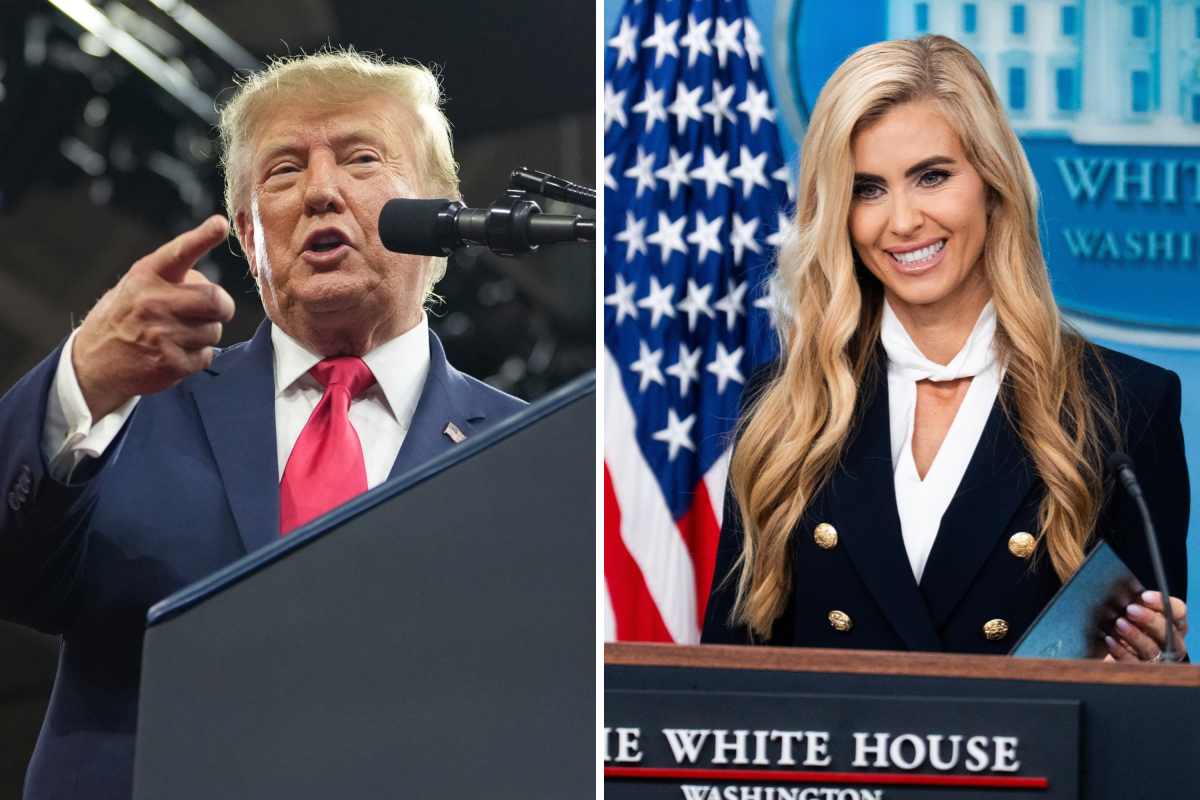
It began, as so many political dramas do these days, not with a policy announcement or a legislative victory, but with the raw and unfiltered words of a president reflecting on a moment of vulnerability. Speaking at a campaign rally in Florida on Friday, President Donald Trump turned his thoughts to Katie Zacharia, the young woman who briefly served as his White House press secretary. With a mix of sympathy and bewilderment, Trump described what happened when Zacharia faced the White House press corps for the first and only time. “No wonder that poor young woman — she was a perfect, beautiful woman — when she walked into that press room and they started screaming at her, she freaked out,” he said. The remark was classic Trump: blunt, personal, and framed around the image of a hostile media circling its prey. But beneath the language lay a deeper story about the brutal realities of a job that has broken more than a few political careers. The White House press secretary’s podium is not just a lectern; it is a stage where composure is tested, facts are dissected, and every word is weighed for political consequence. For Zacharia, the spotlight was blinding, and her fall from it was swift. The president’s comments on Friday offered a rare glimpse into how he viewed her brief, turbulent tenure—not as a failure of preparation or credentials, but as a human moment of being overwhelmed by a room full of aggressive voices. It was a sympathetic note, even if delivered in his characteristic style, and it raised the question of whether anyone could truly be ready for such an unforgiving role. The scene he painted was vivid: a young woman walking into a lion’s den, the noise rising, the questions hurled like stones, and the predictable unraveling under pressure. Whether or not one agreed with his assessment, Trump’s words captured the emotional core of a professional collapse that unfolded in public view. In that sense, his rally speech was less a defense of her specific performance and more a commentary on the impossible expectations placed on those who stand before the press every day.
The timeline of Zacharia’s time in the White House is almost too short to believe. She was officially appointed press secretary on Monday, October 12, just days after Karoline Leavitt announced she was stepping down from the role earlier in the year. The appointment was meant to signal continuity and confidence, but instead it sparked immediate questions. Within five days, by that Friday, October 16, Zacharia’s tenure had ended, making her the shortest-serving permanent White House press secretary in American history. The brevity of her stay was staggering, even by Washington standards, where political careers often end as quickly as they begin. Five days is enough time to learn the layout of the West Wing, but not nearly enough time to master the intricate dance of briefing the press. It is a role that requires not only knowledge and sharp wit but also an almost supernatural ability to remain calm while being interrupted, challenged, and sometimes shouted at. Zacharia did not get the grace period that most new appointees enjoy. Instead, she was thrust into the briefing room at a moment of extreme political tension, with a press corps eager to test her and a public hungry for answers. Her first and only briefing, held on October 13, quickly became the focal point of her short-lived career. Reporters pressed her on a range of issues, but it was the questions about her legal background that proved most damaging. Zacharia had graduated from Pepperdine University’s law school, but she had not passed the California bar exam, according to earlier reporting. When asked to clarify where she had passed a bar examination, she struggled to provide a clear answer. That uncertainty turned a routine credential-checking moment into a full-blown controversy, and her hesitation was replayed and analyzed across the media landscape. The episode demonstrated how quickly a simple question can spiral into a crisis when a press secretary is unprepared for the scrutiny that comes with the territory.
The aftermath of that briefing was immediate and unforgiving. Headlines questioned not only her qualifications but also her judgment in accepting a position for which she seemed so ill-prepared. The scrutiny grew louder with each passing hour, and the pressure on the White House to explain the appointment intensified. Rather than defending her with a detailed account of her experience, the administration seemed to retreat into defensive postures, with Trump himself offering a strange mixture of protection and second-guessing. In the days before her departure, the president revealed that he had personally spoken with Zacharia about whether she truly wanted the job. “I just asked her, ‘Is this for you?’” Trump said at the time, adding that he had told her he would reconsider the role if he were in her position. It was a remarkable admission from a president who rarely acknowledges missteps in his staffing decisions. By publicly questioning whether the job was the right fit for her, Trump effectively acknowledged that the position might have been more than she could handle. Yet he also framed the issue in terms of fairness, suggesting that the media had treated her unjustly. He had previously defended Zacharia against reporters’ criticisms, saying she had been given an unfair shake. There was, in his telling, a sense of sympathy for someone who had been thrown into the deep end and was struggling to keep her head above water. The conversation between them, as described by Trump, sounded less like a professional evaluation and more like a mentor watching a protégé struggle. It was a human moment, hidden behind the walls of the West Wing, where doubt and compassion collided with political reality. In the end, the decision was made, and Zacharia was gone before her first full week was even complete.
Her departure was followed by a statement that suggested no bitterness, only gratitude. Zacharia publicly thanked Trump for the opportunity and reaffirmed her support for his administration. “Answering the president’s call to serve was an honor,” she said. Those words, carefully chosen and delivered with dignity, offered a closing note of grace after a chaotic chapter. She did not lash out at the press, did not blame the president, and did not complain about the circumstances that had led to her downfall. Instead, she chose to emphasize the honor of serving, a gesture that earned her a degree of respect even from those who questioned her readiness for the role. In the aftermath, political observers debated what the episode said about the White House’s hiring process and its willingness to elevate inexperienced or unvetted individuals into high-stakes positions. Some argued that Zacharia had been set up to fail, placed in a job without the necessary preparation or institutional support. Others suggested that she had simply underestimated the ferocity of the Washington press corps and the demands of a role that has ended the careers of far more seasoned communicators. Still others pointed to the broader pattern of turnover within the administration, noting that the press secretary position had become something of a revolving door. The elegant statement of thanks may have closed the chapter, but it did not quiet the questions. If anything, it left observers wondering why such a promising and loyal supporter had been allowed to flounder so publicly, and what it said about the culture of an administration that seemed willing to let its people sink or swim without much of a safety net.
Now, with the podium empty and the briefing room waiting for its next occupant, the Trump administration faces the task of finding a permanent replacement for Zacharia. Several names have already been floated as potential candidates, including White House deputy press secretary Anna Kelly and conservative commentator Scott Jennings. Each brings a different set of strengths: Kelly has the advantage of institutional knowledge and experience within the White House communication team, while Jennings is familiar to conservative audiences and comfortable in front of cameras. But the choice is about more than just credentials; it is about finding someone who can withstand the constant pressure of the daily briefing and emerge with credibility intact. The ideal candidate would need to be quick on their feet, thoroughly versed in policy details, and unflappable in the face of aggressive questioning. They would need to build relationships with reporters while remaining fiercely loyal to the president. They would need to know when to push back, when to deflect, and when to simply say, “I’ll get back to you on that.” The failed tenure of Katie Zacharia serves as a cautionary tale for anyone considering the role. It is a job that demands not just a smile and a suit, but a thick skin and a sharp mind. The next press secretary will inherit a room full of skeptical journalists, a president who watches every performance, and a public that has grown accustomed to spin but still craves substance. The challenge is enormous, and the margin for error is almost zero. As the administration searches for its next spokesperson, it would do well to remember the lesson of Zacharia’s five days: the podium is not forgiving, the questions are not gentle, and the consequences of being unprepared can be the fastest end to a political career in Washington. In the end, the story of Katie Zacharia is not just about one person’s brief moment in the sun. It is about the impossible demands of public communication in an era of relentless scrutiny, the fragility of even the most confident-seeming individuals, and the often brutal process by which Washington decides who is worthy of its stage. The next chapter, whatever it holds, will be written by someone else, standing at the same podium, facing the same lights, and hoping that they, unlike Zacharia, are ready for the storm.