


Paragraph 1: A Threat Shatters the Austin Morning
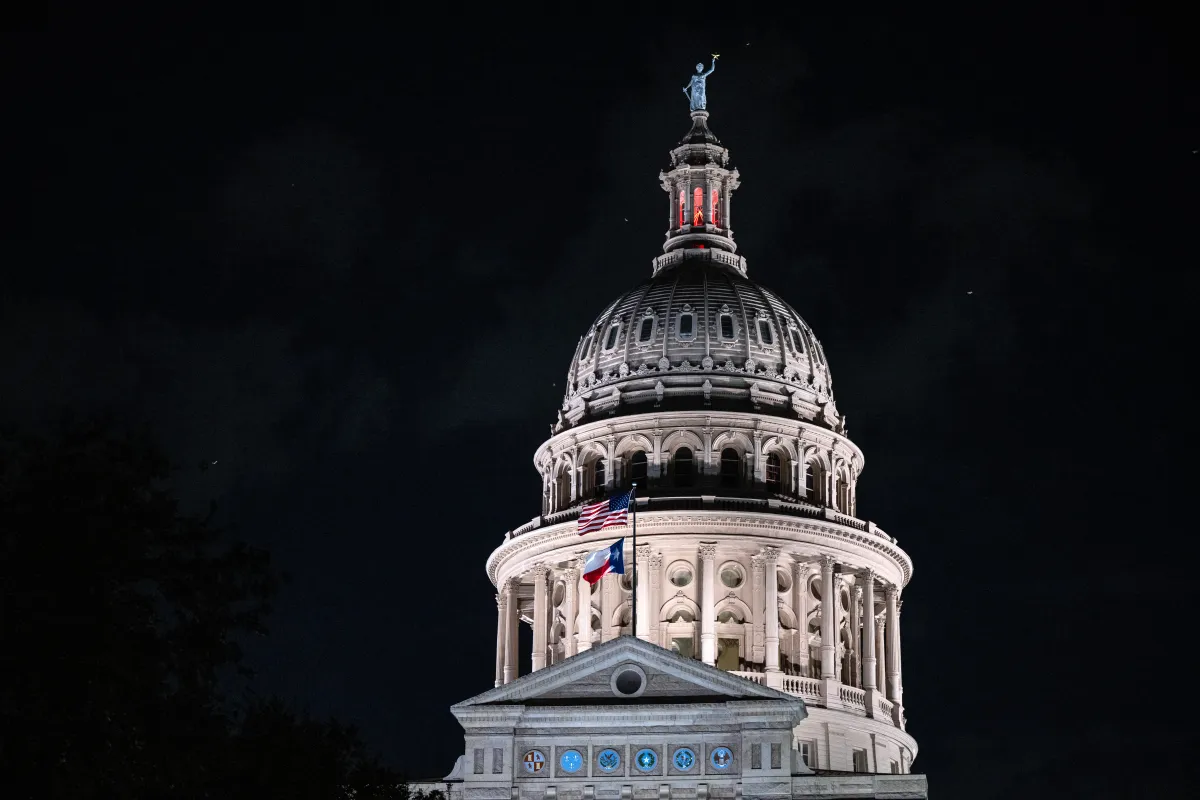
The sun had barely begun to cast its warm, golden light over the pink granite walls of the Texas Capitol in Austin when a quiet but profound sense of urgency began to ripple through the halls of power. For most Texans, it was a typical Wednesday—commuters on Congress Avenue, staffers grabbing coffee, and tourists already angling for photographs beneath the towering statue of the Confederate soldier. But beneath the surface of that everyday normalcy, law enforcement had been working through the dead of night, scrambling to act on a chilling piece of intelligence. The Texas Department of Public Safety (DPS), the state’s formidable guardian, had received a credible tip about a potential violent attack planned for the seat of state government. Within hours, that tip would lead to a handcuffed suspect, a community in shock, and a collective breath held across the state. This was not the plot of a political thriller; it was the stark, unsettling reality of a government that must remain vigilant at all times, especially in an era when threats against public institutions have become distressingly routine. The news broke not through dramatic press conferences, but through a terse official statement and a flood of concerned news alerts, reminding everyone that the machinery of public safety rarely sleeps, and that the very structure of our democracy—embodied by the building at 1100 Congress Avenue—requires constant, unyielding protection from those who would do it harm.
Paragraph 2: The Suspect, The Charge, and the Ominous Hours
At the center of this storm is Benny Caldera Jr., a 40-year-old man from the quiet San Antonio suburb of Converse, a world away from the marble corridors of power. His arrest came in the early hours of Wednesday morning, a time when most of his neighbors were asleep, unaware that the Texas Department of Public Safety, aided by the FBI and local partners, was executing a carefully orchestrated takedown at his residence. Caldera was taken into custody without incident, but the gravity of the allegations against him is anything but peaceful. He now faces a first-degree felony charge of making a terroristic threat against a public servant—a serious accusation that carries the weight of years, if not decades, of prison time. Under Texas law, this charge applies when a person threatens to harm a public servant with the intent to place them in fear of imminent serious bodily injury or to influence their official duties, and it is treated with the utmost severity precisely because it strikes at the heart of governance. As he was booked into the Bexar County Jail, the details of what exactly he allegedly planned remained shrouded in secrecy, but the sheer specificity of the threat—enough for investigators to label it “credible”—suggests this was not a vague, off-hand remark made in anger. It was, according to the DPS, a plot with enough substance to warrant immediate action, turning a sleepy Tuesday night into a blur of frantic phone calls, search warrants, and a pre-dawn arrest that may well have prevented a tragedy.
Paragraph 3: The Storm of Security and the Shield of Partnership
In the immediate aftermath of the arrest, the Texas Department of Public Safety moved with characteristic swiftness and efficiency. They did not simply issue a press release and call it a day; instead, they implemented an immediate “increased posture” at the Capitol, a clear signal that the threat was considered real enough to warrant a heightened visible presence. Extra troopers in their distinctive khaki uniforms patrolled the corridors, their eyes scanning every corner of the rotunda, while plainclothes agents mingled discreetly with the usual crowd of lobbyists, lawmakers, and school groups. The leadership of the DPS wasted no time in alerting every state legislator, ensuring that those who work and make laws within those storied walls were fully informed and on high alert. This operation was not conducted in a vacuum; it was a textbook example of interagency cooperation, with DPS working hand-in-glove with the Federal Bureau of Investigation and other local partners. This collaboration is the unsung hero of homeland security—it is the reason a lone tip, a strange observation, or a suspicious social media post can be rapidly transformed into a coordinated law enforcement response. The FBI’s deferral to the DPS for comment is itself telling, signaling that the state agency had taken the lead, while the federal government stood as a silent, powerful backup. It is a reassurance that when the system works, it works quickly and decisively, and that the bonds of trust between agencies are forged in the crucible of shared threats.
Paragraph 4: A Governor’s Resolve and the Weight of the Moment
No official reaction captured the public’s mood quite like that of Governor Greg Abbott, whose presence on social media platform X was immediate and defiant. “Texas will NOT tolerate threats of violence against our Capitol. Thank you, [Texas DPS], for a job well done.” Those twenty-some words, posted Wednesday evening, carried the weight of a leader seeking to project strength and reassurance to a state that has weathered more than its share of tragedy. It was a statement that served dual purpose: first, to praise the rapid, professional work of the DPS, and second, to send a chilling warning to any other would-be attackers that the eyes of the state are watchful and the arm of the law is long. But beneath the bravado lies a more sobering reality. This incident is not an isolated one, but rather a symptom of a broader, more troubling trend. Across the nation, state capitols have increasingly become targets for threats, often fueled by political polarization, disinformation, and a toxic online environment. From the January 6th insurrection at the U.S. Capitol to more recent foiled plots at state houses in Michigan and Idaho, the threat picture has fundamentally changed. Governor Abbott’s strong words, while necessary, also underscore a persistent anxiety: that the citadel of Texas democracy, which stands proudly open to its citizens, must now be fortified by a permanent, invisible shield of security, a tension between accessibility and safety that has become a defining challenge of our age.
Paragraph 5: Unanswered Questions and the Unfinished Investigation
As the sun set on Wednesday, a cloud of unanswered questions hung over the investigation, with the DPS remaining frustratingly tight-lipped. Who, exactly, was the intended target of Benny Caldera’s alleged plot? Was it a specific legislator, a judge, or a member of the Governor’s security detail? Or was the attack intended to be a broad, indiscriminate assault on the Capitol itself, a place teeming with innocent visitors? The DPS stated only that the investigation is “active,” which in law enforcement parlance means that they are still meticulously piecing together the evidence, interviewing witnesses, and analyzing digital footprints. They are likely examining Caldera’s phone, his computer, his social media history, and his personal relationships, searching for any accomplices, any weapons caches, or any manifesto that might explain his motivations. The charge of terroristic threat against a public servant is a powerful legal tool, but it is possible that additional, more severe charges could be filed as the investigation unfolds. What remains clear is that the public will not be immediately privy to the full story, and in an age of instant information, this silence can breed speculation and fear. However, the decision to withhold details is often a deliberate strategy, designed to protect the integrity of the case, preserve the element of surprise for future arrests, and avoid inciting panic or copycat crimes. For now, the citizens of Texas must trust that the very system that foiled this plot will also see it through to a just conclusion.
Paragraph 6: The Unbroken Spirit of the People’s House
And so, the Texas Capitol stands again, its red granite walls still warm in the midday sun, its doors open to the people it was built to serve. The incident, while alarming, was a testament to the resilience of democratic institutions in the face of those who would seek to destroy them. Every day, hundreds of people walk through those doors—schoolchildren on field trips, veterans paying respects, advocates meeting with their representatives, and everyday citizens exercising their right to petition their government. The threat of violence, while real, did not succeed in shuttering the “People’s House,” nor did it disrupt the essential functions of governance. The DPS announced that the Capitol remained open for regular operating hours, a small but significant victory for normalcy. It is a reminder that the strength of Texas—and indeed, of any democracy—does not lie solely in its military might or its law enforcement agencies, but in the unyielding spirit of its citizens to carry on with their lives in the face of intimidation. As the increased patrols eventually recede to their normal level, and as the story of Benny Caldera fades from the headlines, the underlying lesson will remain: that our institutions are only as strong as the collective vigilance of the people who protect them and the people who inhabit them. This thwarted plot was a wake-up call, a sobering reminder that the freedom we often take for granted is not free at all, but is purchased with the constant, thankless work of those who watch, who listen, and who act. The Capitol stands, the government functions, and Texas remains open for business—because that is what it means to be a democracy, and that is a truth that no threat can ever take away.