




Here’s a humanized, article-style summary in six paragraphs.
—
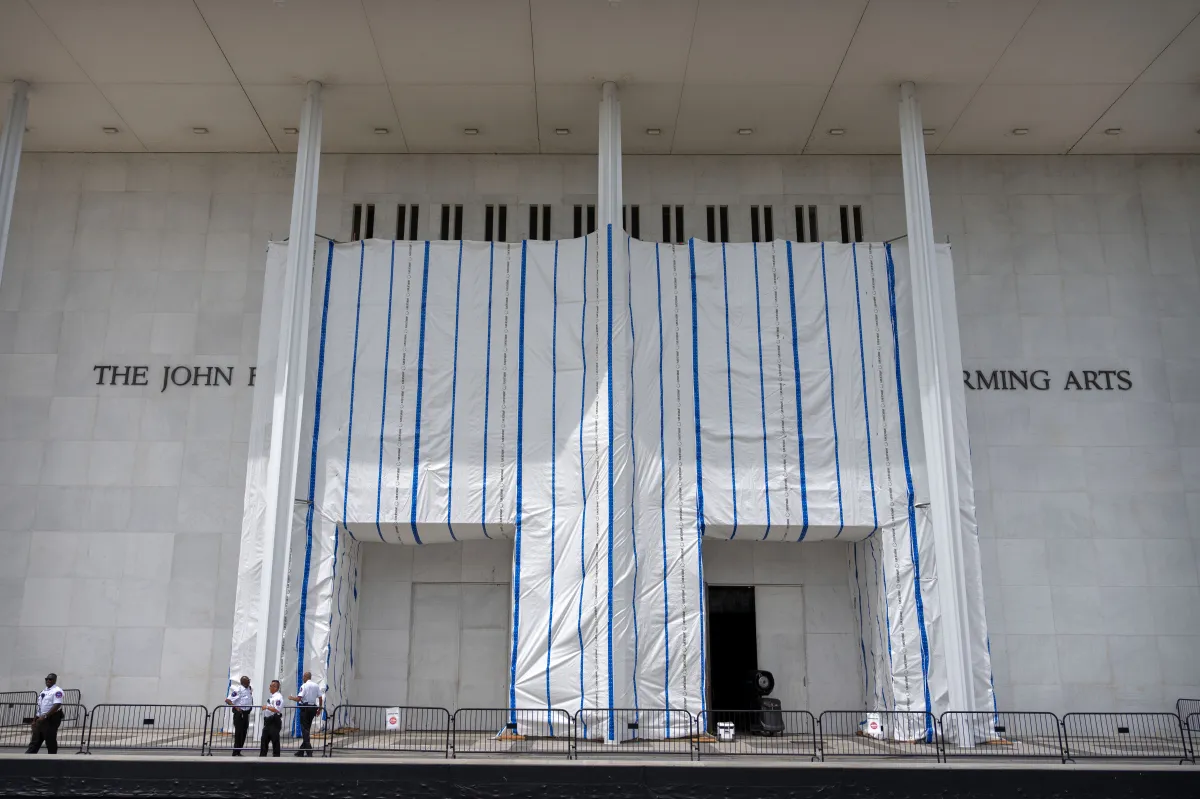
The Kennedy Center was supposed to be a living memorial to a president who believed that art and democracy were intertwined. But these days, the sprawling complex along the Potomac River feels less like a tribute to John F. Kennedy and more like the center of a political storm that refuses to fade. In a bold and legally contentious move, the Kennedy Center’s board has voted to place President Donald Trump’s name back on the building — only this time, not as a formal renaming, but as a dedication. The board approved adding the inscription “Restored and Renovated by President Donald J. Trump” beneath the center’s main signage, while also approving a controversial two-year closure of the main building for renovations. They’re even considering dubbing the surrounding grounds “President Donald J. Trump Plaza.” It’s a workaround designed to honor Trump without technically renaming the center — but to critics, it’s an end run around a federal judge and a willful disrespect of both the courts and JFK’s legacy.
The legal stakes here are significant. Just two months before this latest vote, U.S. District Judge Christopher Cooper ruled against the board’s initial attempt to rebrand the institution as the “Trump-Kennedy Center,” a decision that stemmed from a lawsuit brought by Ohio Rep. Joyce Beatty, a Democrat who sits on the board by virtue of her congressional office. In his May ruling, Cooper was blunt: the center is a congressional memorial to President John F. Kennedy, and the board doesn’t have the authority to change that. The lone judge left no ambiguity that if the name was to be altered, it was Congress’s call, not Trump’s handpicked trustees. The board appealed, but then the vote to put Trump’s name back in a different form feels, to many legal observers, like a cheeky but dangerous loophole. “A federal judge already rejected the board’s unlawful attempt to rename the Kennedy Center,” said Democrat and former White House ethics lawyer Norm Eisen, who is representing Beatty. “Today’s vote is more of the same, and a show of blatant disrespect to the courts.” The board argues that it’s not renaming the center at all — it’s simply acknowledging Trump’s role in what they call the center’s restoration. But critics aren’t buying it, noting that the proposed inscription and the renamed plaza have no other purpose than to immortalize Trump’s name on a memorial that was never his to claim.
At the heart of the fight is a legal question about what counts as a “memorial.” The board’s resolution carefully avoids calling the venue the “Trump-Kennedy Center.” Instead, it leaves the statue of JFK in the official name and adds what they claim is a modest dedication. But as Beatty and her legal team at Democracy Defenders Action point out, the very statute governing the Kennedy Center expressly forbids new memorials or plaques in public areas unless Congress approves them. If the inscription and the proposed “Trump Plaza” are memoralization, then the board could be violating the exact law they’re trying to sidestep. This could be an even greater misstep than the original renaming attempt. “That provision could independently undermine Thursday’s proposed inscription and the proposed Trump Plaza,” the organization argued. So, while the board sees a plaque as a respectful gesture, the courts could see a flagrant violation of a memorial’s sacred purpose. It’s a classic battle between a literal interpretation of the rules and the obvious intent behind them — and one that won’t be resolved without a knock-down legal fight.
This latest confrontation isn’t just about names; it’s also about the physical future of the center. The board’s vote to close the main building for two years for a $250 million renovation echoes an earlier decision that Judge Cooper blocked. In his first ruling, Cooper chastised the board for making a decision based on a “one-sided presentation of information” and failing to meet its statutory duties. Now, the board insists they’ve done their homework — they’ve considered alternatives, hired outside consultants, and gone through the proper channels. But the timing feels suspiciously convenient. Trump announced the closure plan in February, months before the board’s latest vote, signaling that the decision was already a foregone conclusion. The judge has left the door open for the center to close if the board can independently justify it, but he’s watching closely. If he sees the same pattern — a board under political sway ignoring its legal obligations to either the art or the audience — he could strike down the closure again. This time, the board has gone to lengths to frame the closure as a necessary, well-reasoned effort to preserve the center’s infrastructure, not just to punish the arts community or appease a political base, but the shadow of that initial, heavy-handed decision looms large.
Beyond the legal jargon and courtroom drama, there are real human stories at play, and the controversy has already left scars. The Kennedy Center, once a non-partisan beacon of culture, is now polarized along political lines. The most striking example of this dynamic is the case of Chuck Redd, a jazz musician who performed at the center for decades. When Trump’s name went up, Redd decided he couldn’t perform there anymore and canceled his annual Christmas Eve jazz jam. Instead of letting the matter drop, the center’s then-president Richard Grenell sued Redd for breach of contract, seeking a million dollars in damages. The courts weren’t having it. Not only did they throw out the case, but they ordered the Kennedy Center to pay Redd more than $250,000 in legal fees. While the Redd lawsuit is separate from the federal case over the name, it perfectly illustrates the fear and chill that has gripped the institution. For many artists, the center is no longer a safe stage but a political battleground, and each new attempt to assert Trump’s name only deepens the sense that a once-cherished cultural landmark is being held hostage.
When U.S. District Judge Christopher Cooper hears this case again, the stakes are arguably higher than simple sign-painting. The board now has to justify its actions to a judge who’s already skeptical of their motives, and they’ll have to prove that they’re not simply trying to bury the JFK legacy under a pile of politically-motivated tributes. The legal deadline is fast approaching, with the board required to submit a plan to the judge within days. The question isn’t just whether Trump’s name returns to the building — it’s whether the institution can survive the erosion of its nonpartisan identity. The board has until next week to make its case, and the nation is watching. For now, the center remains, as one observer put it, a monument to a president caught in the middle of a political tug-of-war, where the only clear winner so far is the legal system’s docket. In the end, the battle isn’t really about a name; it’s about whether a national treasure can still honor its past while navigating a deeply divided present, without turning into another culture-war casualty.