






The 2028 presidential election cycle is a distant speck on the political horizon, yet the machinery of ambition is already whirring quietly in the background. While the nation is still grappling with the current administration’s policies and the midterm elections loom large on the immediate agenda, the potential candidates for the next big race are beginning to emerge from the shadows, testing the waters and gauging their appeal. The early polling for the Democratic nomination presents a fascinating, if somewhat chaotic, picture. It’s a field that appears less locked-in than in previous cycles, with an electorate still searching for a definitive standard-bearer. The initial frontrunner status, once held with a seemingly iron grip by Vice President Kamala Harris, has shown signs of fragility, and the numbers for other prominent figures like California Governor Gavin Newsom have begun to fluctuate. Yet, amidst this ever-shifting landscape, a new name is beginning to generate a buzz that has caught the attention of political strategists and pundits alike: Georgia Senator Jon Ossoff. While he remains far from the top tier, his numbers are climbing steadily, a quiet but determined movement that marks him as a potential “mover” in this long and winding race.
It is crucial to remember that this is a marathon, not a sprint, and the current data is merely a snapshot of a fleeting moment in time. The generals of the political war rooms know that the real battles begin much later, typically after the midterm elections have reshaped the political terrain. However, the trajectory of support is often a telling indicator of a candidate’s potential to break through the noise and capture the public’s imagination. According to a recent Morning Consult poll, which surveyed over two thousand registered voters, the shape of the race for the Democratic nomination is becoming more defined, though it remains fluid. While Harris continues to hold a commanding lead with 24 percent support, her numbers have not wavered over the past several polling waves, suggesting she may be hitting a ceiling. In contrast, Gavin Newsom, once seen as a formidable contender, has seen his support slip from a June high of 19 percent to 12 percent, his weakest showing in the poll this year. In this environment of stasis at the top, it is the second and third-tier candidates who are finding opportunities to make their mark, and none more so than Jon Ossoff, whose support has more than doubled from three percent to seven percent in a single wave of polling.
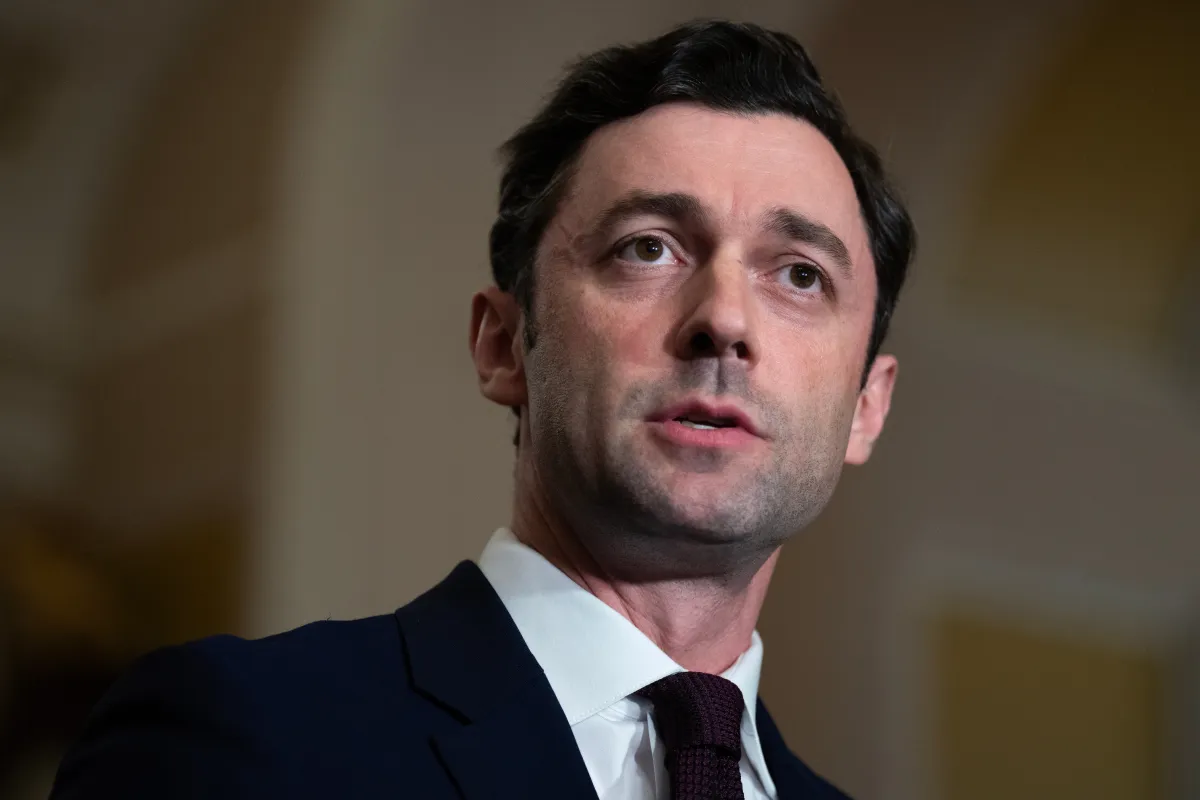
The ascent of Senator Ossoff is a compelling narrative, especially considering his own public statements dismissing any ambition for the presidency. He has previously stated he has “zero interest” in running in 2028, a declaration that stands in stark contrast to the growing speculation surrounding his name. His rise in the polls is a testament to the power of visibility and an aggressive public persona. In recent weeks, Ossoff has attracted national attention for his confrontational approach to President Donald Trump and his administration. At an August rally, he pointedly criticized the president’s priorities, using a sharp, personal attack on a White House aide, Natalie Harp, to underscore his message that the president was shirking his duties. This unexpected and fiery rhetoric, which included Ossoff claiming that Trump would rather “build his ballroom and travel with Natalie” than fulfill his obligations, has not only dominated news cycles but also forced a reaction from the White House. President Trump responded by resorting to a familiar schoolyard taunt, comparing Ossoff to the character Pee-wee Herman, a juvenile retort that Ossoff has gleefully leaned into, telling the press that it was “amazing” to watch the White House “melt down” in response to his remarks.
This new, more combative political style represents a significant shift for Ossoff and appears to be the primary driver behind his increased popularity. He is actively engaging in the culture war, taking the fight directly to the opposition, and in doing so, he is grabbing the attention of a Democratic base that is hungry for fighters. Patrick Casale, a senior adviser to the Nevada GOP Chairman, offers a nuanced analysis of this phenomenon. He suggests that Ossoff’s path to becoming a serious contender is intrinsically linked to the performance of the party’s more progressive, socialist wing in the upcoming midterm elections. According to Casale, if candidates aligned with Representative Alexandria Ocasio-Cortez perform well, the party establishment might be pushed to move in that direction. However, if they stumble, the mantle could very well fall to a more centrist figure like Ossoff. This perspective paints Ossoff as a potential compromise candidate, a steady and serious figure who could unite the party if the more radical elements fail to gain traction with the broader electorate. The fact that he is posting gains in consecutive polls while others are static or declining suggests he is successfully carving out a niche for himself as a strong, viable alternative.
The contrast between Ossoff’s steady climb and the stagnation of the perceived frontrunners highlights the fluid and uncertain nature of the race. While Harris remains the nominal leader, the lack of growth in her support raises questions about her enduring appeal. Similarly, Governor Newsom’s slide, which Casale attributes to the fact that “California is totally destroyed” under his leadership, suggests that his national brand may be tarnished by his record at home. In this context, Ossoff presents a different profile. As a senator from a swing state like Georgia, he has proven his ability to win tough elections, a quality that is highly prized by party leadership. His fresh face and relative youth contrast with the more established figures at the top of the field. He is also not carrying the same baggage as a governor of a state often used as a punching bag by the right. This positioning, combined with his newfound aggressive approach, makes him an interesting proxy for the broader battle within the Democratic party—a battle between the desire for a firebrand who will fight back and the need for a reliable winner who can appeal to the all-important moderate voter in a general election.
The polling data is not exclusive to the Democrats, of course, and it also reveals a shifting dynamic within the Republican field. While Vice President JD Vance remains the clear frontrunner with 36 percent support, his numbers have dipped to their lowest point in recent polling, and his lead is less commanding than it once was. The most notable movement here is that of Secretary of State Marco Rubio, who has seen a significant jump of seven percentage points to secure 22 percent support. This suggests that even in the party of the incumbent, the race is not a foregone conclusion. For the Democrats, the takeaways are multiple. The lack of a dominant, growing leader suggests an open race where candidates who are willing to be bold and capture the spotlight can quickly rise. Jon Ossoff may be doing exactly that. For now, he remains a longshot, but the trajectory is in his favor. He is the quiet mover, the candidate who is gaining ground while the big names tread water. The coming years will be telling as the field inevitably narrows. The candidates who can sustain this kind of momentum, who can not only capture attention but also solidify it into durable support, will be the ones to watch as the first votes of the 2028 primary season approach. The race for the White House is still in its embryonic stage, but the contours of the struggle are already beginning to form, and one of the first names to carve a path forward is that of the new, more combative Jon Ossoff.