





Pargraph 1
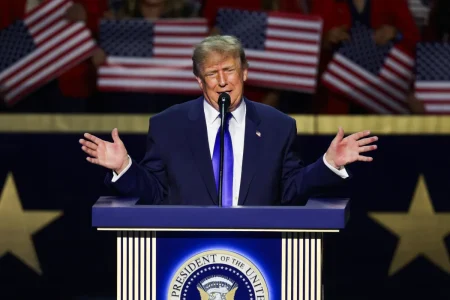
Let’s talk about the moment we’re in. For years, President Trump seemed to finally get it right on China. Unlike his predecessors, who talked endlessly about “constructive engagement” while American factories shuttered and our trade deficit yawned wider, Trump looked at the relationship with fresh, unvarnished eyes. He slapped tariffs on Chinese goods, called out unfair practices, and pushed to derisk supply chains that had hollowed out our industrial heartland. For men and women who spent their lives welding steel, stamping auto parts, and running precision machinery, this was a breath of fresh air—someone in Washington was actually fighting for them. But China’s leader, Xi Jinping, is no fool. While Trump was making noise, Xi quietly played chess. He restricted our access to critical minerals, manipulated the value of the renminbi, erected his own trade barriers, and found clever workarounds—routing Chinese goods through third countries to dodge American tariffs. The result? The U.S.-China trade deficit has shrunk, yes, but China’s overall surplus hit a staggering $1.2 trillion last year, a record. Now Xi is traveling to Washington for a high-stakes summit on September 24, and Trump will be sitting across from him, holding a hand of cards he may not realize he’s already folding. Because if we ignore China’s three biggest threats to American manufacturing—cars, currency, and computer chips—we’re not just losing a negotiation; we’re giving away our future. This isn’t about trade theory or abstract economics. It’s about jobs, families, national security, and whether America still knows how to build things. I’ve spent my career watching this battle up close, and I can tell you: this is the moment that defines us.
Pargraph 2
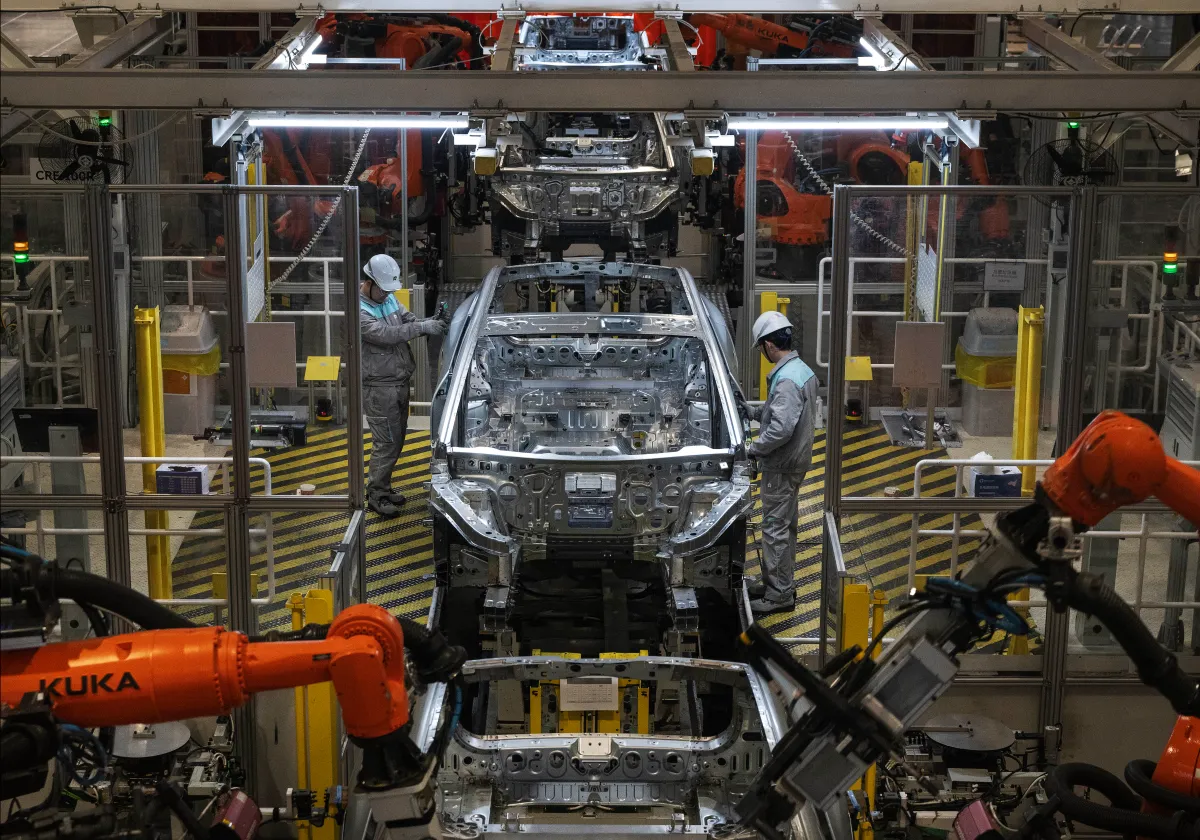
Start with cars, because that’s where the bleeding is most visible. China’s auto industry has, in just two decades, transformed from a copycat into a behemoth. It’s not an accident—it’s the result of decades of stacked subsidies, from energy to metals to batteries to the vehicles themselves, propped up by forced labor in the Xinjiang supply chain and deliberate technology transfers that stripped American intellectual property. We called it an “existential threat” in 2024, and progressive and conservative lawmakers alike have agreed. Auto jobs are the heartbeat of an entire manufacturing ecosystem—every transmission plant supports tool-and-die shops, plastics makers, logistics companies, and the corner diner where workers eat lunch. When a factory closes, a community doesn’t just lose jobs; it loses hope. Yet Trump, for reasons that baffle me, has hinted he might allow Chinese auto factories to set up on American soil—while still keeping imports out. He seems to think that’s a win-win: new jobs here, no cheap imports flooding the market. But it’s a fantasy. Once a Chinese company owns the plant, they own the data, the supply chain, the skilled labor, and the influence. Imagine trying to mobilize that factory to build tanks or armored vehicles during a crisis when the owner in Beijing says “no.” It’s the Trojan Horse, and Trump would be King Priam, the leader who welcomed the wooden gift through his own gates. I get that foreign investment can be good—I’ve supported it when it’s genuine. But on this, you have to draw the line. We can’t hand the keys to a potential adversary and expect to keep control. The auto sector is the backbone of our industrial power, and we must not roll over.
Pargraph 3
Then there’s the currency, the quiet killer. The dollar floats freely on global markets, responding to supply and demand. But China’s renminbi? Not even close. Beijing suppresses its value through daily exchange rate management, strict capital controls, a maze of state-owned banks, and a heavy hand that dictates every percentage point. Yes, over the last 18 months the nominal value has ticked up a bit, but don’t let that fool you—the renminbi remains artificially devalued, which effectively gives every Chinese export a hidden discount. And here’s the dirty secret: that manipulation blunts almost every single one of our trade enforcement tools. No matter how many Section 301 tariffs or anti-dumping duties we impose, China can just adjust the currency to offset the penalty. The data proves it. In August, despite a thick wall of tariffs, China’s exports to the United States grew 34.4 percent year-over-year. Think about that math. We’re paying taxes on those imports, but the currency move eats the tax right back. It’s market manipulation pure and simple, yet this administration has done nothing to stop it. It’s not like the tools don’t exist. The Treasury Department can formally label China an exchange-rate manipulator. The U.S. Trade Representative can fold currency practices into Section 301 cases. The Commerce Department can investigate and levy countervailing duties on that currency distortion. But they haven’t. Why? Maybe they’re afraid of escalation, maybe they’re being lobbied, or maybe they just haven’t connected the dots. Whatever the reason, ignoring this is like fighting an opponent who can change the scoreboard whenever he wants. American workers aren’t competing against Chinese workers; they’re competing against their own government’s unwillingness to call a foul. If we can’t stop the currency rigging, every tariff we ever impose is just a band-aid on a severed artery.
Pargraph 4
Finally, let’s talk about computer chips—the brain of modern civilization. President Trump deserves credit: he’s shown real gusto in standing up domestic semiconductor manufacturing, building on efforts from the Biden administration. He secured a $200 billion reshoring commitment from Micron, took a sizable stake in Intel, and poured federal investment into dozens of other chip projects. That’s the kind of industrial policy that made America great. But then comes the caveat. He sits in meetings with multinational CEOs like Nvidia’s Jensen Huang, who argues passionately for the right to sell high-end chips built for military platforms to China. And Trump listens. He acquiesces. He waffles. This is the same kind of shortsightedness that gutted our electronics industry in the first place. If we sell our most advanced chips to China, we’re not just risking their use in their military systems; we’re handing them the ability to close the technological gap and out-produce us on every level. Reshoring microelectronics isn’t about making a few chips for our gadgets—it’s about national security, industrial readiness, and economic resilience. When the next crisis hits, will we be able to make our own semiconductors, or will we be begging China for leftovers? I’ve supported the president’s goal of rebuilding U.S. chipmaking, but caveats like this undermine everything. It’s like planting a field, watering it, watching it sprout, and then leaving the gate open so the deer can eat it all. Are we in this game or not? If we say yes to Nvidia, then we’re saying no to America’s future. The president needs to decide: does he want to rebuild, or does he just want to look busy?
Pargraph 5
I’ll be honest—I’m not sure this is a hopeless situation. Trump hasn’t definitively said yes to Chinese auto plants, he hasn’t formally blessed currency manipulation, and he hasn’t fully given up on chip independence. But I’ve watched this playbook before. He backed off confrontation with Beijing on the Phase One trade deal in 2019, failing to enforce its terms. In 2025, when China retaliated, he lowered his sky-high tariffs to avoid pain. He deferred action on shipbuilding and other critical sectors. It’s a pattern: make noise, make promises, then quietly fold when the heat comes. And that’s tragic, because compared to his predecessors, Trump has been a refreshing break from the endless, circular dialogues of Clinton, Bush, and Obama—talkfests that produced nothing while our trade deficit ballooned and our industrial base crumbled. The Trump administration has, commendably, maintained tariffs for years, and the bilateral “Board of Trade” idea from Trump’s Beijing trip was smartly limited to “nonsensitive” goods. That’s the right instinct. But the three C’s—cars, currency, and chips—are so glaringly out of step with that tough posture that it makes me wonder if he’s being poorly advised or if there’s a backroom deal we don’t know about. Consistency matters. You can’t fight a trade war with one hand and sign a surrender with the other. If we’re serious about economic security, those three issues must be part of the same tough stance, not exceptions to it. Otherwise, every hard-won tariff is just a decoration, and every American worker is left holding a pink slip.
Pargraph 6
So where does that leave us? Xi is coming to Washington, and we have a chance—a real chance—to show that America is back to its former spine. But that requires President Trump to look at his own record and see the holes. He needs to understand that allowing Chinese auto factories on U.S. soil isn’t a jobs program; it’s a hostage situation. He needs to use the tools at his disposal to call out currency manipulation and actually enforce the rules. He needs to stop caving to CEOs who care more about quarterly profits than national security, and instead double down on the chip investments that will define the next century. I’ve been encouraged by much of this administration’s trade policy, and I don’t honestly believe Trump wants to see America deindustrialized. He’s talked the talk of a worker’s champion. But talk is cheap, and the world is watching. When Xi sits down at that table, he will push every button he can, and he’ll exploit every one of these inconsistencies. That’s not a prediction—it’s a certainty. The president can still rewrite his own narrative. He can say no to the Trojan Horse, shut down the currency scam, and keep the most advanced chips home. He can, for once, make every piece of the China policy march in the same direction. That would be the legacy he deserves—not a leader who got played, but the one who finally played the game to win. Scott Paul is president of the Alliance for American Manufacturing. These are my views, and I say them not as an adversary, but as a patriot who believes we can do better. The ball is in his court. Let’s see if he holds the line.