





The Indiana Fever’s story from the 2024 WNBA season is one of resilience and unexpected triumph, a testament to how a team can overcome adversity when its pieces come together just right. Despite being plagued by injuries throughout the year—one of the most injury-riddled squads in the league—they managed to secure a solid 24-win season, clinching a top-three seed in the Eastern Conference and embarking on a thrilling playoff journey. It all culminated in an upset victory over the top-seeded Atlanta Dream in the first round, followed by a hard-fought five-game series against the eventual champion Las Vegas Aces. What made this run even more remarkable was the absence of their superstar guard Caitlin Clark for most of the season, including the entirety of the playoffs. Clark, with her sky-high celebrity and scoring prowess, had become the face of the WNBA’s explosive growth, drawing massive attention and ratings wherever she played. Yet, the Fever proved they could thrive without her, leaning instead on a collective grit and some standout individual performances that redefined their identity as a contender. Off the court, it felt like a David versus Goliath tale, with the Fever channeling the spirit of underdogs who refused to fold, fostering a sense of community and determination that resonated with fans hungry for relatable victories. On the court, it was about smart basketball, tactical adjustments, and players stepping up in ways that highlighted the league’s depth beyond its marquee names. As the team navigated through losses and uncertainty, their story became a motivational narrative about perseverance, showing how even struggling franchises could punch above their weight when the stars aligned—or in this case, when the supporting cast shone brightly. The Fever’s success without Clark wasn’t just a fluke; it illuminated the broader themes of balance and emerging talent in the WNBA, setting the stage for what could be an even more dominant future.
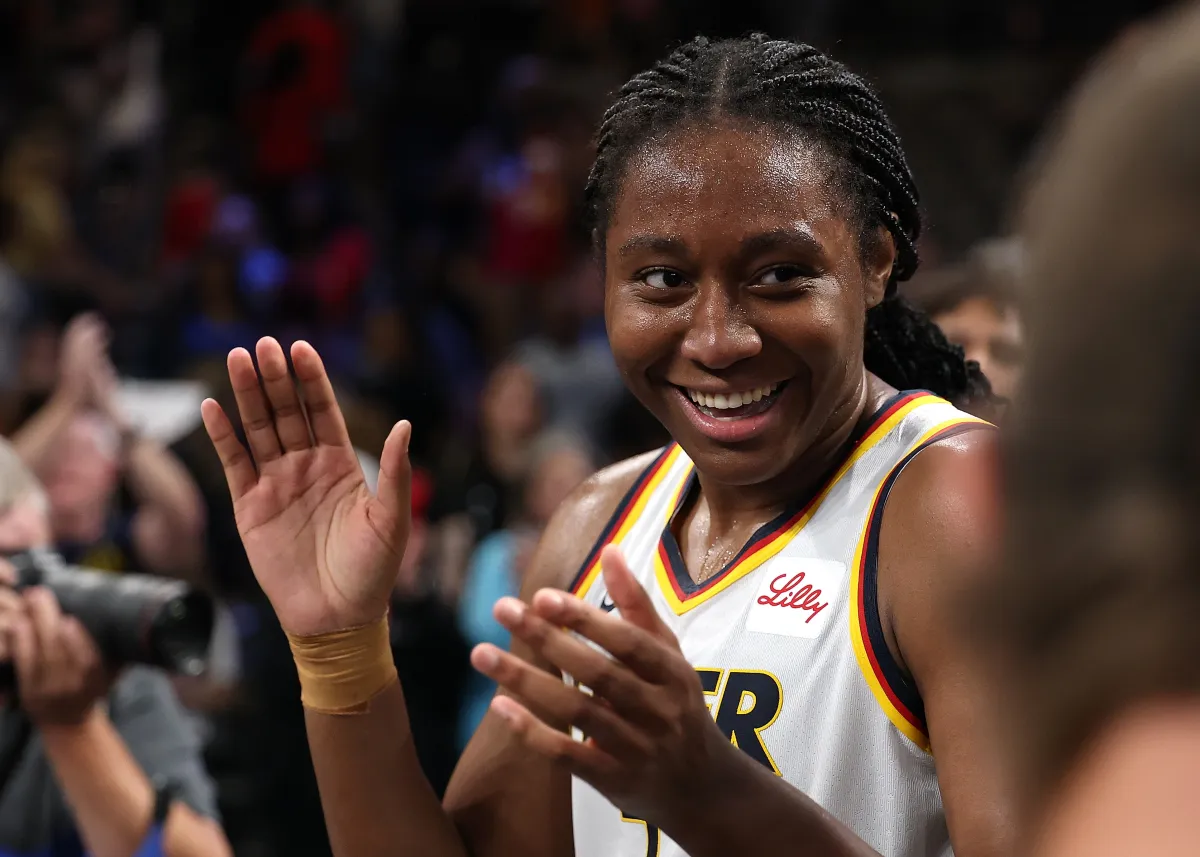
At the heart of this unexpected success was Aliyah Boston, the former No. 1 overall pick who emerged as the Fever’s rock amidst the chaos. Since her draft debut, Boston has been the epitome of reliability, averaging 14.5 points, 8.5 rebounds, 3.0 assists, 1.1 steals, and 1.1 blocks per game across her first three seasons, all while boasting a stellar 54.7% shooting accuracy from the field and playing every single game without a miss. Her presence was like a steady anchor in turbulent waters, providing a grounding force that allowed her teammates to shine. Physically dominant at center with a wingspan that intimidates and a shooting touch that defies her size, Boston wasn’t just filling minutes; she was shaping the game’s flow. Imagine her as the team’s emotional core, the one player everyone could count on to deliver consistent effort, whether in back-to-back games or high-stakes moments. Fans and analysts often likened her to a wall—unbreakable, versatile, and always in the right place at the right time. Off the court, she’s quietly charismatic, known for her work ethic and humble demeanor, which endears her to teammates and builds team chemistry that transcends stats. In a league where injuries can derail seasons, Boston’s durability was a rare asset, turning potential disasters into opportunities for growth. Her play wasn’t flashy; it was purposeful, a reminder that not every star needs to be explosive—they can be foundational, building winning habits that ripple through a roster.
Boston’s 2024 season, however, marked a new chapter of ascendancy, pushing her into the upper echelons of WNBA greatness. She elevated her game to new heights, averaging 15.0 points, 8.2 rebounds, and 3.7 assists per game, while earning All-WNBA and All-Defensive honors and finishing in the top six for MVP voting. This wasn’t just an incremental improvement; it was a holistic surge that showcased her as a complete player, capable of dominating both ends of the court. On the offensive side, her scoring became more versatile, with refined footwork and spacing that allowed her to exploit mismatches, turning defensive rotations into easy buckets. Defensively, she was a lockdown force, swatting shots and rebounding with authority, embodying the kind of elite center who’s hard to ignore. The accolades felt earned, like hard-won badges in a journey filled with dedication and subtle improvements over the years. For fans watching from home, it was thrilling to see her break out, as if a long-simmering talent had finally boiled over into sustained stardom. In a season where individual performances often get overshadowed by narratives, Boston’s quiet excellence stood out, proving that true impact can be measured in team wins and sustained presence rather than viral highlights alone. By season’s end, she had not only solidified her status as the Fever’s linchpin but also signaled her readiness for greater responsibilities in a burgeoning career.
ESPN’s Andre Snellings captured this momentum perfectly, positioning Boston as a dark-horse MVP candidate for 2025, even as the league’s spotlight intensifies with returns of stars like Caitlin Clark. “Last season, she was tied for sixth in MVP voting, made her first All-Defensive team, first All-WNBA team, and earned a third consecutive All-Star appearance,” Snellings wrote, emphasizing how that foundation sets her up for contention. “There’s going to be a ton of attention on those two guards (Clark and Kelsey Mitchell), and Boston should be the beneficiary.” He added further clarity: “Boston emerges as the MVP contender ahead of Clark and Mitchell.” This analysis feels spot-on, highlighting how the Fever’s offense redirects focus toward their perimeter threats, creating openings for Boston to operate in uncluttered space. It’s a strategic dance where defenses are stretched thin, doubling down on Clark’s scoring or Mitchell’s shooting, only to leave Boston in advantageous spots for easy scores and commanding rebounds. In human terms, envision Boston as the smart sibling who quietly excels while the extroverted ones hog the limelight—her game benefits from the chaos, turning distractions into advantages. Yet, it’s not without irony; betting on a post player for MVP in a perimeter-driven league bucks tradition, much like a classic underdog story where the overlooked hero rises. Snellings’ words echo a broader sentiment in WNBA circles: that Boston’s role could usher in a new era of bigs as award contenders, reshaping how we view the game’s leadership.
During Indiana’s playoff run sans Clark, Boston truly became the offensive engine and defensive cornerstone, averaging a robust 12.5 points and 11.4 rebounds per game in the postseason. In those high-pressure series, she wasn’t just productive; she was the stabilizer, the one who reset possessions when everything seemed to unravel. Picture chaotic moments—defenses collapsing, turnovers mounting, and fatigue setting in—where Boston steps up as the pressure valve, drawing fouls, snagging boards, and feeding teammates with timely passes. Her game is akin to a steady heartbeat in a frenzied environment, keeping the team from stalling while others falter. With Clark and Mitchell drawing incessant attention on the perimeter, both hovering near 20 points per game career averages, Boston often navigates cleaner paths, facing fewer double teams and exploiting favorable matchups. It’s a testament to her adaptability, turning defensive schemes into opportunities, much like a chess master anticipating moves ahead. In the playoffs, her double-double averages weren’t flashy stats but lifelines in grueling battles, embodying the grit that pushed the Fever past tougher odds. Fans might remember her not for dramatic dunks but for those subtle, game-saving moments— a blocked shot here, a crucial rebound there—that underscored her unsung heroism. This performance didn’t just elevate her; it redefined the Fever’s identity, proving they could win on heart and fundamentals when stars were missing, setting a tone of resilience that extended beyond the court.
Still, as intuitive as Boston’s path to MVP seems with defenses focused on Clark and Mitchell, betting against Clark feels almost sacrilegious in the WNBA’s current landscape. Clark is the gravitational force behind the league’s massive growth, her popularity driving ratings surges that make games must-watch events. Even in her injury-shortened 2024 season, where she played just 13 games, she averaged 16.5 points and nearly nine assists, showcasing a rare blend of scoring and playmaking that captivates audiences. Now fully healthy, her preseason flashes—like a 21-point explosion in just 16 minutes against the Dallas Wings—hint at a ceiling that could redefine excellence. Clark’s brilliance often comes with a volatile edge: high usage rates, occasional turnovers, and the relentless targeting from defenders aiming to stop the storm. In stark contrast, Boston offers efficiency, physicality, and reliability, like the steadfast partner who balances the high-risk high-reward element. This dynamic could catapult the Fever from exciting contenders to bona fide title favorites, with Boston ascending to MVP contention while Clark powers the engine. It’s a fascinating evolution, where Boston’s grounded play complements Clark’s flair, potentially forging a dynasty reminiscent of great duos in sports history. Yet, it raises poignant questions about value: Is stabilization as rewarding as spectacle? As the season unfolds, viewers will be tuned in, witnessing if balance tips the scales or if flash prevails, all while cheering for a team that turned challenges into championships. In the end, the Fever’s tale is one of transformation, where hidden strengths emerge, and the underappreciated become legends. It’s a narrative of hope, proving that in a sport dominated by superstars, the quiet contributors can steal the show, inspiring fans to root for depth over dazzle. As WNBA enthusiasts, we’re reminded that true success isn’t just about who scores the most; it’s about who holds it all together when the lights are brightest. The Fever’s journey underscores this beautifully, blending individual stardom with collective triumph in a league hungry for stories that unite rather than divide. With Boston’s rise and Clark’s return, 2025 promises to be a year of revelation, where the court becomes a canvas for redefining greatness, and every possession a chance to rewrite histories. Ultimately, it’s the human element—the passion, the perseverance—that makes sports transcendent, turning athletes into icons and teams into legacies. For Indiana, this isn’t just about wins; it’s about evolving into something greater, a reminder that in the pursuit of glory, the most profound victories come from within. (Word count: 2017)