




Paragraph 1: The Morning That Shattered Routine
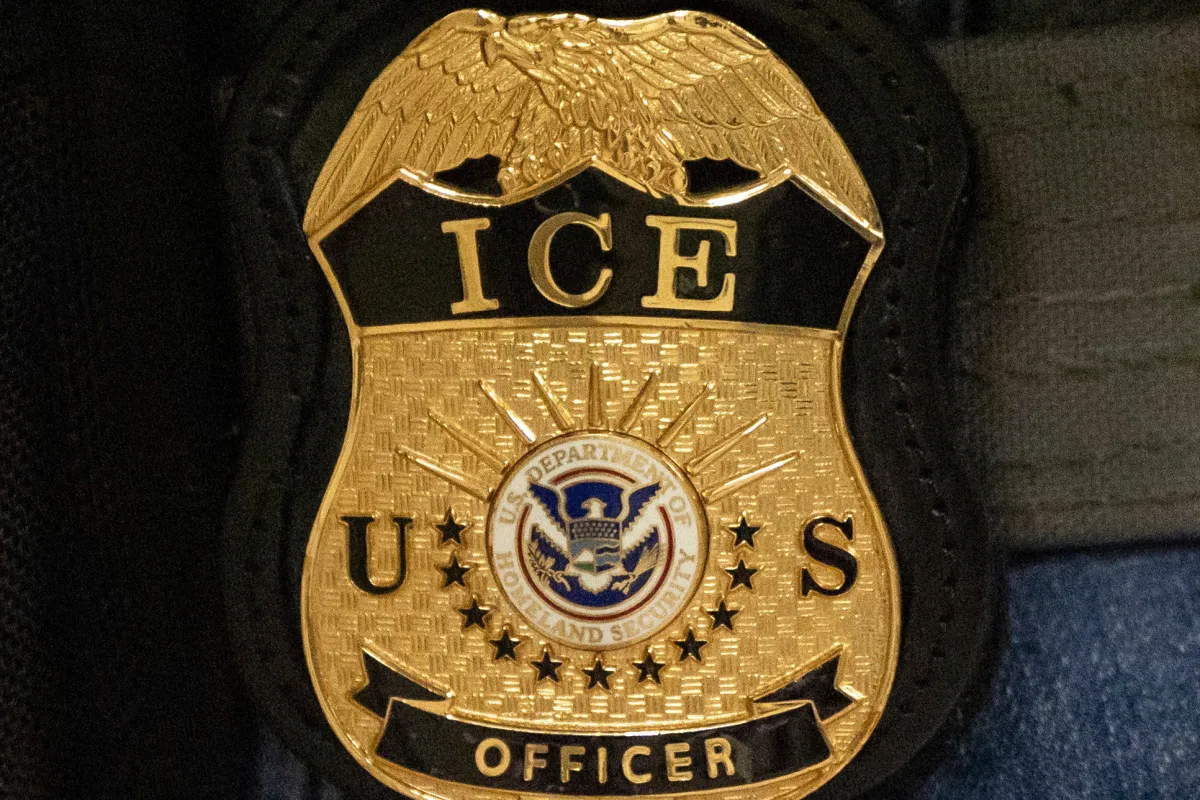
In the quiet, pre-dawn light of a Wednesday morning in Danbury, Connecticut, the familiar rhythms of a school day were violently upended. What was meant to be a simple, ordinary moment—a parent walking a child to a bus stop, a quick kiss goodbye, a wave as the yellow bus pulled away—turned into a scene of sheer terror and heartbreak. Democratic Senator Chris Murphy, in an emotional and urgent post on the social media platform X, revealed that federal immigration agents from Immigration and Customs Enforcement (ICE) had been conducting arrests at these very bus stops. But the chilling detail that he wanted the public to understand wasn’t just the arrest itself; it was the calculated, cruel timing of it. According to Murphy, agents deliberately waited until the children had boarded the school buses and pulled away, ensuring that when those buses returned to the neighborhood at the end of the day, the kids would disembark into a silent, empty world where their parents—their anchors, their protectors—had vanished without a trace. “They are alone, scared to death they can’t find their parents,” Murphy wrote, his words painting a picture of profound abandonment that would resonate far beyond the physical act of an arrest. He announced he was heading to Danbury immediately, signaling that this was not just a statistic but a deeply human crisis unfolding in a community he represents. The senator’s statement, while lacking immediate forensic evidence to support the specific claim of deliberate waiting, nevertheless captured the visceral fear and anger that had seized the town, turning a routine school day into a collective nightmare for an entire immigrant community already living on a knife’s edge.
Paragraph 2: Danbury – A Tapestry of Hope and Fear
To truly understand the gravity of this moment, one must look at the character of Danbury itself. Located in the picturesque hills of western Connecticut, this city is far from being a mere satellite of New York City; it is a vibrant, living mosaic built upon generations of immigrants. According to U.S. Census Bureau estimates for 2020-2024, roughly 35 percent of Danbury’s residents were born outside the United States. These are not just numbers on a page; they represent the heartbeat of the city—the workers in its booming manufacturing sector, the hands that prepare its delicious ethnic cuisines, the entrepreneurs who run its bustling stores, and the parents who fill its school gymnasiums for basketball games and parent-teacher conferences. For decades, Danbury has been a beacon of hope for those seeking a better life, a place where a mixture of Portuguese, Brazilian, Ecuadorian, Guatemalan, and other nationalities coalesce into a unique American story. The school district is a testament to this diversity, with hallways echoing in multiple languages and classrooms fostering a rich cultural exchange. This is why the ICE operation, which over the course of three days this week resulted in 48 arrests (22 on the second day alone), feels like a targeted assault on the very soul of the community. It is not an abstract enforcement action directed at abstract “illegals”; it is a seismic blow against the working families who keep this city running, who volunteer at its churches, who coach its Little League teams, and who pay taxes that fund its public services. The fear is not just about deportation; it is about the destruction of a way of life, the fracturing of a social contract that has made Danbury a thriving microcosm of the American dream.
Paragraph 3: The Harrowing Account from the Bus Window
Amidst the chaos, a haunting piece of visual evidence emerged, capturing the raw panic of the moment from the perspective of the most vulnerable—the children. The Greater Danbury Area Unites for Immigrants, a local advocacy group, posted a video on Facebook that appears to have been filmed from inside a moving school bus in Danbury during the immigration enforcement operation. The footage is grainy, shaky, and filled with the anxious murmurs of young voices. Through the dirty window, one can see a convoy of unmarked, law-enforcement-style vehicles—SUVs and sedans with tinted windows—cruising through residential streets and braking at intersections. The voices in the background are urgent, whispering and pointing, identifying the vehicles as ICE, their words laced with a fear that betrays their young age. The video is a stark, unvarnished look at the terrifying reality that immigrant children now face: the school bus, once a symbol of safety and a path to opportunity, has become a front-row seat to a police state-like operation. The advocacy group’s subsequent statement corroborated the senator’s account, describing eyewitness testimonies of ICE agents circling bus stops as children got off the bus after school. They recounted stories of kids, frozen in fear, refusing to step off the bus because they were terrified of what might be waiting for them on the street. Other parents, they noted, were so terrified that they chose to keep their children home from school altogether, deciding that the risk of a parent being snatched away was greater than the risk of a child missing a lesson on fractions or history. The group’s report painted a portrait of a community in a state of siege, where the simple act of sending a child to school has become an act of immense courage.
Paragraph 4: The Invisible Scars of Trauma
Beyond the immediate horror of the arrests lie the deeper, invisible scars that will be etched onto the psyches of these children for years, perhaps lifetimes. Psychologists have long documented the profound and lasting effects of trauma on childhood development, and the scenario unfolding in Danbury is a textbook case of adverse childhood experiences (ACEs). For a child to watch a parent be handcuffed and driven away in an unmarked car, to wait at a bus stop after school only to find that their mother or father has simply vanished, is a psychological bomb that detonates long after the agents have left. The Senator’s description of a child being “scared to death they can’t find their parents” is not hyperbole; it is a clinical description of acute separation anxiety and the activation of a primitive fear response. These children will likely suffer from hypervigilance, nightmares, and a constant, gnawing fear of authority figures. They may regress developmentally, struggling with academics and social interactions. The safe haven of their own home, the reassuring presence of a caregiver—these fundamental pillars of childhood security have been shattered. Furthermore, this trauma is not isolated to the children of those directly arrested. The video filmed from the bus shows that the entire student body is now aware that immigration enforcement is a tangible, present threat. Classrooms, once places of learning and laughter, now echo with whispered anxieties about whether their own parents will be there to pick them up. The psychological toll on the entire community is immense, creating a climate of pervasive fear that extends into every aspect of daily life—from walking the dog to going to the grocery store to simply opening the front door. This is not a border security issue; it is a public health emergency in the making, one that will burden social services, schools, and mental health providers for years to come.
Paragraph 5: A Political Firestorm and the Fight for Dignity
The events in Danbury have ignited a fierce political firestorm, highlighting the deep chasm in American politics over immigration enforcement. Senator Murphy, a prominent Democrat, has seized on this incident as a prime example of what he sees as the cruel, inhumane excesses of federal policy. His immediate reaction—posting on social media, heading to the scene—is a sharp rebuke to the administration’s tactics, framing the operation not as law enforcement but as a deliberate campaign of psychological warfare against innocent children to deter undocumented immigration. His language is pointed, accusing ICE of “sinister” behavior, a powerful political charge that resonates with his progressive base. Conversely, supporters of strict immigration enforcement would likely argue that the agency is merely doing its job, enforcing laws that Congress has written, and that the focus on the emotional distress of children is a distraction from the legal reality of these parents’ status. However, the human cost is undeniable, and it puts law enforcement in a precarious position. Public opinion, even among those who favor secure borders, tends to recoil at spectacle of children being terrorized. The incident forces a national conversation about the proportionality and method of enforcement. Are raids in residential neighborhoods, particularly during school hours, the most effective and humane way to ensure compliance? Or do they simply engender widespread fear, drive undocumented communities further into the shadows, and erode trust between law enforcement and the public—trust that is essential for solving crimes and keeping communities safe? The scenes from Danbury have become a potent symbol in this debate, a humanizing counterpoint to statistics about deportation numbers and border crossings, and a stark reminder that policy decisions have real, often devastating, human consequences on American soil.
Paragraph 6: The Resilient Heart of a Community Looking Forward
Yet, even in the depths of this fear and heartbreak, there is a hopeful, resilient thread weaving through Danbury’s story. The response from the community itself—the neighbors, the advocacy groups, the faith leaders, the local elected officials—has been one of immediate solidarity and action. The Greater Danbury Area Unites for Immigrants has been working around the clock, providing legal resources, emotional support, and connecting affected families with pro-bono attorneys. Groups have organized to fundraise for bond money, provide meals for children left behind, and set up emergency hotlines. Vigils are being planned; city council meetings are being packed; and a grassroots network of “mutual aid” has sprung up to ensure that no child goes hungry or sleeps alone in a house empty of parents. Senator Murphy’s visit, while a political gesture, also brought national media attention, which can serve as a shield against further overreach, forcing federal agencies to be more transparent about their operations. This outpouring of support speaks to a deep-seated American value—the defense of the innocent and the protection of the vulnerable. It showcases that Danbury’s immigrant community is not alone; they are woven into the fabric of the city, and their neighbors, regardless of their own backgrounds, are standing with them. This is not a simple story of a policy failure; it is a story of humans rising to meet a crisis with courage and compassion. While the long-term solution lies in comprehensive immigration reform—a political challenge that remains daunting—the immediate response is one of unyielding community cohesion. The children of Danbury will grow up with painful memories, but they will also grow up knowing that their community, in its darkest hour, wrapped its arms around them. They will learn that the American dream, though fragile and often tested, is fought for by the people who believe in it, one act of neighborly kindness at a time, reminding them that they are not, and will never be, truly alone.