


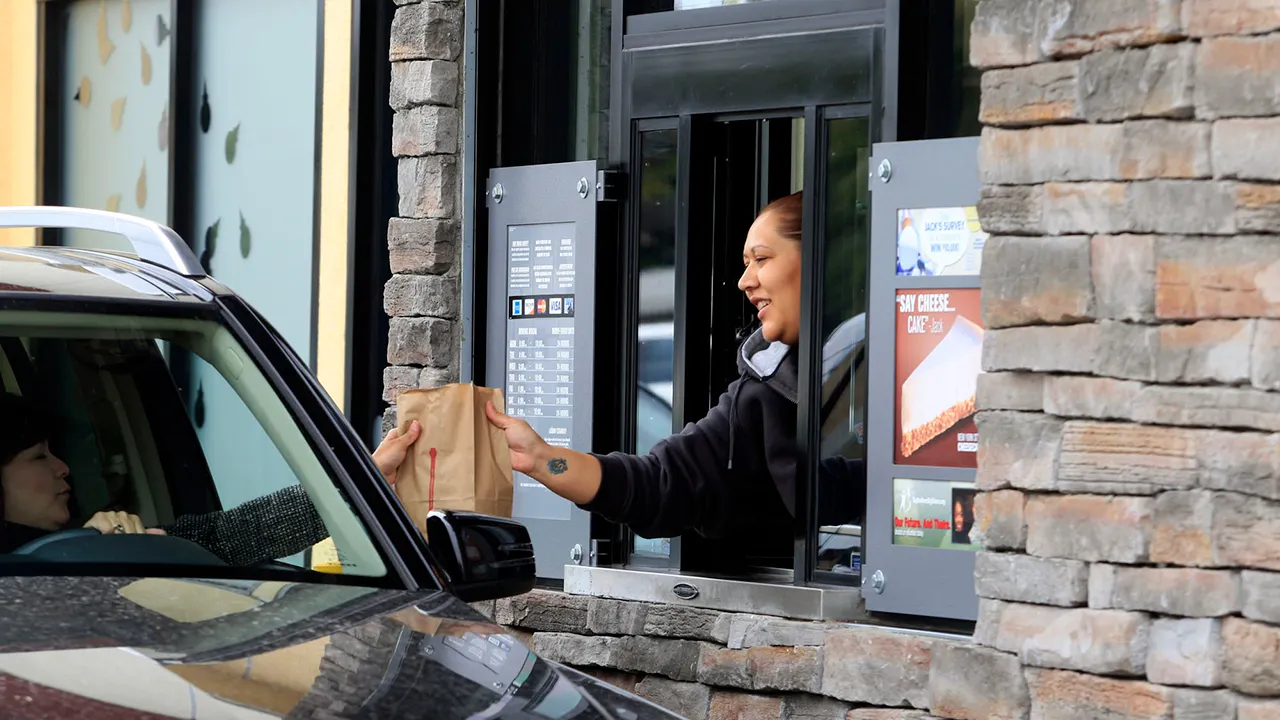
The Rise of the Drive-Thru: How America Fell in Love with Eating in the Car
For countless Americans, the morning ritual is practically second nature: wake up, get dressed, grab the keys, and head to the nearest fast-food drive-thru for a quick coffee and breakfast sandwich before the workday begins. This experience feels so ordinary, so deeply woven into the fabric of daily life, that it’s hard to imagine a time when it didn’t exist. Yet the drive-thru is a relatively recent invention in the long history of American dining, and its rise to prominence tells a fascinating story about how our relationship with food, cars, and time itself has transformed over the past eight decades. What began as a novel experiment at a handful of enterprising restaurants has evolved into a multi-billion-dollar industry that shapes not only how we eat but also how restaurants design their buildings, train their staff, and market their menus.
Capri Cafaro, the creator, executive producer and host of “America the Bountiful,” has spent considerable time studying this cultural phenomenon. She points to convenience and our collective “on-the-go” lifestyle as the primary factors behind the drive-thru’s enduring popularity. In an interview with Fox News Digital, Cafaro explained that the drive-thru didn’t just appear overnight—it emerged organically as Americans’ lives became busier, our commutes longer, and our desire for efficiency more pronounced. The drive-thru wasn’t just about food; it was about time, about reclaiming precious minutes in a day that never seemed long enough to accomplish everything we needed to do. It represented a fundamental shift in how Americans thought about meals, transforming eating from a dedicated activity into something that could be squeezed into the margins of our schedules.
The history of the drive-thru is somewhat contested, with different restaurants claiming the title of pioneer. Many food historians and industry observers credit West Coast favorite In-N-Out Burger with creating the first true drive-thru system, complete with a two-way intercom that allowed customers to order without ever leaving their vehicles. This innovation debuted in California in 1948 and was considered revolutionary at the time. However, Cafaro and other publications point to a lesser-known establishment in Springfield, Missouri called Red’s Giant Hamburg, which reportedly introduced its own drive-thru concept a year earlier in 1947. The restaurant’s sign famously couldn’t fit the full word “hamburger,” leading to the abbreviated name that would become part of its local legend. Whichever restaurant can claim the title of “first,” what’s clear is that the drive-thru concept emerged during a period of profound transformation in American society, a moment when the automobile was becoming more than just a mode of transportation but rather an extension of the American home and identity.
The post-World War II era witnessed an unprecedented surge in automobile ownership and usage across the United States. The growth of suburbs, fueled by returning veterans seeking affordable housing and the American dream, meant that more people than ever were commuting to work by car rather than using public transportation or walking. The construction of the interstate highway system, initiated by President Dwight Eisenhower in the 1950s, further cemented the car’s centrality to American life, connecting cities and creating new possibilities for travel and commerce. Route 66, which will celebrate its 100th anniversary in November, became an iconic symbol of this automotive age, representing freedom, adventure, and the open road. As Americans increasingly took to the highways for both work and leisure, the demand for restaurants that could accommodate this mobile lifestyle grew correspondingly. The drive-thru was the perfect answer to this need, allowing hungry travelers and commuters to satisfy their cravings without disrupting their journeys.
While McDonald’s has become synonymous with fast-food breakfast in the modern era, the company was notably not the first to introduce morning meals to the drive-thru format. That distinction belongs to Jack in the Box, which launched its breakfast menu in 1969 with the Breakfast Jack—a simple yet satisfying sandwich combining egg, cheese, and ham on a bun. This innovation was revolutionary at the time, as most fast-food restaurants didn’t even open their doors until lunchtime. McDonald’s would follow suit two years later in 1971, when franchise owner Herb Peterson invented the now-iconic Egg McMuffin at a location in Santa Barbara, California. The Egg McMuffin, with its perfectly round egg, Canadian bacon, and melted cheese nestled in a toasted English muffin, would go on to become one of the most recognizable breakfast items in American culture, spawning countless imitators and variations. Cafaro noted this interesting historical twist, observing that McDonald’s, despite its dominance and recognizability in the fast-food landscape, was actually a later adopter of trends that have become deeply embedded in our fast-food culture today.
The golden arches themselves didn’t appear over a drive-thru window until 1975, when McDonald’s added its first drive-thru lane to a location in Sierra Vista, Arizona. The decision was driven by a specific and somewhat unusual need: soldiers at the nearby Army base who were not permitted to leave their cars while wearing their uniforms off-post. This practical accommodation would prove to be a strategic masterstroke, as drive-thru sales now account for roughly 70% of McDonald’s business, according to the corporate website. The company’s dominance in the drive-thru space has become so complete that it’s easy to forget how relatively recent this innovation was. Similarly, Starbucks, the coffee giant that has become nearly as ubiquitous as McDonald’s, didn’t open its first drive-thru location until 1994, more than two decades after its founding. Business Insider reported that approximately two-thirds of Starbucks sales now happen through the drive-thru, demonstrating how thoroughly even premium brands have embraced the model they initially resisted.
The evolution of the drive-thru reflects broader changing attitudes about food and dining in American society. In the mid-20th century, eating out was still considered somewhat of a special occasion, something to be savored and lingered over. But as life accelerated—as more women entered the workforce, as schedules became packed with activities and obligations, as technology promised ever-greater efficiency—the way we thought about meals shifted dramatically. Food became fuel, something to be consumed quickly and moved past. The drive-thru was perfectly adapted to this new sensibility, offering not just convenience but also a way to maintain productivity throughout the day. Breakfast, traditionally a meal that families shared together before starting their day, was perhaps the most affected by this transformation. The drive-thru breakfast allowed busy parents to feed their children on the way to school, harried commuters to grab something on their way to work, and shift workers to eat at any hour of the day or night. It’s a trend that shows no signs of slowing down, with continued innovations in mobile ordering, digital payment, and even drone delivery on the horizon.
As Cafaro aptly observed, the drive-thru and fast-food landscape has undergone dramatic changes over the past 50 to 70 years, and it will continue to evolve as long as Americans maintain their love affair with cars and their demand for convenience. The drive-thru has become more than just a way to get food; it’s a cultural institution, a symbol of American ingenuity and our constant quest for efficiency. From the humble beginnings at Red’s Giant Hamburg in Missouri and In-N-Out Burger in California to the sophisticated, technology-enhanced drive-thru experiences of today, this uniquely American innovation has transformed how we eat, how we work, and how we live. It’s a reminder that even the most ordinary aspects of our daily routines have fascinating stories behind them, stories that reveal deep truths about who we are as a people and what we value most. The next time you pull up to that intercom and place your order, take a moment to appreciate the remarkable journey that brought this simple convenience into your life—a journey that continues to shape the food industry and American culture in ways we’re only beginning to understand.