


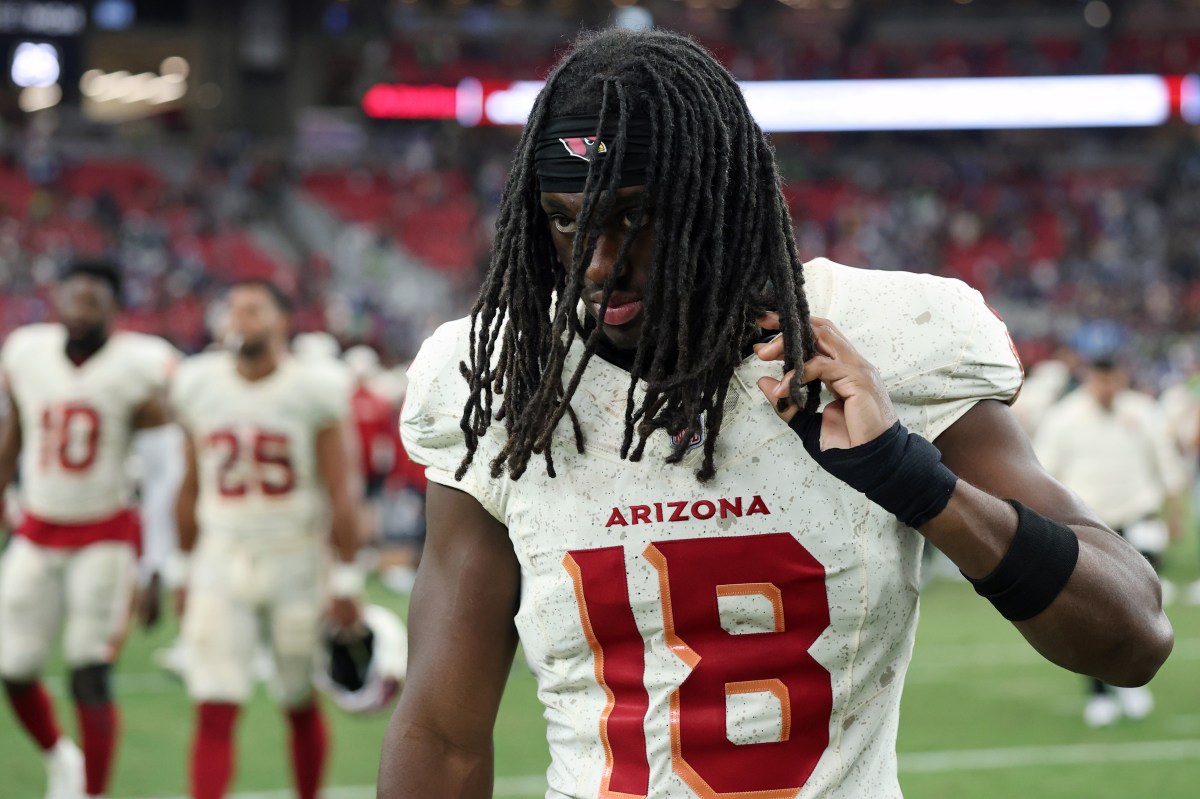
When the Arizona Cardinals made Marvin Harrison Jr. the fourth overall pick in the 2024 NFL Draft, it was supposed to be the kind of moment that changes a franchise. The son of a Hall of Famer, armed with flawless route-running, spectacular hands, and the kind of pedigree that makes scouts whisper about future greatness, Harrison was viewed as a cornerstone. He was the player who would make the Cardinals’ offense explosive, the target who would demand double teams, the difference-maker who could turn a rebuilding team into a contender. And for a while, that vision felt real. In his first two seasons, he showed flashes of brilliance and offered plenty of reasons for hope. Yet here we are, at the start of his third professional campaign, and the return on that enormous investment is beginning to look a little uncomfortable. Through the first two games of the 2026 season, the talented wide receiver has just one catch on four targets. One. Four. Those numbers are jarring, especially for a player of his caliber. It is a small sample size, to be sure, but it is also a pattern that cannot be ignored. When a team spends the fourth overall pick on a wide receiver, the expectation is not just occasional production. It is consistent, game-changing involvement. The early returns this season have been far from that, and the questions have started to multiply.
Now, the situation is not quite as simple as saying Harrison has stopped being a good player. The Cardinals are simply using other weapons more, and the results have been mixed. Fellow wide receivers Kendrick Bourne and Michael Wilson have been far more involved, combining for twenty-five targets in just two weeks. That is a massive share of the pie, and it clearly demonstrates where quarterback and coaching trust currently resides. Meanwhile, the team’s leading receiver is none other than superstar tight end Trey McBride, who has already reeled in seventeen catches for 136 yards and two touchdowns. McBride is a matchup nightmare and one of the best at his position in the league, so it is not surprising that the offense flows through him. But for Harrison, the lack of opportunities has to sting. Every receiver wants the ball, and receivers with his rare talent feel it even more acutely. He is not being punished, at least not in any obvious way. He is simply not a priority in the current offensive game plan. That is a tough pill to swallow for a player who was drafted to be the centerpiece. Harrison hasn’t just lost targets; he has lost his place in the pecking order. And in the NFL, that kind of thing can wear on a player’s confidence, even one with as much natural ability as Harrison.
When Cardinals coach Mike LaFleur was asked about Harrison’s lack of usage during a press conference on Monday, his answer was honest, practical, and refreshingly human. “That’s a great question, because I know it’s just like ‘just get some easy completions to get him going,’” LaFleur responded. “That’s fine, we also have Trey McBride who is one of the best underneath guys in the world and there’s only about 60-65 plays a game.” There is something very real in that quote. Coaches are not playing videogames. They are working within a limited number of snaps each Sunday, and every decision carries opportunity cost. If McBride is open underneath, if he is producing, if he is a reliable force in the middle of the field, then the ball will go to him. It is not that LaFleur doesn’t want Harrison to succeed. It is that he is trying to win with the resources he has available, and right now, McBride is the safest and most productive option. The coach’s words also reveal a deeper truth: there is no guaranteed way to “get someone going.” You cannot simply dial up an easy completion for a player who isn’t part of the rhythm. The defense has something to say about that, as do the quarterback’s reads and the flow of the game. LaFleur’s answer was not dismissive, though. It acknowledged the desire to involve Harrison while also highlighting the reality of a coordinator juggling too many talented pieces with too few plays.
The team’s early-season journey has only made the situation more complicated. In Week 1, the Cardinals pulled off an upset over the Los Angeles Chargers, and it felt like the kind of statement win that could catapult them forward. There was energy, belief, and a sense that this team might be ready to take the next step. But then came Week 2, and the mood changed completely. Arizona was blown out by the Seattle Seahawks in a game that exposed plenty of weaknesses on both sides of the ball. In a loss like that, everything gets magnified. The offense sputters, the defense breaks, and suddenly fans are looking at every individual performance with a microscope. Harrison’s quiet start stood out even more after a defeat. It is one thing to win while your star receiver is a non-factor; it is another to lose while he watches from the sideline more than he catches passes. There is a human element to this too. Players feel the weight of expectations. They see the headlines. They hear the debates on television and social media. And for a young receiver like Harrison, the pressure to justify the organization’s faith must be enormous. He is not just a football player; he is a symbol of hope for a franchise that has been searching for relevance. Every drop, every missed target, every quiet game carries extra meaning. That sort of burden can be overwhelming, and it is important to remember that Harrison is not a machine. He is a man trying to find his rhythm in a league that does not wait for anyone.
That brings us to the upcoming Week 3 matchup against the San Francisco 49ers, which is now the most important game of Arizona’s young season. The 49ers are a formidable opponent, a team with a winning culture, a strong defense, and enough firepower on offense to punish almost any mistake. For the Cardinals, this game is an opportunity to get back on track. But it is also an opportunity to get Harrison involved in a meaningful way. It is not just about stats or fantasy football; it is about establishing trust and chemistry. When a player of Harrison’s caliber feels disconnected from the game plan, it can affect his enthusiasm, his blocking, and his overall presence on the field. Coaches know this, and LaFleur has shown self-awareness in acknowledging the situation. The next step is action. The fans want to see the old Harrison, the one who made contested catches look easy and turned short passes into long gains. They want to believe that the dream from draft night is still alive. The good news is that two games do not define a career. Veterans across the league have had slow starts and still finished as superstars. Harrison’s story is far from over. It might just need a single play to change the momentum. A quick slant. A deep shot down the sideline. A well-timed screen that allows him to use his athleticism in space. Sometimes all it takes is one spark to ignite a fire that burns for the rest of the season.
In the end, the Cardinals do not need to panic, but they do need to be intentional. They need to find creative ways to get Harrison the ball early against San Francisco, even if it means forcing themselves to look his way before the defense can settle in. That kind of deliberate effort can pay off not just in this game, but in every game that follows. Harrison has the talent, the work ethic, and the pedigree to bounce back. What he needs is opportunity. The coach, the quarterback, and the offensive coordinator all have a role to play in bringing him back into the fold. Football is a team sport, and no one player wins or loses alone. But for the Arizona Cardinals, investing in Marvin Harrison Jr. was always about more than one season. It was about building a foundation for the future. The foundation is still there. The walls are not crumbling. There is still plenty of time to shape this into a successful campaign, both for the team and for the young man wearing the No. 4 pick’s jersey. As Week 3 approaches, the hope remains. The defense wants him to get going. The coaches want him involved. The fans want to cheer his name. And Harrison himself, you can be sure, wants nothing more than to deliver. Sometimes the greatest stories in sports are not about how you begin. They are about how you respond when the world is watching. For Marvin Harrison Jr., that response starts now.