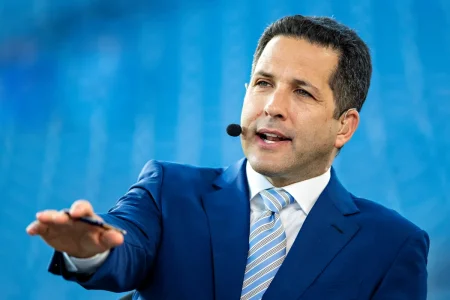






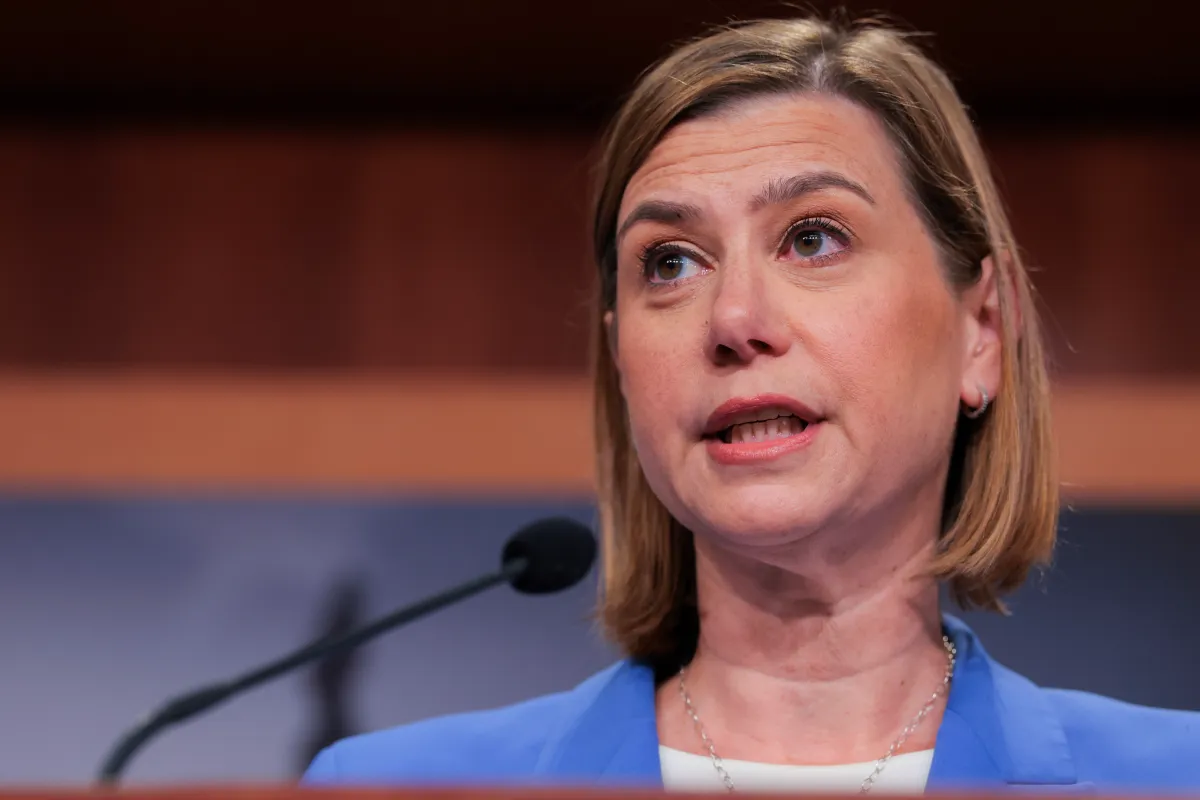
The devastating aftermath of any major electoral defeat inevitably plunges a political party into a period of raw, painful, and highly public soul-searching. This familiar cycle of grief and finger-pointing has freshly erupted within the Democratic Party following the 2024 elections, exposing deep, simmering fractures between its entrenched leadership and a restless new generation of lawmakers. The spark that lit the current powder keg was struck by Senator Elissa Slotkin of Michigan, a pragmatic and battle-tested moderate who has built a reputation for surviving in tough political territory. Appearing on Stephen A. Smith’s podcast, Straight Shooter, Slotkin did not hold back her anxiety about the party’s current trajectory. She passionately argued that the Democratic Party is desperately in need of “significant change” and “new leadership,” asserting that the traditional operational models simply no longer work for ordinary Americans. When pressed by Smith on whether this critique extended to the high-ranking leadership of her own party in the House, Senate, and White House, Slotkin responded with an unequivocal “absolutely.” Her raw, candid assessment was a direct challenge to the party’s elder statesmen, suggesting that those who are unable or unwilling to adapt to the realities of the modern political landscape must step aside and make room for others who can truly understand the urgency of the moment.
This bold public declaration from a rising star in the Midwest did not sit well with the party’s established power brokers, triggering a swift and protective counter-offensive from the powerful Congressional Black Caucus (CBC). Perceiving Slotkin’s remarks as a direct, disrespectful swipe at House Minority Leader Hakeem Jeffries—the first Black lawmaker to lead a major party in Congress—the CBC released a fiercely defensive statement aimed at shutting down her critique. They praised Jeffries for working tirelessly to hold the line for working-class families and leading the House Democrats with discipline, clarity, and tangible results. However, the caucus did not stop at defending their leader; they chose to make the confrontation deeply personal. In a stinging rebuke, they accused Slotkin of political posturing and eyeing a potential run for higher office in 2028, implying her criticisms were rooted in personal ambition rather than genuine concern for the party’s direction. To further deflate her reformer credentials, the CBC pointedly highlighted her past bipartisan voting record, including her votes to confirm certain Trump administration nominees, such as future Homeland Security Secretary Kristi Noem. This sharp, public retaliation laid bare the deep-seated resentment within the party’s establishment toward center-left lawmakers who break ranks, revealing a protective wall built around leadership that values loyalty and unity above all else.
At the center of this brewing storm stands Hakeem Jeffries himself, who had to navigate the fallout of his colleague’s criticisms on national television. Appearing on CNN with Wolf Blitzer, Jeffries attempted to project an aura of calm, focused professionalism, coolly dismissing Slotkin’s remarks by stating he had “no idea” what she was talking about. Rather than engaging in a war of words, Jeffries sought to refocus the conversation on the immediate, existential task at hand: winning back the House majority in the upcoming midterm elections. Yet, beneath this public display of confidence lies a leader grappling with significant political friction of his own, particularly within his home state of New York. The establishment Jeffries champions recently suffered a series of humiliating primary setbacks in some of the state’s bluest congressional districts, where centrist candidates endorsed by Jeffries and other traditional power brokers were soundly defeated by progressive challengers. These defeats, minor in the grand scale of national politics but deeply symbolic, serve as a stark reminder of the shifting ground beneath the feet of New York’s Democratic elite, casting a shadow of vulnerability over Jeffries’ otherwise disciplined leadership.
These local New York primaries highlight a much broader, ideological civil war raging between the party’s moderate establishment and an increasingly assertive progressive wing. In these races, a surging progressive coalition mobilized by figures like New York City mayoral candidate Zohran Mamdani successfully challenged the party’s traditional power structures, proving their ability to energize and organize voters who feel alienated by the status quo. Despite the stinging defeats of his endorsed candidates, Adriano Espaillat and Dan Goldman, Jeffries remained defiant, telling MSNBC’s Jen Psaki that he was proud to have stood by his colleagues and would do the exact same thing again. This steadfast loyalty to his inner circle speaks to the human core of establishment politics, where relationships and mutual protection often supersede ideological flexibility. However, to the progressives who managed to claim victory, this stubborn adherence to old alliances looks less like loyalty and more like an out-of-touch establishment refusing to read the writing on the wall, further widening the trust gap between the party’s grass-roots activists and its Washington leaders.
To bridge these widening internal cracks, Democratic leaders have repeatedly fallen back on a familiar, powerful unifying tool: the looming threat of Donald Trump and the rise of conservative extremism. Speaking to Psaki, Jeffries urged his colleagues to adopt an “all-hands-on-deck” approach, warning that the level of extremism being unleashed by the Republican Party is entirely unprecedented. This plea for unity is a classic establishment defense mechanism, designed to quiet internal rebellion by reminding dissenters of the catastrophic consequences of a divided front. Yet, this strategy highlights a fundamental disagreement over how to combat the opposition: while leadership believes that survival depends on locking arms, maintaining discipline, and avoiding disruptive internal changes, critics like Slotkin argue that this defensive, reactionary posture is exactly what led to their defeats in the first place. For the reform-minded wing of the party, pointing to the threat of the opposition is no longer a substitute for offering a bold, visionary, and self-reflective path forward that resonates with voters who feel left behind by both parties.
Ultimately, the public clash between Elissa Slotkin and the Congressional Black Caucus is not just a passing media spat, but a profound manifestation of a party caught in a classic identity crisis. It is a deeply human drama of legacy, power, ambition, and fear as the Democrats try to figure out how to rebuild their broken coalition. The party is torn between its respect for hardworking veteran leaders who have dedicated their lives to the institutions of government and a desperate, rising cry from members who see those very institutions as failing to meet the crises of the modern era. As the Democrats look toward the future, the tension between maintaining establishment stability and embracing disruptive, generational change will continue to define their internal politics. Whether they can find a way to channel this intense internal friction into creative political energy, or whether these deep divisions will continue to splinter their ranks and erode their chances of reclaiming power, remains the defining question for the future of the Democratic Party and the country it hopes to lead.