





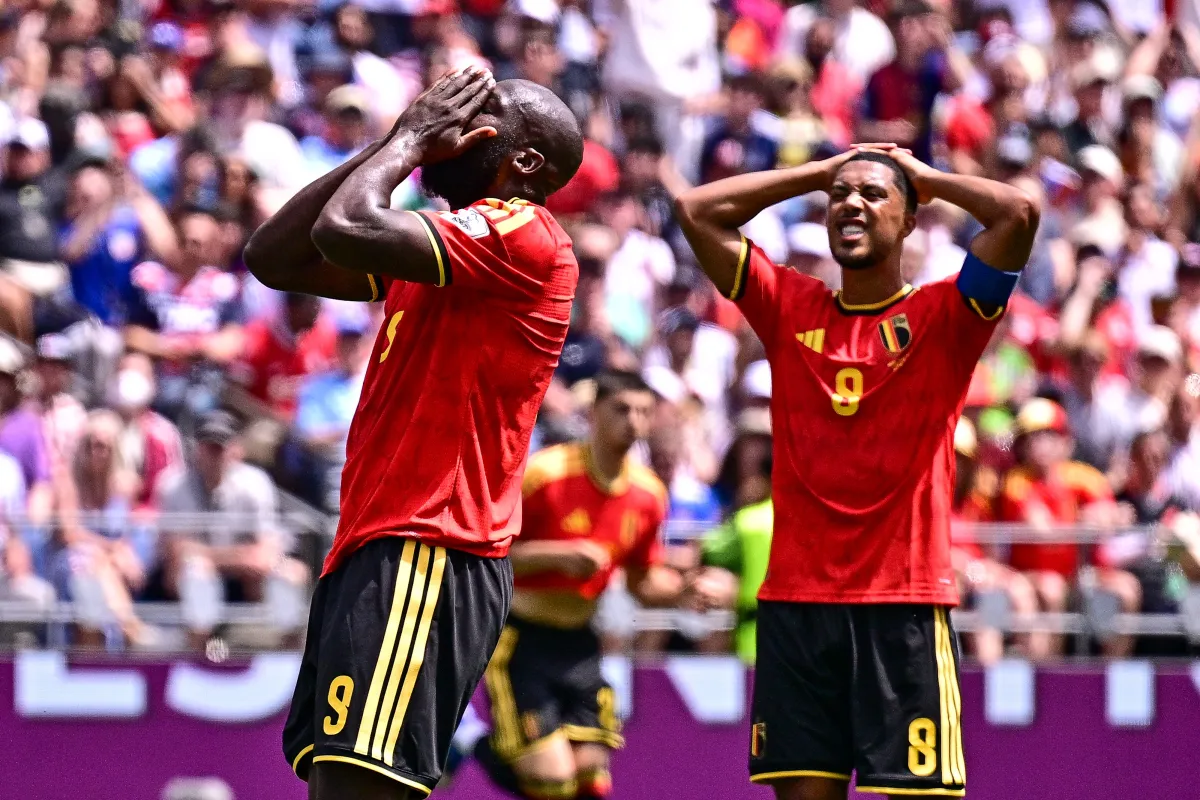
The air inside Seattle’s Lumen Field on Monday was heavy with anticipation, carrying the distinct, electric charge that only a FIFA World Cup match can generate. Beneath the open sky of the Pacific Northwest, an astonishing crowd of 66,775 passionate spectators converged to witness Belgium embark on their Group G campaign against a highly disciplined and spirited Egyptian side. However, the pre-match optimism surrounding the star-studded Belgian lineup quickly evaporated as the realities of tournament football set in. From the opening whistle, Egypt proved to be a formidable and highly organized opponent, refusing to be intimidated by Belgium’s formidable reputation on the European stage. The pivotal moment of the first half arrived in the 20th minute, when Egypt’s Emam Ashour seized on a defensive lapse and unleashed a clinical strike that bypassed the Belgian goalkeeper, sending the traveling Egyptian fans into a state of absolute delirium. For the remainder of the first half and well into the second, Belgium appeared sluggish, lacking the creative spark and physical urgency required to dismantle Egypt’s low defensive block, leaving their supporters to wonder if a disastrous opening defeat was inevitable.
With the clock ticking away and his team’s offensive efforts looking increasingly toothless, Belgian head coach Rudi Garcia recognized that a drastic tactical intervention was required to salvage their tournament opener. In the 66th minute, Garcia signaled to the bench and introduced the nation’s talismanic striker, Romelu Lukaku, a move that immediately injected a palpable wave of energy through both the team and the stadium. Despite his lack of match sharpness, Lukaku’s sheer physical presence and reputation as one of Europe’s most lethal goalscorers forced Egypt’s defensive line to drop back deeper in apprehension. The impact of his introduction was nothing short of miraculous, occurring in less than sixty seconds after he stepped onto the pitch. As Belgium launched a swift attack down the flank, a teasing cross was swung into the penalty area, prompting Lukaku to charge down the center of the field with his trademark power and determination. Sensing the imminent threat of the looming striker pouncing on the ball, Egyptian defender Mohamed Hany made a desperate, sliding attempt to clear the danger, only to inadvertently deflect the ball into his own net, leveling the score at 1-1 and sparing Belgium from what would have been a catastrophic defeat.
Behind this dramatic, game-changing cameo lies a deeply personal and grueling story of human resilience, perseverance, and the emotional toll of physical vulnerability. To understand the significance of Lukaku’s brief but impactful appearance, one must look back at a harrowing season spent mostly in the shadows of the treatment room rather than the spotlight of the pitch. While playing club football for Napoli, Lukaku suffered a severe hamstring injury in August that derailed his entire year, limiting him to a agonizingly brief 64 minutes of competitive play across the entire season. For an elite athlete whose identity and passion are completely intertwined with the game, being forced to watch from the sidelines is a psychological crucible that tests one’s mental fortitude. The path back to fitness was defined by lonely, exhausting rehabilitation sessions, constant setbacks, and the heavy emotional weight of wondering if he would even be healthy enough to represent his country at the World Cup. His presence in Seattle was a testament to his refusal to give up on his dream, turning what could have been a career-ending season of disappointment into a triumphant story of personal recovery.
In the post-match press conference, head coach Rudi Garcia spoke with remarkable candor and realism about the delicate balancing act of managing Lukaku’s fitness during a high-stakes international tournament. Garcia made it clear to reporters that despite Lukaku’s heroics on Monday, the technical staff has no intention of rushing him back into the starting lineup, emphasizing that his current physical condition is simply not robust enough to handle the rigors of a full ninety minutes. “He can’t start a game,” Garcia admitted openly, explaining that the transition to becoming a starting player can only occur when his body has fully adapted to the intensity of World Cup football. The manager expressed immense relief and gratitude that Lukaku was even capable of contributing, noting that the coaching staff had previously harbored serious doubts about whether he would be fit enough to travel to the United States at all. With so few competitive minutes under his belt in recent months, Garcia emphasized that patience is paramount, and that Lukaku’s body must gradually regain its competitive rhythm in a controlled, responsible manner.
This necessary caution, however, has inadvertently provided Belgium with one of the most terrifying tactical weapons in modern football: the ultimate superstar impact substitute. Garcia pointed out that while Lukaku is no longer suffering from the acute hamstring injury that plagued his season, his limited physical capacity makes him perfectly suited to play a “super-sub” role designed to terrorize tired defenses in the latter stages of matches. For opposing defenders who have already endured over an hour of relentless sprinting, tackling, and physical exertion, the sight of a fresh, highly motivated Romelu Lukaku warming up on the touchline is a deeply demoralizing prospect. His ability to use his imposing physical frame to hold up the ball, combined with his natural predatory instincts in the penalty box, makes him a nightmare for fatigued backlines to mark. By positioning Lukaku as a late-game disruptor, Garcia can maximize his player’s immense strengths while protecting his health, turning a physical limitation into a devastating tactical advantage that can change the outcome of a match in a heartbeat.
As the dust settles on the opening matchday, the competitive landscape of Group G has morphed into an incredibly tight and unpredictable race where every single goal and point will be fiercely contested. The drama of Monday’s matches was amplified by a thrilling 2-2 draw between New Zealand and Iran, leaving all four teams in the group completely level with one point each after the first round of games. This parity sets the stage for a highly dramatic second round of fixtures, where Belgium will face off against a disciplined Iranian national team on Sunday in a match that will carry immense pressure for both sides. For Belgium, the path forward will require a significant improvement in their overall collective play, but the knowledge that they possess a game-changing weapon in Lukaku provides a massive boost of confidence. As the tournament progresses, the footballing world will watch with bated breath to see if the legendary striker can continue his remarkable comeback journey, proving that even in the face of physical adversity, the human spirit can rise to achieve greatness on the grandest stage of all.