





The Rise of a Star: Azzi Fudd’s Journey to the Dallas Wings
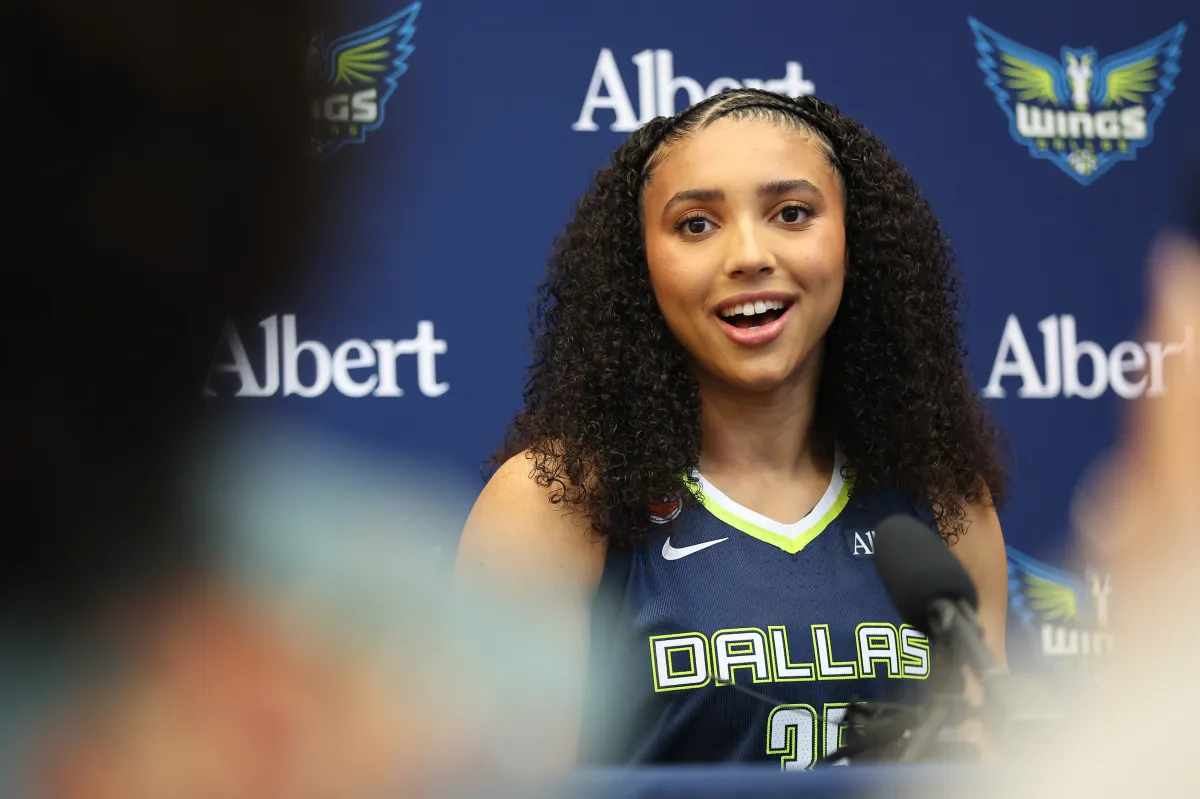
Imagine stepping onto a professional basketball court after a storied college career at UConn, where you’ve won championships and etched your name into the history books. That’s the reality for Azzi Fudd, the phenom whom the Dallas Wings selected as the No. 1 overall pick in the 2026 WNBA Draft on April 13. It’s a moment that feels like the culmination of years of hard work, sweat-soaked practices, and endless repetitions of dribbling drills in dimly lit gyms. Fudd, with her sharp shooting, defensive tenacity, and that unmistakable sparkle in her eyes, represents the next generation of WNBA talent. Fans and analysts alike had been buzzing about her potential ever since her breakout seasons in college, where she averaged jaw-dropping numbers and led her team to victory after victory. But as exciting as the draft was, with confetti and flashes from cameras lighting up the arena, the true test began in the real world of the WNBA. The Wings saw in her not just a player, but someone who could infuse youthful energy into a franchise hungry for success. Picture Fudd walking into her first training camp last month—nervous, perhaps, but ready to prove herself. It wasn’t long before she felt like part of the family, blending her competitive spirit with the camaraderie of her new teammates. Yet, beneath the excitement, real challenges loomed. In a league where every play counts and every decision matters, Fudd’s adaptation would touch on something deeper: the frustrations bubbling beneath the surface in the WNBA. Officiating had always been a hot-button issue, a topic that veteran players whispered about in locker rooms and debated in interviews. For someone new like Fudd, it was about more than just learning the ropes; it was adjusting to a system that sometimes felt unfair, where calls could swing the momentum of a game in an instant.
Fudd’s seamless fit at that training camp was evident right away. She dove into practices with enthusiasm, earning nods from coaches for her work ethic and quick learning curve. But in the preseason games leading up to the regular season, things got real. During the Wings’ 101-84 loss to the Las Vegas Aces on Sunday, Fudd opened up about her feelings in a post-game interview, her voice a mix of honesty and bewilderment. “Honestly, I feel more confused,” she told reporters, her words catching the attention of everyone in the press room. At just 22 years old, Fudd was stepping into a world where the physicality of the game met head-on with stricter rules than what she’d experienced in college. She described the uncertainty: “I thought you could be physical in the WNBA, and anytime you touch someone, it’s a foul. So, I’m not really sure whether to be physical, whether to be hands off. I’m still figuring that out.” It was a candid admission from someone who’d spent her life dominating on the court, but now faced the nuances of pro-level enforcement. You could almost picture her scribbling notes in a mental playbook, adapting mid-game to avoid penalties. Her comments wasn’t just rookie talk; it highlighted a broader confusion that plagues many players. In the WNBA, officials are tasked with maintaining the game’s integrity, but interpretations of contact, blocking, and roughing up opponents can vary wildly from game to game. For Fudd, this uncertainty wasn’t discouraging—it was fuel to push harder, to understand the league’s heartbeat. Yet, as she spoke, the tension in the air reminded everyone that words spoken freely can carry consequences, a reality that even a confident rookie like her was about to learn.
The scene turned heartfelt when Fudd’s teammates reacted to her comments. Second-year guard Aziaha James and veteran forward Jessica Shepard couldn’t help but burst into laughter, their chuckles echoing through the interview area like a long-overdue release of tension. James gently patted Fudd on the back, a gesture of camaraderie that spoke volumes—a mix of mentorship and lighthearted ribbing that defined team dynamics. Shepard chimed in with a wise warning, her seasoned voice cutting through: “Yeah, you’re still figuring this out, too, because you may get hit with a fine.” It was a moment of humanity, showing how the WNBA isn’t just a collection of athletes but a community where experiences are shared. Shepard, with her years of dealing with media scrutiny and league bureaucracy, knew the sting of those fines firsthand. Her comment wasn’t meant to discourage Fudd but to protect her, offering a glimpse into the veteran wisdom that helps rookies navigate the minefield of public statements. James, the energetic playmaker known for her assists and defensive hustle, added an element of fun to the exchange, reminding everyone that behind the serious discussions about officiating, there was still room for bonds to form. In that brief, unguarded moment, you could feel the essence of teamwork—the way players rally around each other, sharing laughs even in defeat. Fudd’s rookie confusion became a shared story, a bridge between generations of Wings players. It humanized the league, showing that even superstars grapple with adversity, and that support from within can make the toughest challenges feel a little less daunting.
Digging deeper, the issue Fudd touched on isn’t isolated to her experience—criticizing WNBA officiating is a tradition as old as the league itself. For decades, players have voiced frustrations about inconsistent calls, biased refereeing, and the impact on the game’s flow. The league maintains a strict policy against such criticism, often fining players for their outspokenness on social media or in interviews. While the WNBA doesn’t publicly disclose the amounts of these fines, they’re designed as deterrents, aiming to uphold respect for officials and maintain the game’s integrity. But as Fudd’s conversation revealed, it’s a double-edged sword: players feel stifled, unable to fully express the realities of their profession. Imagine the frustration after a hard-fought game, where a missed call alters the outcome, and you’re left wondering why the league clamps down on honest feedback. It’s not just about penalties; it’s about a culture where voices are heard but sometimes silenced. Veteran players have navigated this landscape for years, learning to temper their words or face financial repercussions. For rookies like Fudd, it’s a crash course in diplomacy, balancing passion for the game with the wisdom of staying out of trouble. This pattern of fines hasn’t dulled the criticism, though—instead, it has sparked ongoing debates about transparency and fairness in the league’s governance. As the 2026 season looms, these issues promise to simmer, reminding fans that beneath the sports entertainment lies a community grappling with its imperfections.
Specific stories from players illustrate just how pervasive these concerns are. Take Indiana Fever guard Sophie Cunningham, who’s been fined multiple times for her candid takes on officiating. Last August, she revealed she was hit with a $1,500 fine after one such critique, a sum that adds up in a sport where the average salary hovers around six figures. Cunningham’s story is one of defiance—she speaks her truth, aware of the risks, because she believes the system needs reform. Her experiences resonate with many, showing how even star players like her, with her tenacious defense and precise shooting, feel the weight of unjust rulings. Then there’s Angel Reese, the former Chicago Sky All-Star now with the Atlanta Dream. In a heated moment last July, Reese didn’t hold back, declaring that officiating “has to be fixed” and dismissing potential fines as “cheap.” Her profanity-laced outburst captured the raw emotion of athletes fed up with mistakes that affect careers and championships. Reese’s words weren’t isolated; they echoed through the league, sparking discussions about equity on the court. Veteran guard Natasha Cloud, featured in ESPN’s Maria Lawson’s in-depth report, took it further by advocating for accountability in the other direction. “I also think that there needs to be a fine placed on referees for missed calls,” Cloud argued, her frustration palpable. “If I can get a technical in the game for my emotions, I think the referees should be able to be reprimanded for their mistakes, too.” These anecdotes paint a vivid picture of a league where passion meets bureaucracy, where players like Cunningham, Reese, and Cloud aren’t just speaking for themselves but for the integrity of the game. Their stories humanize the struggle—turning abstract complaints into personal journeys of advocacy and resilience.
As the 2026 season gears up, officiating looks set to remain a dominant storyline, one that could overshadow on-court drama. The Dallas Wings, with their exciting rookie addition, will kick off their regular season next Saturday, May 9, at 1 p.m. EST, traveling to Indiana to face the Fever. This matchup promises excitement, pitting Fudd’s fresh energy against a formidable foe in a electric atmosphere. But beyond the tip-off, fans are hoping for progress—better communication between players, officials, and league executives to foster understanding and reduce conflicts. In an era of expanding WNBA viewership and heightened scrutiny, addressing these issues could elevate the league further, making it not just a sport, but a model of fairness. For Fudd and her teammates, the road ahead is about embracing the challenges, learning from veterans, and pushing for change from within. As she continues to figure out the physicality of the WNBA, her story reminds us that behind every game are real people striving for honesty and excellence. If officiating evolves, perhaps rookies like Fudd will look back and see it as just part of growing into legends. For now, though, the anticipation builds, with hopes that the 2026 season brings not only thrilling basketball but a more unified and just playing field for all. (Word count: 1987)