


It is not often that a college football team gets to experience the kind of emotional high that swept through Auburn in Week 7. The Tigers walked into a showdown with the Georgia Bulldogs, a program that has been the standard-bearer of the Southeastern Conference for years, and somehow walked out with a statement win that shook the landscape. For a few days, the Auburn family could exhale. Fans could celebrate, players could smile, and the coaching staff could feel the warmth of a victory that seemed to validate all their hard work. But in the world of big-time college football, joy has a way of being fleeting. Just days after that monumental triumph, the program was hit with news that cut through the celebration like a cold front. Head coach Alex Golesh announced that the Tigers would be parting ways with one of their most gifted defensive players, star linebacker Xavier Atkins. It was a difficult, painful decision, the kind no coach enjoys making, especially after a week that should have been all about hope. But Golesh made the call anyway, and suddenly Auburn was left to reconcile the thrill of beating Georgia with the sober reality that they had just lost a major piece of their defense. Football is a business, after all, and even the most joyful victories cannot shield a program from the hard decisions that come with building a team.
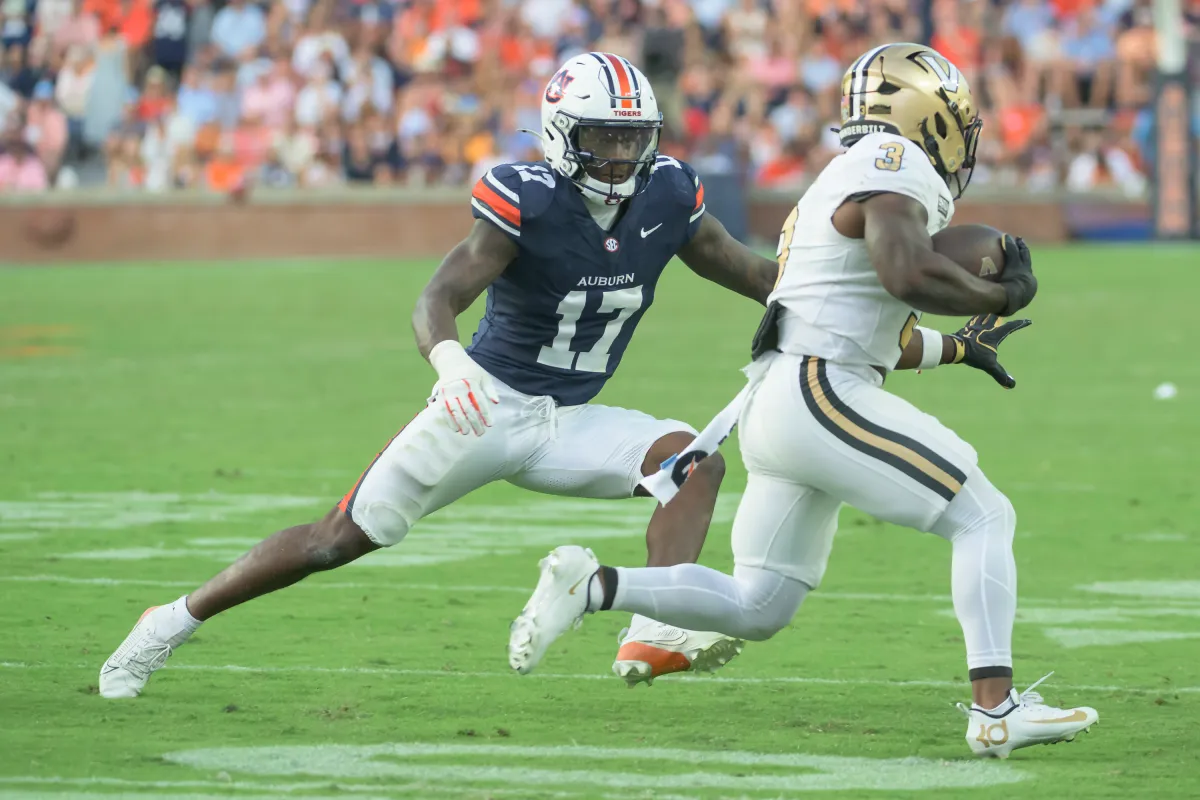
The loss of Xavier Atkins is especially significant because of what he meant to this Auburn defense. Atkins broke out in a major way during his sophomore season, turning raw potential into production that few players in the entire conference could match. He recorded nine sacks and led the SEC with seventeen tackles for loss, a number that jumped off the stat sheet and earned him First Team All-SEC honors. Those are not just nice stats. They are the kind of numbers that define a defensive identity. Atkins was the kind of player who could change a game from the linebacker position, blowing up running plays in the backfield, pressuring quarterbacks into bad throws, and making sideline-to-sideline plays that energized his teammates and frustrated opponents. He was seemingly on the path to making a similar kind of impact this year. Through the first five games of the season, Atkins was tied for the team lead in sacks and ranked as Auburn’s second-leading tackler. He was not just a talented player. He was a vocal presence, a leader by example, and someone the defense could rally around. His future looked incredibly bright, and there was every reason to believe he would be one of the defining players of this Auburn team, a cornerstone for the program’s resurgence under Golesh. That is what makes this situation so jarring. It is never easy to lose a player to injury, but losing a player to a dismissal carries a different kind of weight. It raises questions, stirs emotions, and leaves everyone wondering what could have been.
The first sign that something was wrong came just before Auburn’s matchup against Georgia. Golesh announced that Atkins would not be available for the game, but he declined at the time to go into detail about the reason. It is not unusual for coaches to be vague about injuries or personal matters, so the announcement did not immediately set off alarm bells. Maybe Atkins was dealing with a lingering injury. Maybe he had a personal issue that needed time away. No one knew for sure, and the focus remained on the game ahead. But as Auburn went out and beat Georgia, the silence around Atkins grew louder. There were no triumphant videos of him celebrating with his teammates on the sideline. There were no reassuring comments from the coaching staff about his return. Instead, the situation seemed to escalate behind the scenes until it reached a breaking point. According to ESPN college football insider Pete Thamel, Auburn made the decision to dismiss Atkins from the program entirely. That is a much stronger step than simply holding him out of a game. Dismissal means that the relationship between the player and the program is over, at least for now. It means whatever happened was serious enough that the coaching staff felt there was no path forward. The news hit the Auburn community hard, not just because of the timing, but because of the player involved. Atkins was supposed to be part of the solution, not a cautionary tale. Now, his name is tied to a situation that remains cloudy and unresolved.
What exactly led to Atkins being dismissed from the Auburn football program is still unclear. In situations like this, the lack of information can be the hardest part to deal with. Fans want to know what happened, reporters want to provide answers, and players want to understand how to process the loss of a teammate. But the people inside the program are not saying much. Golesh did somewhat address Atkins’ absence from the Week 7 game on Monday, explaining that the team was “continuing to work through” the situation. That phrase says a lot and very little at the same time. It suggests that the issue is not a quick fix, that it involves something more than a simple misunderstanding, and that the coaching staff is still processing the aftermath. It also leaves the door open for speculation. Some will wonder if Atkins broke team rules. Others will wonder if there was a clash with coaching staff or a pattern of behavior that eventually wore out its welcome. There are also questions about whether Atkins was dealing with personal issues that affected his ability to be part of the team. Without official details, all anyone can do is guess. But what is clear is that Golesh and the Auburn program made a choice. They chose discipline over talent. They chose culture over star power. That is never an easy trade to make, especially in the high-stakes world of SEC football, where a player with Atkins’ ability could be the difference between a good season and a great one. But Golesh has a vision for what he wants this program to be, and sometimes that vision requires making painful decisions.
Regardless of the reasons behind Atkins’ dismissal, there is no denying that his departure is a significant loss for a team that was looking to carry over its newfound momentum after the win over Georgia. On the field, Auburn will need to find a way to replace his production. Sacks and tackles for loss do not just disappear from the lineup without leaving a mark. Other players will need to step up, and the defensive coordinator will need to adjust the scheme to account for the absence of a playmaker who demanded attention from opposing offenses. But the loss is not just statistical. It is emotional. Teammates who had grown close to Atkins, who had fought alongside him in practice and in games, will now have to move forward without him. That is never easy. In the locker room, the news of a dismissal can create a complicated mix of emotions. There is sadness for a friend, frustration at the situation, and a renewed determination to prove that the team can succeed no matter who is on the field. It can either tear a team apart or bring it closer together. The most successful programs find a way to use adversity as fuel, and Auburn now has a choice. They can let this situation define their season in a negative way, or they can honor the work that Atkins put into the program by staying focused and continuing to improve. The Georgia win was a reminder of what this team is capable of. The challenge now is proving that they can sustain that level of performance even after losing a player they never expected to lose.
Auburn will get that chance sooner rather than later. In Week 8, the Tigers are set to return home to face the No. 18 ranked LSU Tigers on Saturday, October 24. It is another tough test in a season full of them, and it will tell everyone a lot about the character of this team. There will be pressure, there will be noise, and there will be questions about how Auburn responds to adversity. The players who take the field will have to carry the weight of the moment, not just for themselves but for the program and for the coaching staff that is trying to build something lasting. For Atkins, the road ahead is uncertain. He is a talented player with a bright future if he can find the right path, but he will have to navigate the consequences of whatever happened. Football has a way of moving on, though. Coaches move on, players move on, and teams move on. That is the nature of the game. Auburn cannot afford to look backward for long. They have a rivalry game to prepare for, a season to salvage, and a standard to uphold. The win over Georgia was a moment to remember, but it will mean very little if they cannot build on it. In the end, this is a story about talent and discipline, about second chances and hard choices. It is a reminder that college football is as much about people as it is about games, and that sometimes the hardest victories are not the ones that happen on the scoreboard. For Auburn, the season goes on. For Atkins, a new chapter begins. And for everyone watching, the hope is that both sides can find their way forward.