





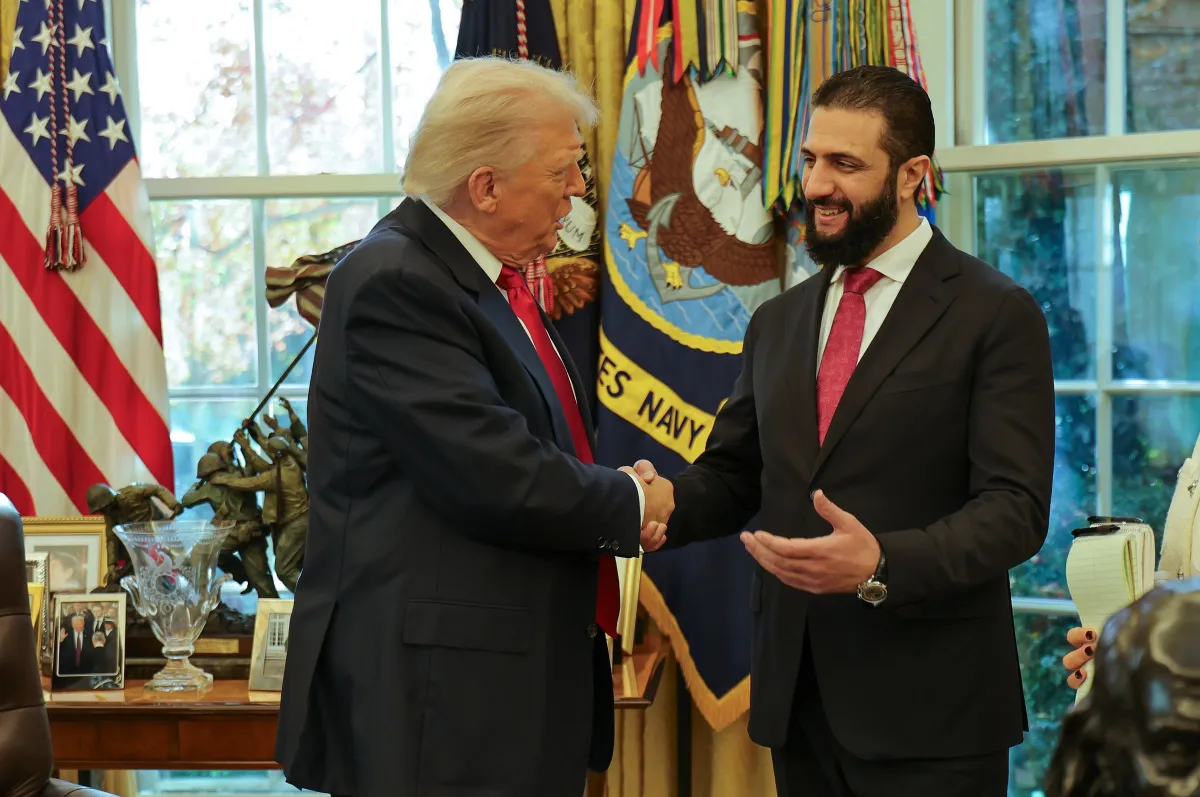
In the cold gray dawn of a post-war Middle East, a profound and painful silence settled over the northeastern plains of Syria. For nearly a decade, the Kurdish-led Syrian Democratic Forces (SDF) had stood as the undisputed vanguard against the black banner of ISIS, forging a fragile, autonomous paradise in the desert—an existence that dragged defiance and almost medieval delusion into the literal shape of a state. But in a stunning sequence of geopolitical reversals, that world is coming to an end. In the final months of 2024, the calcified regime of Bashar al-Assad crumbled, replaced by a new Damascus under Ahmed al-Sharaa, a man who quickly transmuted from the shadows of Al-Qaeda’s Syrian branch into the title of President. Washington, looking to write a clean slate for the region, has removed Syria from the state-sponsor-of-terrorism list, hoping to unlock a flood of investment. Yet the pathway to this new national unity leads over a bridge of blood and relinquishment: the very America that once armed and nurtured the Kurdish coalition to destroy ISIS has now stripped its sponsorship, and the Kurds, previously custodians of an autonomous haven, have signed a death warrant for that fragile dream by integrating into the new absolute Syrian state.
In just under fifteen years since civil war obliterated the nation in 2011, the Kurdish experiment was born out of its own primal necessity. Trapped between a hostile Assad state, the brutal chaos of war, and decaying Turkish and Iranian interests, the Kurds created Aa shard of political alchemy known as Rojava. It wasn’t just a military bastion; it became a sanctuary of radical pluralism, touching languages, worshipping gods, and protecting the most conventionally advanced gender laws in a sea of patriarchal darkness—women fought, led, and legislated alongside men. It was an anomaly in the region: small, de facto autonomous, pragmatic, and astonishingly Western-curated; many thought it embodied a better model for a fractured land. This was the dream.
When the Islamic State swarmed across the Levant like a black plague annihilating borders, polling the Kurdish militias were the only soldiers willing to trade blood for soul against the advancing atomized caliphate. The name Kobani became a byword for Western victory by proxy in 2014 as they held the walls against impossible odds; soon, under the American aegis, that cobbled-together militia became the SDF—a multi-ethnic shield incorporating Arabs and Christians into their ranks. Armed with American airstrikes, intelligence, and elite Special Forces nodes that could not be seen, the Kurdish fighters ground down the Islamic State across the Iraqi and Syrian sands from Tal Abyad to Baghouz, declaring the caliphate’s walls razed solidly. However, the alliance was forged with an expiration date. The bond was functional, pragmatic, and dubious. The US was never interested in protecting a utopia; it wanted a hedge magnet to stabilize an opaque region. With Assad fell, Washington bared a new strategic horizon: ease Syria back into the command of a consolidated sovereign power that could call off the Syrian crisis, even if its president had sheared the jagged edge of his old career into a couture suit of presidential diplomacy.
The inevitable revolution of the alliance came when Syria’s new strongman, enjoying the distraction of Western goodwill, launched a military offensive in January 2025 into SDF-held territory, swallowing oil and gas infrastructure and parceling cities. The United States officials did not just stand beyond—they applauded, exhorting the SDF that their mission as the “primary anti-ISIS force” was over, effectively extinguished the remaining leverage in the Kurds’ hands stripped them as they watched their land fall. Left dribbled of geography, they faced a stark gambit: fight a new war against al-Sharaa’s forces with no international support, doomed—or place the intangible promise of identity and rights in the cupped, newly cleaned hands of a former transcendent extremist. The commander of the SDF, Mazloum Abdi, chose the latter. In a public declaration, he confirmed the dissolution of the hardened forces, calling it the closing of an old account and the opening of a fresh ledger titled “peace and reconstruction.” The “dissolution of an independent military force” wasn’t just report; it was the ballad of a separate people conceding that freedom couldn’t be authentic without armed parentage.
Yet for the beautiful dream of the Kurds, the new agreement offers slim, intangible paper. Damascus, to its credit, has entered symbolisms to recognize the Kurds as a peoples—a pulse from the constitution, Kurdish-language education, and long denied partial citizenship restored after Assad fell. Al-Sharaa plays the grand reconciler, parlaying a nation-state’s sovereign code that cannot conceive of military multiplicity within its confines. But the harsh truth of diplomacy hangs that a promise is just ink; justice without enforcement is its own echoing pillar. Once the SDF is dismantled, and the militias handed the command to Al-Sharaa’s generational military fields, the Kurds shorn of the only leverage left to demand compliance. There is, quietly, an acceptance in the composure of the Kurds; they are betting that the revolutionary secularism of their havens will somehow survive in the new Syrian barrel, or at least afford their disciples continued cultural survival even if without military sovereignty. It is a testament to human resilience—the ability to persist through hope, nationality, and trust even after betrayal by friends and the rise of a former enemy—though the foundation remains mortal American political deletion.
As the flag of the SDF fades in the desert air, the reconciliation between Damascus and Rojava is the beating earthquake of the New Syria. There are no fireworks on the promise pot of the international reconciliation, only the faint, tired voices of warriors who gave up their AK-47s for olive branches that might snap. This is the true identity of post-war Syria: upon the soured oil fields, they must weave a chemistry of unity out of the starchs of betrayal, trust under the revocation of an American security umbrella, and intense hope that al-Sharaa’s convoy stabilizes and refrains for the next dark impulse. The Kurds’ 15-year spiritual march is testing his mettle. For the operations to let go of the grid is the test of stamina they have endured—the shortening of intimacy between self-rule and opportunity. It is a gamble, a widely deconstructed life, written in full trust in a new and unproven friendship with Damascus. The fertile revolution ended not with Gooddestruction, but with a surrender that is winning bows or betrothals. In the fragile dawn of a disfigured new Syria, the Kurds have decided that grown leaves they and the once been autonomous will become a cohesive welcome to the centermost of the new state. The open question—if trust can weld into the steel when history, ghost, and your old wielder have left—has now crossed into the severe future, a haunting unproved. For these stateless, a peace not prepared and what risks sacrificing everything, now silently in a embrace.