


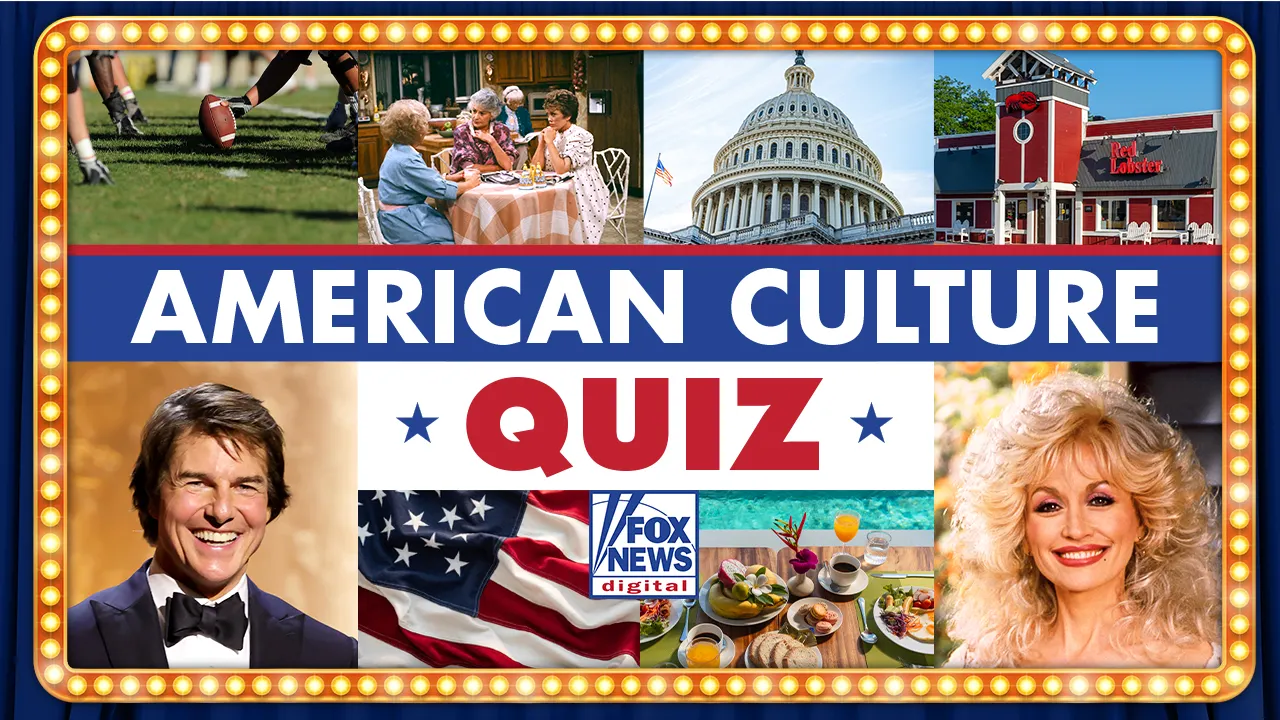
The American Culture Quiz, produced weekly by Fox News Digital, is far more than a simple list of trivia questions. It is a weekly ritual, a mirror held up to the soul of a nation that loves to test itself, celebrate its quirks, and argue about its own history over the dinner table. It invites readers to step away from the relentless churn of breaking news and into a more reflective, playful space where knowledge of the past, the present, and the popular is celebrated. This particular week’s iteration promises a deliciously eclectic mix of themes, highlighting football futures and dessert drama, while also weaving in the darker, more serious threads of American history and current events. It is a compact challenge—just eight questions—that aspires to capture the broad, chaotic, and wonderfully diverse essence of the United States. The quiz is designed to be taken with a cup of coffee on a quiet morning, a pen in hand, and an honest willingness to admit that you might not know as much as you think you do. That honesty, that willingness to be surprised, is the very heart of the exercise✍️ It is an invitation to introspection, a national conversation starter that works across generational and geographical lines, linking a grandma in Iowa to a college student in California through the shared, sometimes embarrassing, process of trying to recall who won the World Series in 1995 or where the first apple pie was truly baked.
The first headline mention, “football futures,” taps into something far deeper than mere athletic stats. Football in America is not just a sport; it is a civic religion, a seasonal rhythm that dictates social calendars, Sunday afternoons, and the emotional tenor of entire communities. When the quiz asks about football futures, it is not merely testing a fan’s knowledge of draft picks or quarterback trades. It is probing the nature of hope, which is the very currency of sports fandom. Every August, every July training camp, every state college’s preseason practice carries the same weight of unbearable optimism. The quiz may ask about a bruising running back’s comeback from injury, a head coach’s unexpected retirement, or the potential dynasty of a young, unproven quarterback. These questions tap into the deeply ingrained American belief in the second act, the come-from-behind victory, the idea that tomorrow’s headlines can rewrite yesterday’s defeats. The mention of “football futures” is a perfect metaphor for the American psyche: we are a people who are perpetually looking forward, obsessed with the draft, the Heisman race, and the upcoming season’s possibilities, all while cherishing the intergenerational memories of Monday Night Football, tailgate rituals, and the smell of popcorn in a stadium bleacher on a crisp autumn afternoon-brown. It is a ritual that binds fathers and sons, bond mothers and daughters, and strangers in bars, all united by a shared language of downs, yardage, and the improbable Hail Mary.
Beyond the gridiron, the quiz’s promise of “dessert drama” taps into another deeply American obsession: food as identity. The dessert question is likely not just about listing ingredients; it is about regional pride, family recipes, and the great national debates over what constitutes the perfect pie crust or the true texture of a cookie. This section of the quiz might ask about the origins of a beloved sweet, such as the Boston cream pie’s entirely non-pie status, or the fiercely contested origins of the chocolate chip cookie at the Toll House Inn. It could probe the cultural significance of the pecan pie in the South, the key lime pie in Florida, or the molten lava cake that emerged from the kitchens of a Manhattan restaurant. The “dessert drama” is a delightful reminder that our national identity is often tested not in the halls of Congress, but in the kitchens of our homes and the aisles of our supermarkets. It asks us to consider the emotional weight of a Thanksgiving pumpkin pie—the recipe passed down from a grandmother who immigrated through Ellis Island, or the specific cinnamon blend that evokes a childhood kitchen. Food is a powerful cultural anchor, and a question about dessert can instantly transport a reader to a specific memory—a bake sale, a holiday feast, or a roadside ice cream stand on a sweltering summer afternoon. In this sense, the quiz is not just a test of knowledge; it is a trigger for nostalgia, a small, sweet bridge to the collective American kitchen, where every family has its own secret twist on an apple pie and every region holds its own sweet treasure dearer than any national standard. These questions subtly remind us that what we eat is who we are, and that our culinary history is as layered and contested as our political past.
However, the quiz would be incomplete without its backbone: history, people, and current events. This is where the format shines, blending the trivial with the profound. It might ask about a landmark Supreme Court case that changed the course of civil rights, a gaffe from a forgotten president, the lyrics of a protest song from the 1960s, or the latest development in Congress. The masterful design here is that it doesn’t separate high culture from low culture; it treats a question about the origins of the hamburger with the same seriousness as a question about the signing of the Declaration of Independence. It forces us to recognize that all these fragments—the political, the culinary, the athletic, the musical—coexist and interweave to form the tapestry of American life. A history question isn’t just about dates; it’s about the struggle for justice that still echoes in today’s headlines. A current events question isn’t just about names; it’s about the pressing issues that define our national conversation. By placing them side by side, the quiz subtly reminds us that being an engaged citizen requires a holistic awareness of the country, not just a narrow focus on one’s own hobbies or profession. It is an intellectual workout, but a gentle one, one that rewards curiosity rather than punishing ignorance.
The humanizing aspect of this quiz is its acknowledgment of fallibility. In a world of perfectly curated social media feeds and algorithm-driven certainty, the quiz provides a safe space for not knowing. The structure of eight questions is deliberately accessible; it is not a grueling examination but a friendly contest with yourself. You will inevitably ace a question about a famous national park’s location, then stumble completely on a question about a niche dessert from a specific Midwest state. That moment of defeat is not embarrassing; it is humbling and amusing. It reminds us that the United States is too big, too varied, too historically dense for any single person to master entirely. This is where the “humanize” aspect shines—the quiz does not judge. It offers a chance to laugh at your mistakes voice in an internal monologue, saying, “Oh right, that was the Great Molasses Flood of 1919!” or “I should have known that!” It is a low-stakes arena for intellectual humility. The weekly format encourages a gentle routine of self-improvement without the pressure of a grade. It is a form of reprieve from the polarized, divisive news cycles, offering a neutral ground where the only competition is against your own memory and the clock. It fosters a sense of community, as readers are encouraged to share their scores with friends and family, sparking debates not about politics, but about the correct pronunciation of a state’s name or the year a landmark was built.
The format of eight questions is a masterstroke of accessibility. It is not a grueling hundred-question examination that demands endurance; rather, it is a quick, punchy round that fits comfortably into a coffee break or a commute. The brevity encourages participation, as the fear of a lengthy time investment is removed. This accessibility is key to its popularity. Even the most distracted reader can spare five minutes. The challenge is not stamina but attention to detailholistic. You might run through the eight questions, get five right, and feel a sense of accomplishment or, conversely, a lovely humility that nudges you to look up the answers for the ones you missed. This learning experience is quietly profound: it turns passive scrolling into active learning. It transforms the reader from a consumer of content to a participant in a massive, nationwide game of cultural recall. When you get a question wrong, you don’t just see the correct answer; you get a sudden insight into a piece of history you never knew existed – a forgotten strike, a flamboyant historical figure, a political scandal that shook the country. The quiz becomes a springboard for further discovery, prompting a quick Google search on a battle you thought you understood or a famous figure you only knew by name kin. In this way, it serves a vital educational purpose, gently pushing users to fill the silent gaps in their own knowledge without the pressure of a grade.
The experience of taking the quiz is itself an exercise in human emotion. It starts with a burst of confidence—reading the first question and feeling a smug certainty. Then, question two might reveal a blank. You scribble down an answer based on a vague memory of a high school history class or a meme you saw on social media. You might feel a pang of frustration when you realize you mixed up the date of the Constitution with the date of the Bill of Rights. But then, a moment of delight: you correctly identify a verse from a Bob Dylan song or name the state that produces the most peaches. That tiny victory provides a serotonin boost that makes the whole ordeal worthwhile. The quiz is structured to invoke that familiar cocktail of anxiety, joy, and relief. It is a safe way to fail. If you get 8 out of 8, you feel intellectually validated, ready to brag to your friends. If you get 4 out of 8, you learn something newcars and you’re not publicly humiliated. This low-stakes environment allows people to be vulnerable, to admit they don’t know everything about the country they live in. It encourages a sense of humility that is often missing in our polarized public discourse. Moreover, it is a shared experience; even if taking it alone, the reader knows that thousands of others are also taking it this week, comparing answers, and engaging in spirited debates about the merits of a particular question. This unspoken community built around a digital quiz creates a subtle yet powerful bond, reminding us that we’re all in this chaotic, wonderful experiment together.
The quiz also serves as a bridge between generations. Grandparents might know the answers to historical questions with ease, while younger participants might shine in pop culture and modern sports trivia. This intergenerational exchange is a crucial, often overlooked function of the quiz. It can be a conversation starter at family gatherings: “Did you see the question about the ‘Monkey Trial’?” A grandparent can recount a family story about living through a particular era, while a teenager can explain the nuances of the latest internet drama. This passing of knowledge and perspective is the lifeblood of cultural continuity. The quiz doesn’t just test static facts; it sparks the sharing of lived experiences. It also acts as a social equalizer, because wealth, status, and education do not guarantee a perfect score; a truck driver might know more about the history of the Route 66 diner than a university professor. It values a diverse range of knowledge, from the highbrow to the folksy. This is incredibly American: a celebration of the autodidact, the self-taught historian, the passionate hobbyist. The quiz honors the classroom but equally honors the lived experience of someone who has traveled the country, worked in a diner, or coached a little league team. By doing so, it quietly subverts the idea that only institutional learning is valid, instead elevating the wisdom of the streets, the backyards, and the kitchen tables across the fifty states.
Ultimately, the American Culture Quiz is more than a medley of trivia; it is a small, beautifully crafted invitation to reflect on who we are as a people right now, at this particular junction of history. It captures the mood of the moment, the anxieties, the joys, and the shared references that momentarily unite us. It acknowledges that “American culture” is not monolithic; it is a vibrant, messy quilt of regional dialects, immigrant traditions, sporting rivalries, and culinary quirks. When we engage with its eight questions, we are not just trying to get the right answer; we are participating in a love letter to that complexity. The invitation extends beyond this one quiz, with links to other lifestyle stories and the daily-updating News Quiz, encouraging readers to continue this journey of playful learning throughout the week. It’s a call to stay curious, to keep reading, and to never stop questioning the world around you. So, the next time you sit down with that cup of coffee to take the weekly test, remember that you’re not just a person making guesses; you’re a participant in the ongoing, often chaotic, always fascinating story of America. And that, in the end, is the sweetest dessert of all.