





1. A Justice on the Defensive: Alito’s Warning About a “Concerted Effort” to Intimidate the Court
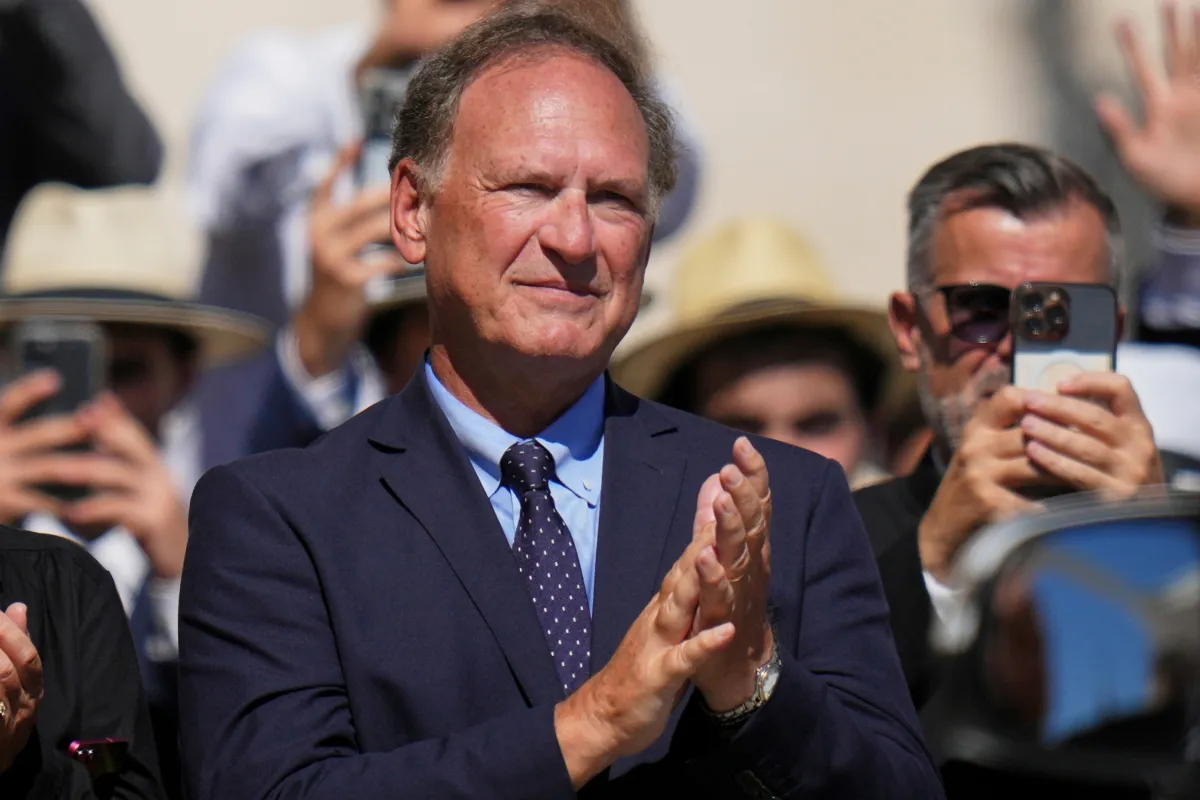
In a moment that felt less like a routine television appearance and more like a quiet alarm bell, Supreme Court Justice Samuel Alito sat down with Fox News Sunday and let the weight of his worry show. He spoke of a “concerted effort” to intimidate the nation’s highest court—an effort, he suggested, that is not merely about criticism but about pressure, aimed directly at the justices themselves, to change the way they decide cases. “There has been a concerted effort to intimidate the court—and justices on the court—to try to influence us to decide cases differently from the way in which we have been deciding them, and I am concerned about the future of the court,” he said. The words were measured, but the concern was unmistakable. Alito, a conservative justice appointed by President George W. Bush, has long been a figure of controversy and conviction, but here he seemed to be speaking not just about his own experience but about the institution as a whole. He described a climate in which public pressure has become so intense that it threatens the long-term standing of the judiciary. His comments arrive at a moment when the court is already under a microscope—facing renewed scrutiny over ethics, judicial independence, and a series of consequential rulings involving President Donald Trump’s administration. For many Americans, the court has become a battleground in a larger cultural and political war, and Alito’s remarks capture a deep anxiety that the institution meant to stand above politics is being dragged into the fray. He did not name specific critics, but his language suggested a broad and organized campaign, one that goes beyond ordinary disagreement and into something more sinister. To hear a sitting justice speak so openly about feeling targeted is striking, even for a court that has weathered storms before. It raises uncomfortable questions about whether the judiciary can remain a stable, trusted arbiter in an era of extreme polarization. Alito’s warning is not just a complaint; it is a plea for the public to understand what is at stake when the court becomes another front in the nation’s political battles.
2. The Numbers Behind the Anxiety: A Public Losing Faith in the Highest Court
The anxiety Alito expressed is not without statistical support. Public confidence in the Supreme Court has been declining for years, and the latest Gallup poll paints a stark picture. Only 34 percent of Americans said they approve of the court, while 61 percent disapprove. Those numbers are enough to make any defender of the judiciary pause. But the most telling detail is how deeply divided the country is along partisan lines. Sixty-five percent of Republicans approve of the court, but only 12 percent of Democrats and 31 percent of independents do. The court, once seen as an institution above the partisan fray, now looks like just another political prize to be won or lost. Alito acknowledged these concerns, saying he worries about the impact of escalating rhetoric directed at both the institution and individual justices. He did not dismiss the critics outright, but he pushed back against the idea that the court has lost its moral or constitutional compass. “The court has not always done the right thing,” he admitted, but he insisted that it has been “fundamental in protecting our constitutional structure and the rights that all Americans enjoy.” That is a nuanced position—one that accepts imperfection while defending the broader mission. Yet for many Americans, the court’s decisions on abortion, executive power, voting rights, and immigration have felt less like neutral interpretations of the Constitution and more like extensions of a political agenda. The Gallup numbers reflect a deep disillusionment, a sense that the court is no longer a referee but a player. Alito’s words, however sincere, may do little to bridge that gap. He sounded like a man trying to hold a line against a rising tide, insisting that the institution is still worthy of trust even as the public’s faith erodes. The human dimension here is important: justices are not robots, and they feel the weight of public opinion even when they claim to ignore it. Alito’s concern about the future of the court is not abstract—it is rooted in the very real possibility that the judiciary could lose its legitimacy in the eyes of a significant portion of the American people. And once that legitimacy is gone, it is very hard to restore.
3. The Political Storm: Trump’s Attacks and the Defense of Judicial Independence
Alito’s interview did not happen in a vacuum. It came at a time when President Trump has grown increasingly frustrated with the very justices he appointed to the court. After a string of landmark rulings went against his administration, Trump accused the justices in the majority of being “very unpatriotic and disloyal to our Constitution.” That kind of language, coming from the highest elected office in the land, is exactly what Alito seems to be worried about. “I am concerned about the escalation in public rhetoric in general and about the things that people in important positions say about the Supreme Court as a whole and about individual justices,” he said. The tension between the executive branch and the judiciary is nothing new, but the current moment feels different. Trump’s attacks are personal, pointed, and relentless, and they have a way of seeping into the public consciousness. When a president calls judges disloyal, it chips away at the idea that the court is an independent body guided by law rather than politics. Chief Justice John Roberts has previously defended judicial independence against attacks from elected officials, and several justices have publicly spoken about the importance of maintaining confidence in the judicial branch. But those defenses often feel like whispers against a shout. Alito’s comments suggest that the justices are not just observing the political storm from a distance—they are feeling its effects. The human toll is real. These are people who have dedicated their lives to the law, and to be publicly vilified by the president of the United States is a heavy burden. Alito’s concern about “things that people in important positions say” is a direct reference to the way political leaders have weaponized rhetoric against the court. It is one thing for citizens to criticize a ruling; it is another for those in power to undermine the legitimacy of the institution itself. The court is designed to be insulated from public opinion, but it is not insulated from the broader culture of hostility that now defines American politics. Alito’s warning is a reminder that the judiciary depends on a shared understanding that its authority comes from the Constitution, not from the popularity of its decisions. When that understanding breaks down, the entire system is at risk.
4. Dobbs, the Shadow Docket, and the Battle Over the Court’s Role
The controversy surrounding the court is not just about rhetoric—it is about decisions. One of the most significant flashpoints remains the 2022 ruling in Dobbs v. Jackson Women’s Health Organization, authored by Alito, which overturned Roe v. Wade and ended the federal constitutional right to abortion. That decision sparked protests, drew fierce criticism from Democratic leaders, and reignited debates about whether the court itself needs to be reformed. Alito has acknowledged the personal cost of that ruling, telling CBS News that Dobbs “resulted in the loss of old friendships.” It is a rare and human admission—a reminder that the justices are not detached from the social consequences of their decisions. But the criticism of the court goes beyond any single ruling. Critics have also focused on the court’s growing use of its emergency docket, often called the “shadow docket.” This process allows major policy disputes to be resolved on an expedited basis, sometimes through brief, unsigned orders, without the full briefing and oral arguments that traditional cases receive. Opponents argue that this allows significant policy changes to take effect without the same level of public scrutiny as ordinary decisions. The Trump administration filed seven emergency requests over the summer; the court ruled for Trump in four, against him in one, with one withdrawn and one still pending. Alito defended the court’s handling of these applications, arguing that the justices have been transparent about the process. He also offered a broader explanation: presidents of both parties have become increasingly frustrated by their inability to persuade Congress to adopt their legislative agendas, so they have turned to unilateral executive actions. “Presidents of both parties have become increasingly frustrated by their inability to persuade Congress to adopt their legislative agenda so they have tried to do as much as they possibly can using their own unilateral power, issuing executive orders or new rules or new interpretation of old statutes or rules,” he said. In other words, the court is being asked to referee an increasingly aggressive executive branch, and the shadow docket is a symptom of that larger problem. But critics are not convinced. They see the shadow docket as a way for the conservative majority to shape national policy without accountability. The debate is not just about procedure; it is about power, transparency, and the very nature of judicial review.
5. Ethics Questions and the Weight of Scrutiny
Beyond decisions and dockets, the court has also faced a steady stream of ethics-related scrutiny in recent years. Alito himself recently recused himself from a climate lawsuit involving oil companies, a case that had drawn questions from environmental groups and watchdog organizations about his financial interests and connections to the energy sector. The case, Suncor Energy v. County Commissioners of Boulder County, stems from a lawsuit brought by Colorado local governments against major oil companies, including ExxonMobil and Suncor. The plaintiffs allege that the companies knew for decades about the climate risks associated with fossil fuels while misleading the public, and they are seeking damages to help cover the costs of climate-related impacts such as floods, droughts, and wildfires. Boulder officials argue that the case involves traditional state-law claims for local harms, not an effort to regulate emissions or set national energy policy. Alito’s recusal was notable, but it did little to quiet the broader criticism. Ethics issues involving several members of the court have fueled calls from some lawmakers and advocacy groups for stricter disclosure requirements and more robust enforcement of ethical standards. The court has no binding code of conduct, and that has become a point of contention. Critics argue that the justices should be held to the same ethical standards as other federal judges, while defenders maintain that the court is uniquely positioned and should not be subject to external oversight. The new term begins on Monday, and it does so amid continued controversy over the court’s decisions and internal operations. The justices are walking into a storm, and they know it. Alito’s interview was, in part, an attempt to push back against the narrative that the court is ethically compromised. But the questions are not going away. The public wants transparency, and the court has been slow to provide it. The human dimension here is complex: justices are public servants, but they are also human beings with lives, investments, and relationships. The line between legitimate inquiry and invasive scrutiny is often blurred. Still, the court cannot expect the public to trust it without demonstrating a commitment to ethical clarity. Alito’s recusal was a step in that direction, but it may not be enough to restore confidence in an institution that many Americans believe has lost its way.
6. Retirement Rumors and the Uncertain Road Ahead
At 76 years old, Alito is no stranger to speculation about his future. In his Sunday interview, he addressed those rumors directly, with a touch of dark humor. “I am bemused by the retirement speculation,” he said. “It’s not too pleasant to look up and see the vultures circling around your head.” He added, “I think it would be foolhardy to make a calculation that I will serve for a certain number of additional years.” Those words are telling. Alito is aware of the political implications of his retirement. If he were to step down, it would give the current president the opportunity to appoint a successor, potentially shifting the balance of the court further in one direction. The stakes are enormous, and the pressure on aging justices is immense. But Alito seems determined to stay, at least for now, insisting that he still has something to contribute. His comments reflect a broader reality: the Supreme Court is not just a legal institution; it is a political battleground, and every retirement, every appointment, every decision is scrutinized through a partisan lens. Alito’s legacy is already written in many ways—Dobbs, the expansion of executive power, and a conservative jurisprudence that has reshaped American law. But the future of the court is uncertain. Public trust is low, political attacks are relentless, and the institution is caught in the crossfire of a divided nation. Alito’s warning about the “concerted effort” to intimidate the court is a cry from the inside, a reminder that the justices are not just deciding cases—they are defending the very idea of an independent judiciary. Whether they succeed is an open question. The court has survived crises before, but this moment feels different. The anger is deeper, the divisions are sharper, and the trust is thinner. As the new term begins, the justices will continue to do their work, issuing decisions that will shape the lives of millions of Americans. But they will do so under a cloud of suspicion and hostility that shows no signs of lifting. Alito’s interview was a rare glimpse into the human side of the court—a side that is often hidden behind black robes and legal jargon. He is not just a justice; he is a man who feels the weight of his decisions, who has lost friendships over them, and who worries about what comes next. His concern for the future of the court is genuine, and it should give all of us pause. The Supreme Court is not supposed to be popular; it is supposed to be principled. But even principles need a foundation of public trust to stand on. If that trust continues to erode, the court—and the country—will be in uncharted territory.