





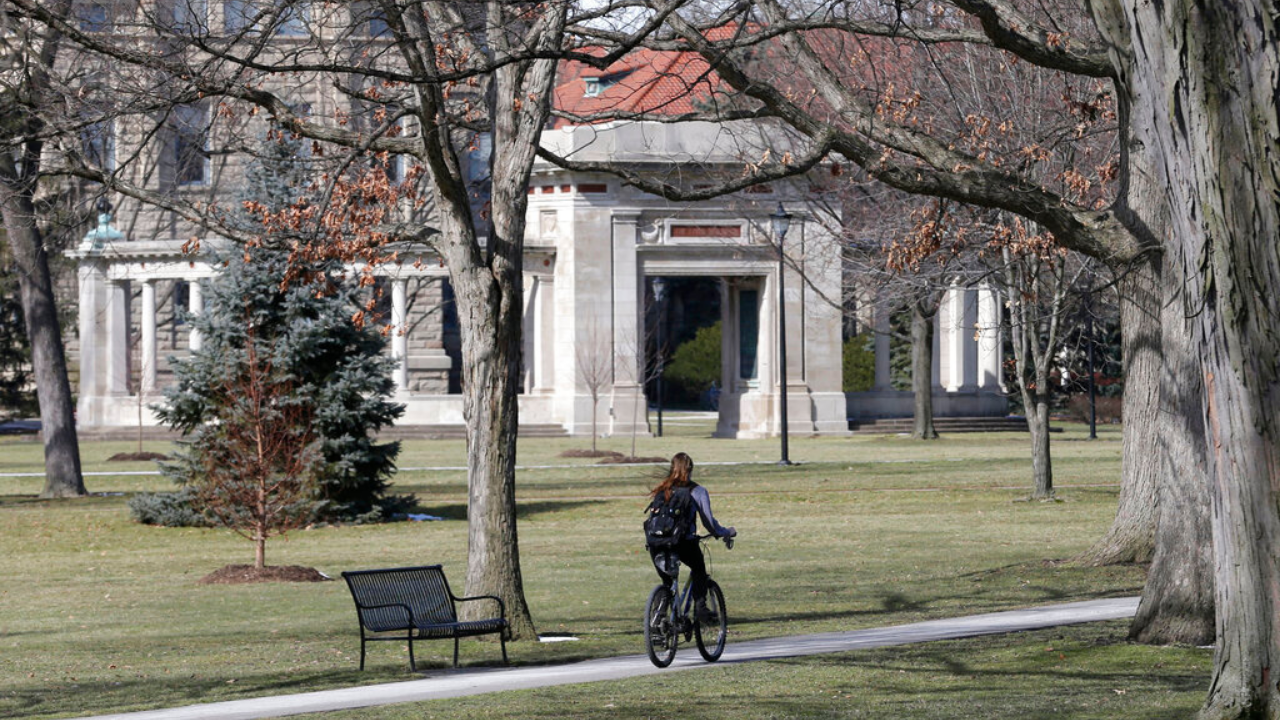
It was supposed to be the beginning of everything: a newly made dorm-bed, unmade by the second week; dining hall meals eaten alone or with strangers; the strange quiet of a building full of people who don’t know you yet. For some members of Gen Z, though, that story is ending almost as soon as it begins. Just weeks into the fall semester, a growing number of freshmen have made a sudden, private decision to abandon campus and return home. One 17-year-old student at Southern University in Louisiana became a viral TikTok story after leaving campus two weeks into her first semester and flying back to her family in Las Vegas. To be clear, she did not drop out of college. Instead, she switched to the school’s online program, keeping the degree but shedding the campus experience itself. She still wants the education. What she did not want was the roommate drama, the communal showers, the awkward small talk, the endless pressure to perform social normalcy. And she is not alone. In the viral discourse that followed, many students and parents revealed similar stories, and the old assumption that college is equally about education and about “finding yourself” in a dorm room has been called into question. The degree, for many, is the point. The rest is just a debt-laden extra.
The online reaction to this quiet exodus has been anything but quiet. It has run the gamut from fierce understanding to blatant tough love, with every shade in between. On Facebook, one user shrugged, “To be fair, college is not for everyone.” Another blurted, “Time for the school of HARD KNOCKS!” The latter old-school sentiment captures something important about how many people view this moment: they see students who are strangers with discomfort, quick to run when things get hard. “Y’all have to learn how to be uncomfortable,” one commenter advised. But a gentler voice countered, “It’s OK to be uncomfortable, anxious and stressed during your first year of college.” The divide is generational and also deeply personal. Co-host Kayleigh McEnany remembered her own college years and the painful ritual of leaving home after a holiday break. She recalled standing in the airport crying, her mother telling her, “You’ve gotta get on the plane, you’ve gotta go back.” She boarded the plane, and though it was difficult, she is grateful. That story, told with affection, is meant to inspire. But it is worth remembering that McEnany had a home-cooked, hard-won resilience built from years of ordinary practice. Many Gen Z students did not have the same runway. They spent their high school years largely online, in their childhood bedrooms, eating lunch in their kitchens with parents nearby. The pandemic shaped them into students who know how to mute a microphone, turn in homework digitally, and self-navigate a learning management system. It did not teach them how to walk into a cafeteria full of strangers. It did not teach them how to sit in a lecture hall and raise a hand when their voice shakes. The uncomfortable moment for a generation raised on remote schooling was not just the moment of leaving home; it was the moment of arriving, expected to know how to be present.
Behind the headlines and the passionate comment sections, there are real families trying to make sense of what happened. One parent wrote on Reddit that their son, a top student in his high school class, had quit college after one week. The parent’s pain is raw: the son was offered a scholarship to cover his first year, and the family had invested so much—not only emotionally but also financially, buying him a car, a laptop, bus passes. Now, the son won’t even consider sticking with it for a semester or two. The parent admitted feeling like a loser and explained that both the son and parent have anxiety, so there has always been a careful, empathetic effort to help him push through struggles. The parent also offered a surprising context: “I took 19 years to finish my bachelor’s degree, but I was always employed, so what can I really say?” It is a moment of desperate self-doubt, written in the dark, crowded with love, disappointment, and confusion. The responses from other Reddit users were surprisingly measured. Some urged the parent to ask deeper questions: What are his reasons? How much ability do you have to force him to stay? Is it already a done deal? The most thoughtful commenter advised, “I would absolutely try to get to the bottom of it and figure out how to work around whatever his concerns are.” Another parent chimed in with a different but equally familiar story: a daughter with social anxiety, especially fear of public speaking, used to miss days of high school whenever she had to present. She had just finished her second week of college, and although it was not without struggle, she was surviving. One class required discussion from everyone, every single time. That kind of daily exposure to fear can feel impossible to a young adult who has spent years avoiding exactly that.
And yet, another set of voices pushes back against the assumption that staying on campus is inherently better. On Reddit, one commenter offered a broader philosophy: “I feel that college is a huge maturity checkpoint and most young adults aren’t ready for it right out of high school.” This person went on to say they are a strong proponent of not pushing young people toward college until it is something they want to do. That does not mean there are no expectations, but perhaps the option should exist to work full-time and pay bills instead. This perspective reframes early departure as a sign of clarity rather than failure. Maybe the student is not being lazy. Maybe they are honest enough to say that the university lecture hall, the crowded dorm, the drinking scene, the social arms race—all of it—is not the path they want to walk right now. Many online commenters pointed to the practical reasons: financial concerns, mental health struggles, homesickness, and the simple desire to focus exclusively on academics. For some students, returning home is not a retreat from responsibility; it is a retreat from distraction. They would rather wake up in their childhood bedroom, open a laptop, take their classes, and get the degree without the emotional chaos of campus life. There is something undeniably pragmatic about that choice. College, after all, is not a rite of passage for every family. It is often simply a gateway to a better job, a credential that matters on a résumé, a requirement for a career. The “college experience,” with its football games and late-night philosophical debates, is a luxury, not a requirement. And after years of watching tuition climb and wages stagnate, many Gen Z students are not interested in paying extra for an experience they never asked for. They are, as the Fox News panel noted, after the degree.
The question is not simply whether to stay or go. It is the uncomfortable, multiplying question of what the student will do once they return home. Leaving campus is not a cure. It can become the same problem in a different room. If a student goes home and spends days in bed, avoiding classes and ignoring deadlines, then the decision to return was not a strategy—it was a symptom. But if coming home is paired with intentionality, it can be a lifeline. Experts who study this emerging pattern emphasize that families need clear structure to make it work. A mental health counselor writing in Psychology Today advised parents to set clear boundaries around work, household responsibilities, health and wellness, and daily routines. The message is that coming home should not mean sliding backwards into dependence. It should mean creating a new kind of adult life under the same roof. Parents can support a returning student by asking what their day looks like, what time they will log on to class, what chores they will own, how they will stay active, and who they will talk to outside the family. The online program, in other words, still needs a person to show up. And the young person who decided they were not ready for campus still needs to become ready for something. The University of Home is not a retreat center; it is a place to rebuild habits. If the student is hiding, no amount of online lectures will save them. If the student is regrouping, then home can be the safest place on earth to figure out how to re-enter the world at a different pace.
In the end, the trend of Gen Z freshmen leaving campus weeks into the semester is less a shocking moral failure than a mirror of the times. These students watched the world shut down in their most formative years. They learned to associate school with isolation, and they learned—perhaps too well—that separation from other human beings is manageable, even efficient. Their first weeks on campus asked them to make a sudden leap from that narrow emotional universe into a dense, loud, confusing place where everyone seems to know something they don’t. For some, the leap is impossible; for others, it is simply untimed. The parents who push, the parents who accept, and the students who leave all want the same thing in their own way: for the young person to grow into a functioning, self-aware adult. That doesn’t happen on a single campus or in a single semester. It happens through difficult conversations, mistakes, restarts, and quiet Sunday night meltdowns before a long drive back to school. It happens when a mother says, with love, that you have to get on the plane. It also happens when a father says, with love, that it’s okay to come home. The good news is that one decision does not define a life. The students who left Southern University on a TikTok whim may transfer next year, or graduate online, or find their way to a campus that fits them better in five years. The Reddit parent’s son might work a job, learn something about himself, and return to college with a hunger he didn’t have before. The student with public-speaking anxiety might not need to become a podium star; she might just need one professor who creates enough safety to say something small. What matters is not the place where the lesson is learned. It is the courage to keep learning, even when it looks nothing like the brochures promised.