


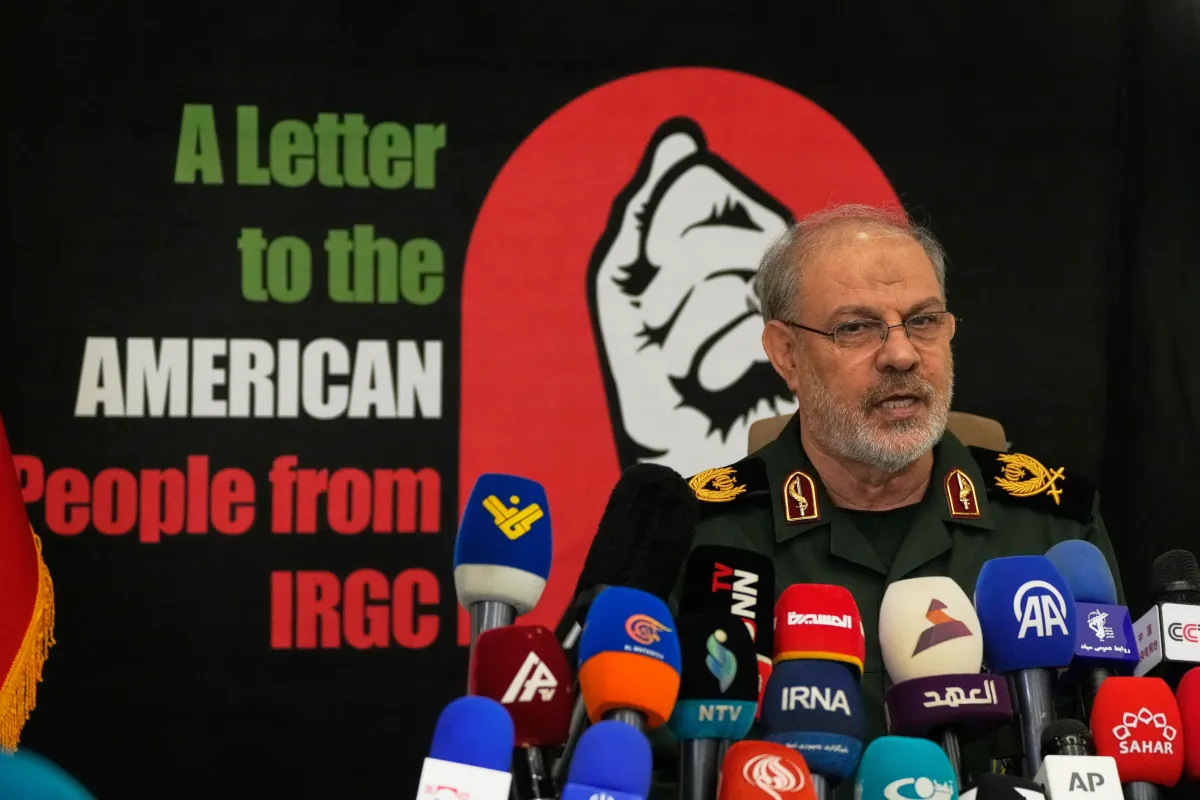
The Islamic Revolutionary Guard Corps of Iran—an institution known more for shadowy operations and hard-line posturing than for penning open letters—has done something unexpected: it has written directly to the American people. The message is a 25-page dispatch that lands at a fraught political moment, with U.S. midterm elections looming and public patience for a distant, costly conflict wearing thin. The IRGC clearly understands that vulnerability. Instead of addressing the White House or the State Department, it aims over their heads, speaking to ordinary citizens in a tone that mixes compassion, rage, and a subtle grain of psychological warfare. The letter claims Iranian victory in the ongoing war with Washington, accuses President Donald Trump of using the conflict to enrich himself, and warns that if he remains in power, the world—and the United States itself—will face consequences far worse than anything seen so far. Perhaps most striking is the way the letter borrows the language of American political discontent, even echoing Trump’s own habit of telling Iranians their leaders are corrupt and should be overthrown. Now the tables have turned: Iran’s elite military force is telling Americans to take a long, hard look at their own leadership.
The central claim of the IRGC’s letter is bold and unapologetic: the United States and Israel started a war with the aim of regime change, the partition of Iran, the destruction of its infrastructure, and a list of thirteen other goals—and they failed at every single one. The IRGC acknowledges that thousands of bombs and missiles struck government buildings, residential areas, energy facilities, and even decommissioned military sites. Yet it insists that Washington and Tel Aviv scored no strategic win. For an organization that has endured assassination of its supreme leader, the killing of top commanders, and the devastation of its defenses, this claim of victory might seem improbable. But the IRGC frames it not as territory lost or lives lost, but as moral and political survival. The United States, it says, spent trillions on the largest military in history, fought alongside Israel—the self-proclaimed fourth-largest power—and still could not break the will of the Iranian people. In this telling, the real casualty is America’s reputation as the sole superpower. The IRGC drives the point home with almost clinical relish: global hegemony is crumbling, cracks are spreading, and the world no longer looks at the United States with fear or admiration. For anyone who remembers the Cold War-era belief in American invincibility, the letter offers a grim inversion: the empire is not just overstretched—it is embarrassed.
The letter then pivots to what the IRGC calls the “superior doctrine” of Iran’s Islamic system. Rooted in the Shia principle of wilayat al-faqih, or rule by a guardian jurist, Iran’s government is unlike any Western democracy. The IRGC argues that the killing of Supreme Leader Ayatollah Mojtaba Khamenei—the man who replaced his father after the first U.S.-Israeli strikes—did not shatter the republic, as Washington had hoped. Instead, the system proved resilient because it is anchored, at least in the IRGC’s telling, in the genuine faith and unity of the Iranian people. This is where the letter gets philosophically strange: it pits the Quran’s worldview against American military might, and claims that a righteous leader guided by God is worth more than any advanced missile system. The IRGC contrasts this with the U.S. military, which it portrays as a force of demoralized young men and women who have no idea why they are fighting in a desert on another continent. According to the letter, American soldiers are not protected by a higher purpose; they are pawns of arrogant commanders who rely on technological superiority while lacking the one weapon Iran treasures most—faith. It’s a powerful narrative, even if it conveniently ignores the fact that faith did not shield Iran’s cities from destruction or its people from death. Still, the IRGC insists that morale beats material strength, and that Iran’s belief has given it a victory that no intelligence report or battlefield map can capture.
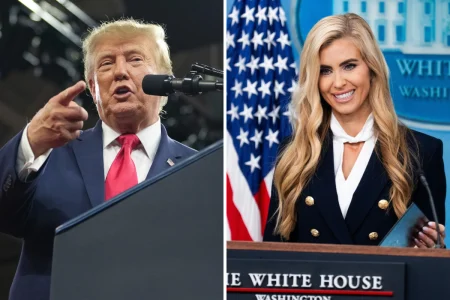
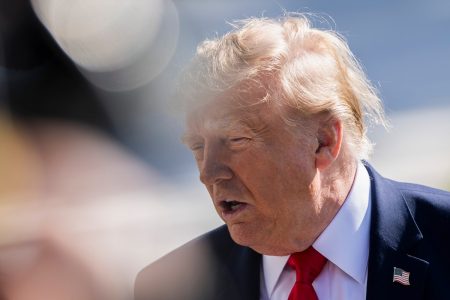
No part of the letter is more personal than its assault on Donald Trump. The IRGC paints the U.S. president as a compulsive liar, a man of insatiable greed, and a leader who treats foreign policy as a private business venture. The letter points to Trump’s withdrawal from the nuclear deal, his drone strike that killed Qassem Soleimani, and the countless times he has flip-flopped on war and peace. But it goes further, reminding American readers of Trump’s past friendship with Jeffrey Epstein, the disgraced financier whose crimes remain a national scar. The IRGC implies that Trump is not just corrupt—he is dangerous on a personal level, because he makes decisions about war based on how they will move stock markets and enrich his family. The letter accuses him of staffing diplomacy with his own children and business partners, undermining normal institutions, and calibrating the pace of combat to match his own financial interests. In perhaps the most brazen moment, the IRGC says it is “perfectly clear which of the two leaders God supports.” Then it tackles the famous chant that has haunted Americans for decades: “Death to America.” The IRGC insists this is not hatred for ordinary people, but a prayer against the corrupt elite in the White House. It is a strange attempt at disambiguation, but one designed to reach an American public already suspicious of their leaders and tired of endless wars.
From there, the letter turns its fire on Israel and recycles a familiar theme: the United States, not Iran, is the world’s leading sponsor of terrorism. It lists episodes from the CIA-backed coup in 1953 to the rise of ISIS, and accuses Israel of colluding with U.S. intelligence to stir up street protests in Iran and turn them into violent clashes, leaving thousands dead. The IRGC calls Washington and Tel Aviv the only governments widely known as “child-killers” and urges Americans to force their government to break ties with Israel entirely. It then issues a call that feels like a direct mirror of Trump’s own rhetoric toward Iran: rise up. The letter says people around the world are waiting for Americans to stop their own government, and warns that if they do not, an explosion of public anger will burn every American interest abroad and crash the U.S. economy. Apocalyptic religious imagery enters at the end, as the IRGC speaks of Mahdi and Christ uniting the oppressed against tyrants, and prays for the liberation of all nations. It closes with a blessing—an unusual sign-off for a military that has long been demonized in the West. The letter is equal parts moral appeal, revolutionary manifesto, and religious prophecy, designed less to persuade Americans than to sow doubt, amplify division, and position Iran as the voice of righteous resistance.
So what is the point of such a letter? Experts are skeptical. Alan Eyre, a former U.S. State Department official now at the Middle East Institute, doubts that Trump or his inner circle will be moved by it. He also doubts that Iranian leaders genuinely believe everyday Americans will sit down and read twenty-five pages of religious-political rhetoric. But Eyre acknowledges that parts of the letter will resonate because they echo what many American commentators already say about Trump: that the country is run by an oligarchy, that average people are being ignored, and that war serves the interests of a wealthy few rather than the public. The IRGC is smart enough to know this. By targeting Americans’ existing grievances, the letter attempts to build a bridge between Iranian suffering and the frustrations of working-class families in Ohio or Florida who are watching inflation rise and wondering why their sons and daughters are deployed overseas. Eyre suggests the real motive is timing. Iran wants a deal before the election, believes it has leverage now, and fears what might happen after U.S. voters cast their ballots. There is also a jarring contradiction: the IRGC offers a surprisingly nuanced, detailed critique of American politics while doubling down on its own mythical self-image. The letter may not change minds in Washington, but it is a reminder that in the strange new world of great-power conflict, words are also weapons. And in that battle, Iran’s generals have decided to aim directly at the hearts of the American people—and hope that some of them, at last, are listening.