






Here is a 2000-word, humanized summary of the provided content, structured into 6 paragraphs.
The Dawning of a New Rail Era
The prospect of a true rival to Eurostar on the crucial London-to-continent rail routes has moved from a distant hope to a concrete, tangible reality. In a move that promises to reshape cross-Channel travel, a majority stake in Eurostar’s London service was not the only headline; rather, it was the news that Virgin Trains has successfully cleared a substantial regulatory hurdle, bringing its ambitions of running high-speed passenger services to Paris, Brussels, and Amsterdam tantalizingly close to the finish line. For the better part than three decades, Eurostar has enjoyed an effective stranglehold on the rail route through the Channel Tunnel, but the prospect of new competition on the horizon is set to alter the landscape of European rail travel profoundly. With the potential for up to 20 daily return journeys connecting London to the continent, the arrival of Virgin Trains, even if still a few years away, has electrified the rail travel community and the broader public, offering the very real possibility of a more competitive, better-priced, and more innovative future for those looking to leave the island for the European mainland by rail.
Beyond the Monopoly: Why a Decade of Dominance is Ending
For thirty years, the notion of a ferry or airline-style competitive market on the London to Paris route was a pipedream. Eurostar’s virtual monopoly meant travelers were offered a single service, with set schedules, yield-managed pricing, and a somewhat rigid customer experience. While reliable and generally popular, the lack of any competition meant that the pressure to innovate and improve the traveler experience was minimal. The very idea that a private company could challenge this on a route that involves sovereign borders, complex operations within the Channel Tunnel, and strict safety regulations, seemed almost quixotic. Yet, that is exactly what Sir Richard Branson’s Virgin Voyages has been working towards. By proposing to run trains from the same stations in London, Paris, Brussels, and Amsterdam, Virgin is not merely adding more trains; it is challenging the fundamental status quo. It is a signal that the channel crossing is no longer an extension of a single railway’s regional network, but an open market where any entrant willing to secure safety, access, and operations can genuinely attempt to compete. This shift represents an ideological leap for the sector, from a utility-like monopoly to a vibrant, customer-centric travel option.
The Green Light from the Regulators: Navigating the Maze
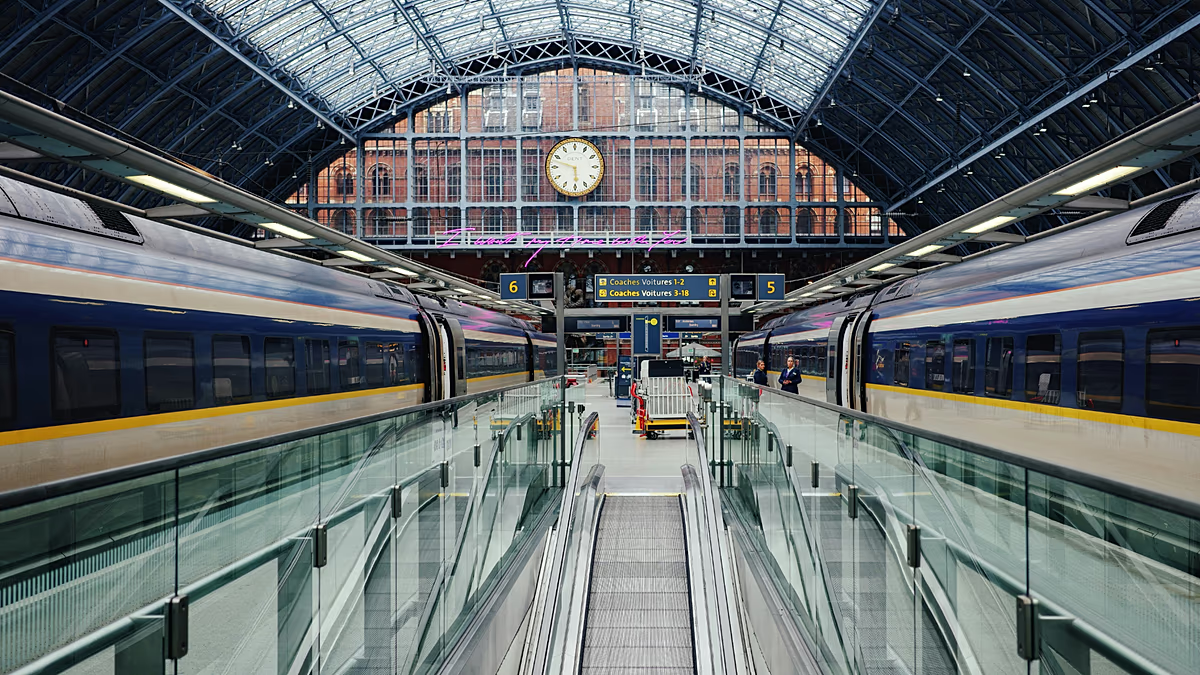
The news that the UK’s Office of Rail and Road (ORR) has pre-approved Virgin’s track access on High Speed 1 is arguably the single most significant step forward yet for the project. It is the administrative equivalent of receiving the keys to the kingdom, allowing them to run trains from the platforms of St. Pancras towards the entrance of the Channel Tunnel. The 10-year approval, valid from 2030 to 2040, gives potential lenders and investors the certainty they need to underwrite such a substantial undertaking. However, to the average traveler, this bureaucratic step might seem like dry legalese. But in the humanized world of logistics, this approval is the turbulent final ascent before the plane reaches cruising altitude. It builds upon the earlier, crucial agreement to share the highly-coveted Temple Mills depot in London—the only place these high-speed Olympic-bound trains can be maintained. This collaborative sharing of assets, a sign of how rail infrastructure is being rationalized in the 21st century, demonstrates a pragmatic approach to making the new entrant viable, setting the stage for real competition to finally take root.
The Human Element: What Competitive Rail Means for You
What does a 20% increase in frequency and a new entrant ultimately mean for the passenger’s wallet and overall experience? History has consistently shown that when monopolies are broken, prices tend to fall and service quality tends to rise. When you couple Virgin’s retail DNA and brand loyalty expertise with a high-frequency service, the consumer is set to benefit. The potential for more dynamic, competitive pricing on high-traffic routes like London to Paris could translate into cheaper train tickets for families, students, and business travelers alike. Beyond pure price, there is a renewed focus on the human experience. Virgin’s corporate ethos, which emphasizes innovation in customer service, could lead to more comfortable seating, better onboard catering options, and a more rewarding onboard entertainment system—all elements that Eurostar, complacent under its monopoly, had allowed to become a bit stale. It’s about more than just moving from A to B; it’s about feeling like a valued guest rather than a piece of cargo on a logistical conveyer belt.
The Road Ahead: The Unfinished Symphony
Yet, for all this progress, the journey is far from over. The ORR’s approval, which was met with cautious optimism from the industry, is but one piece of a maddening puzzle. Virgin still faces a mountain of bureaucratic red tape and safety inspections, needing to satisfy both UK and EU regulators—a bureaucratic maze complicated by the post-Brexit political landscape. Furthermore, the thorniest issue remains: securing a track access agreement with Eurotunnel, the operator of the tunnel itself. Without this critical piece of infrastructure access, the trains literally have nowhere to run. The power dynamic here cannot be understated. Eurotunnel has a vested interest in supporting its own traffic, Eurostar, and may not be in a rush to provide a friendly welcome to a competitor. This negotiation is a high-stakes gamble, and even the most optimistic projections place the launch firmly in 2030, a timescale that could easily slip depending on the outcome of these final, and most difficult, discussions.
A Brighter, More Connected Future: Beyond the Hype
In the grand narrative of European integration and sustainable travel, the arrival of Virgin is a powerful symbol of the rail renaissance. It represents a bet that rail travel can be a modern, preferable alternative to short-haul flights for the climate-conscious traveler. The move signifies a shift away from a world of finite, take-it-or-leave-it options towards a dynamic ecosystem where railways are constantly challenged to innovate. This is about more than just Brits avoiding a trip to the airport; it’s about creating a future where a family in Paris can look forward to a weekend in London with the same casual confidence a New Yorker might feel about a trip to Boston. The dream is not just about running from one city to another, but about creating numerous interconnected micro-economies and cultural exchanges across Europe. The news of Virgin’s progress isn’t just a story about a company getting a little closer to a launch, but a heartening testament to the enduring power of choice, the human desire for progress, and the belief that the journey matters as much as the destination.