




Forget dinner and drinks. In California, the hottest ticket in town might no longer be a reservation at a chic, overpriced restaurant with $20 cocktails and a two-hour wait. It might be a membership card, a shopping cart, and a long, lazy Saturday afternoon at Costco. The humble Costco run, once a chore to be completed as quickly as possible, is morphing into an unlikely form of entertainment, complete with cheap eats, treasure hunting, and even the possibility of finding true love. According to a new USA Today report, Golden Staters are at the forefront of this thrifty trend. Shoppers aren’t racing in for 36 rolls of toilet paper and racing back out. They’re lingering. They’re browsing. They’re making a day of it. In a state where the cost of going out has become truly punishing—where a casual night on the town can deliver a brutal bill, and it sometimes feels there’s a cover charge just for setting foot outside your Los Angeles home—the warehouse has become a refuge. Costco offers about 150,000 square feet of possibility, all air-conditioned, well-lit, and free of judgment. It doesn’t care if you show up in sweatpants. It doesn’t care if you spend two hours wandering the aisles and leave with nothing but a $1.50 hot dog. In that way, it has become the ultimate California outing: an escape that doesn’t require a savings account or a dress code.
Who exactly is making Costco their social destination? Almost everyone. A devoted community has sprung up around the warehouse giant, and it looks different from what you might expect. Los Angeles influencers are filming bestie dates in the food court. Silicon Valley moms, often isolated in sprawling suburbs, are using Costco as a low-stress way to meet other mothers and actually talk for more than two minutes. College students at California schools are forming social clubs that meet at their local warehouse. The store has become what sociologists call a third place—not home, not work, but somewhere in between where community can happen. The magic is hard to explain until you’re in it. It’s the slow, almost meditative rhythm of pushing a heavy cart down wide aisles. It’s the communal excitement of a sample cart emerging from behind a tower of paper towels. It’s the freedom to stare at a 60-inch television for ten minutes and imagine a different life. It’s the way a conversation can start with “Would you actually buy a 55-gallon drum of mayonnaise?” and end with two strangers laughing together. For moms, it’s a playdate with wheels. For students, it’s a field trip. For everyone else, it’s a place where no one pressures you to buy a second cocktail or show up with witty small talk. You can be quiet. You can be loud. You can take your time. In a society that often feels isolating and expensive, Costco has become a place where people feel less alone—and that’s not nothing.
Then there is the math, and in California, math matters. The average cost of a date in America is $189, according to a recent Wall Street Journal article citing data from BMO Financial Group. That’s dinner, drinks, maybe a rideshare—gone in one evening. At Costco, meanwhile, two people can still get the legendary hot dog and drink combo for a grand total of $3 before tax. That’s less than a latte in most neighborhoods, less than a gallon of gasoline, and less than the valet tip at the kind of restaurant where a salad costs $27. Some devotees have given this experience a name: the Kirkland Signature date night, named after the store’s in-house brand that has achieved cult status. In online fan forums, shoppers are candid about what these outings mean. “Costco trips have turned into a date night thing for the hubs and I,” one shopper writes. She asks if anyone else gets “giddy” heading to Costco with their significant other. Another responds: “We literally call it our Costco date. She has the chicken bake and I have the hotdog.” Then, with the kind of self-awareness that every regular shopper will recognize, the same poster admits they don’t get the full experience quite so cheaply: “after we have spent at least $200 on I don’t know what.” That joke is the heart of the matter. Yes, the hot dog is cheap. The sample of tortellini is free. But walking through the furniture section and imagining a new couch, stopping to inspect a stand mixer, and grabbing a $17 bag of frozen organic berries is its own kind of evening entertainment. It has all the ingredients of an old-fashioned night out: wandering around, trying food, browsing things you don’t need, and sitting down for dinner afterward. The difference is that no one is checking your reservation time, and you can leave whenever you want.
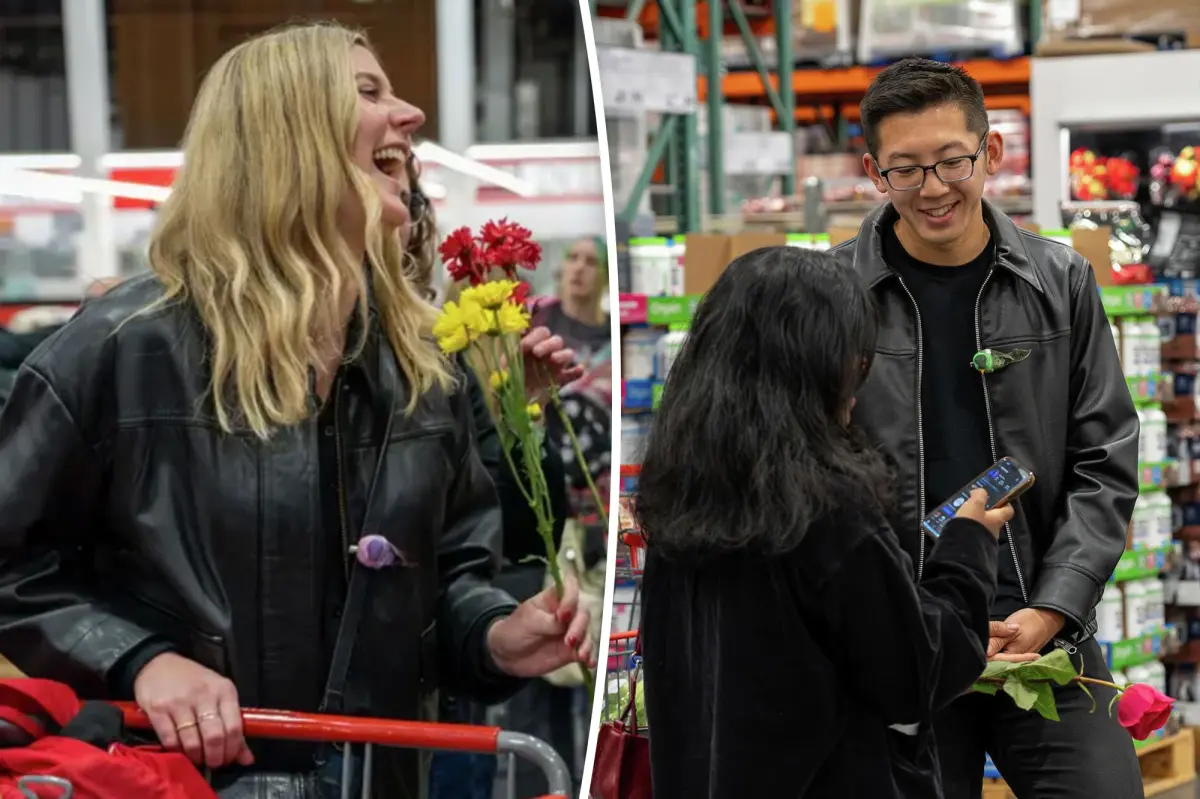
Costco itself has apparently noticed its romantic potential. The company’s website features an entire section with date night ideas for couples, though its suggestions lean more toward buying movie tickets, flowers, and restaurant gift cards than pushing carts down the snack aisle. But some Californians are taking a more direct route straight to their nearest warehouse. Last November, more than 200 singles descended on a Costco in San Francisco for a singles night sponsored by an AI dating app called Rarebird. There were bird pins to identify who was looking for love and cards with icebreakers encouraging people to do things like swap Costco product recommendations. It may sound playful, even gimmicky, but it also makes sense: Costco is a place where values are on display in the most literal way. What you buy, what you stockpile, whether you’re vegetarian or gluten-free, whether you can spot a great deal on olive oil—these are tiny windows into who you are. And the warehouse has already produced at least one real-life California romance that made it all the way to the altar. Lisa Torres and Sterling Lockert met while working at Costco, stayed in touch after Lockert moved away and then returned, and married in Marin County in May. The couple billed their love story on their wedding website as “From the Costco Aisle to the Wedding Aisle.” There is something deeply human about that. In a world of dating app fatigue and endless, expensive first dates, the idea of meeting someone while debating the merits of Kirkland Signature peanut butter doesn’t seem so bad. It’s low-pressure, a little awkward, and completely real—just like any good relationship start.
Costco has also become a popular destination for celebrations among thrifty revelers. Earlier this year, Vivian Cid surprised her Costco-obsessed husband with a birthday party at the newly opened Roseville store, secretly assembling friends and family there. It’s not hard to imagine the scene: a few carts decorated with balloons, a sheet cake from the Costco bakery, friends wandering the aisles together, and the birthday man completely delighted to be in his favorite place. “We used to go clubbing in the disco days, but now this is our club,” Cid said. That line deserves some attention. It’s not just about saving money. It’s about knowing what actually makes you happy as you get older. A nightclub is loud, crowded, and expensive. Costco is also crowded, but it’s predictable, generous, and somehow comforting. You can find a birthday card, a rotisserie chicken, and a 24-pack of sparkling water in one trip. You can see people you know. You can walk out with a huge smile and a trunk full of bulk snacks. For a generation weaned on the idea that a good time must be glamorous, the Costco birthday party is a gentle rebellion. It says: we’re not going to pretend we like paying $30 for an appetizer. We’re going to celebrate where we feel at home. The warehouse may not have a DJ booth or velvet ropes, but it has hope, caffeine samples, and a place to sit near the food court. For many Californians, that’s enough.
To an outsider, the Costco-as-nightlife trend might seem strange, or even a little sad. But to the millions of Californians who are living it, it’s completely natural. When the cost of simply existing in this state has become so high, people find creative ways to maintain the things that make life worthwhile: connection, joy, surprise, and the warm feeling of being part of a community. Costco, with its cavernous aisles and its strange blend of bulk utility and unexpected treasure, has become a kind of modern town square. It’s one of the few places left where you can spend hours with someone without being pressured to spend a fortune, where you can people-watch, snack, and chat with strangers, and where no one is going to tell you to leave when your table’s time is up. The checkout line may be a reality check—“two hundred dollars on I don’t know what”—but the experience itself is emotional. It’s the feeling of pushing a cart beside someone you love, reaching for the same bag of chips, laughing at a giant jar of pickles, and knowing that the best part of the night wasn’t the stuff in the cart. It’s the actual time together. In a world that often feels divided and lonely, Costco reminds us that we still want to gather. We still want to wander. We still want to share a cheap hot dog and look at things we may never buy. Maybe that’s the real treasure hunt: not the discounted electronics or the oversized boxes of cereal, but the chance to feel like a regular person living an ordinary, happy life. Forget dinner and drinks. The new California night out is a $1.50 hot dog, a long walk down a bright aisle, and a hand to hold while you wait in line. And frankly, it’s hard to think of anything more human than that.